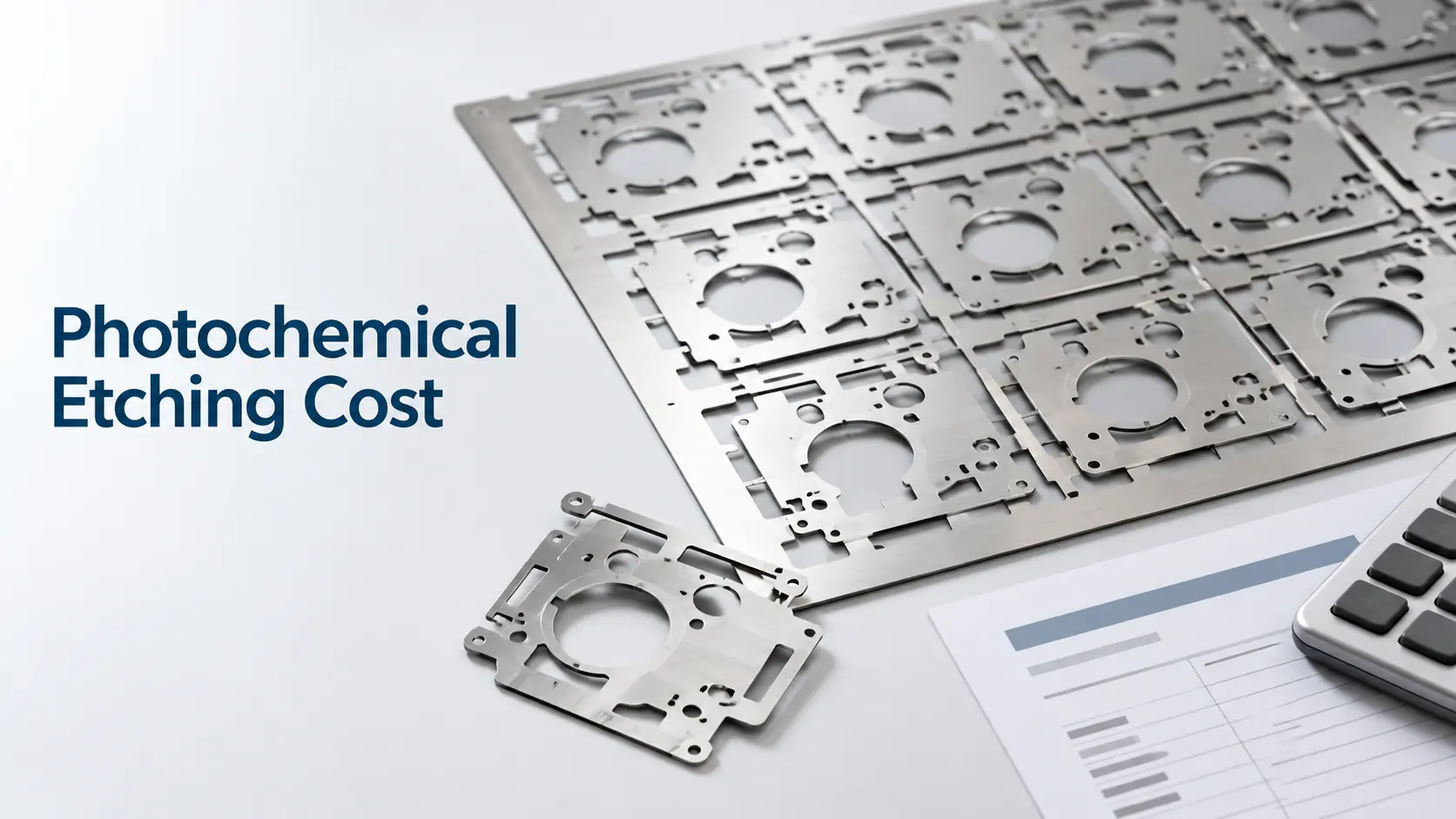

Photochemical etching cost depends on the drawing, material, thickness, order quantity and quality requirements. There is no single price that applies to every etched component. An accurate quote must also define which preparation, inspection, finishing and delivery costs are included.
This guide covers precision parts made from metal sheet and foil, such as screens, shims and plates. To assess your project, start with a drawing review through TMNetch’s chemical etching services.
The most useful question is how much it will cost to receive the required quantity of conforming parts. A low quoted unit price has limited value if it excludes preparation, inspection, finishing or delivery charges.
Key Takeaways
Photochemical etching cost depends on the project specification. Material, thickness, sheet layout, quantity, tolerances and inspection requirements all affect the quote.
Sheet utilization influences unit cost. Fitting more usable parts onto each sheet can reduce material and processing costs per part.
Larger orders can spread preparation charges across more parts. Material, inspection and finishing costs still apply.
Compare the complete cost per conforming part. Include any separate setup, inspection, finishing, packaging and delivery charges.
Photochemical etching is not always the cheapest process. Compare etching, laser cutting and stamping using the same drawing, quantity and acceptance requirements.
What Is Included in a Photochemical Etching Quote?
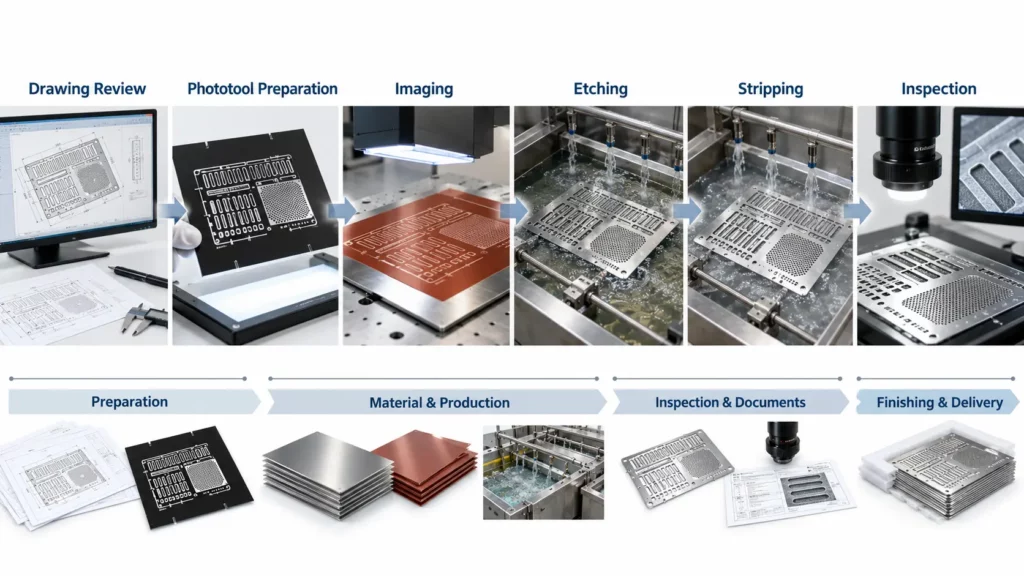
Photochemical machining, or PCM, uses a light-sensitive coating called photoresist to protect selected areas of metal. A chemical solution removes the exposed areas. ASM International’s process overview identifies preparation, imaging, etching, stripping and inspection as key stages.
These stages create several cost categories. However, a supplier’s internal cost calculation may differ from the line items shown on a customer quotation.
| Cost category | What it may include | What to confirm |
|---|---|---|
| Project preparation | Drawing review, artwork, phototool preparation and process planning | Whether these charges are separate, included or reusable for repeat orders |
| Material and production | Metal sheet, photoresist, process chemicals, equipment time, operator time and routine cleaning | The exact material specification and production scope |
| Inspection and documents | Required measurements, reports, material certificates and traceability records | Inspection level, document requirements and acceptance criteria |
| Finishing and delivery | Part separation, forming, plating, special cleaning, packaging and transport | Which operations and delivery charges are included |
A phototool is the image pattern used to transfer the design onto photoresist. The Photo Chemical Machining Institute describes CAD-based tooling and its use from prototype development through production. This does not mean every supplier offers free tooling or identical preparation charges.
Ask how artwork revisions, repeat orders and new inspection requirements affect the quote. Where equipment, labor and overhead are already included in a production charge, they should not be counted again when comparing totals.
What Factors Affect Photochemical Etching Cost?
Material and Thickness
Specify the alloy grade, material condition and thickness. A request for “stainless steel” alone may leave important purchasing and processing assumptions unresolved.
Material price depends on the specification, available sheet sizes and purchasing conditions. Material price cannot be inferred from the alloy family alone. Brass, nickel alloys, stainless steel, aluminum and specialty alloys vary with grade, thickness, sheet size, market conditions and supplier purchasing terms.
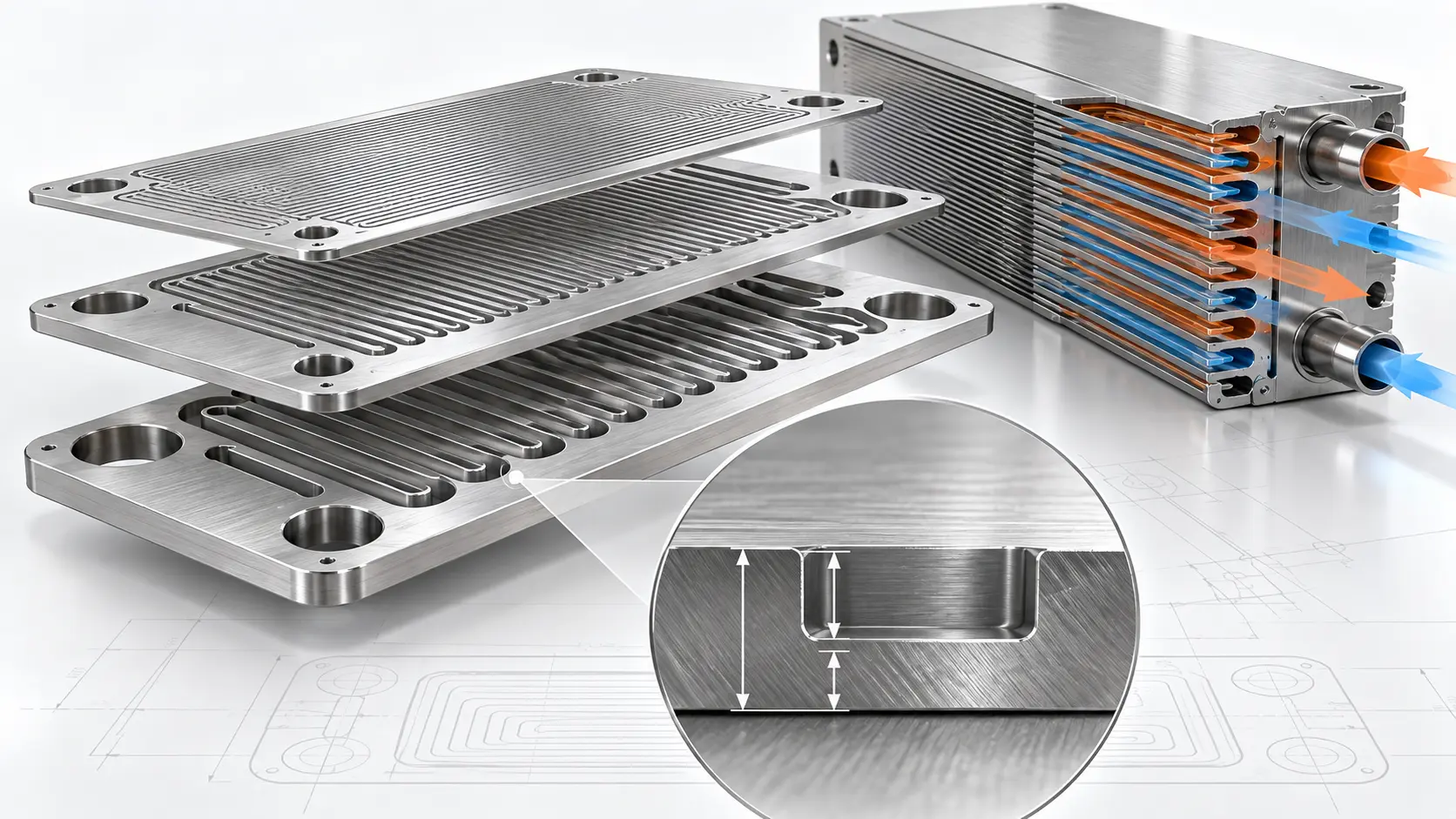
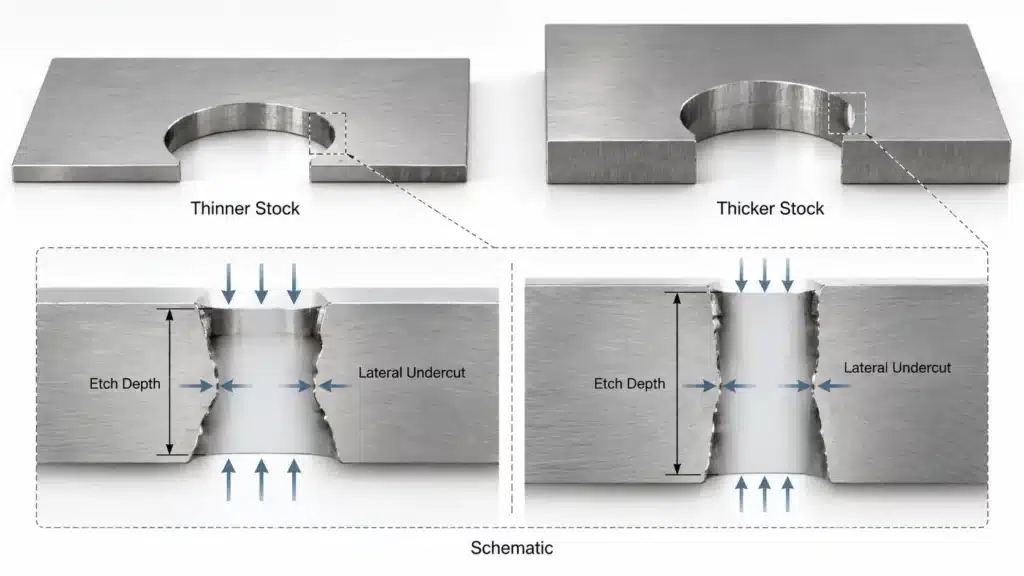
Thickness also affects processing. For a comparable through-etched design, thicker stock requires removal through a greater depth. The supplier must review etching time, lateral material removal and achievable features together.
Choose material and thickness for the part’s function first. A cheaper option that fails strength, corrosion or electrical requirements will not reduce the project’s total cost.
Part Size and Sheet Utilization
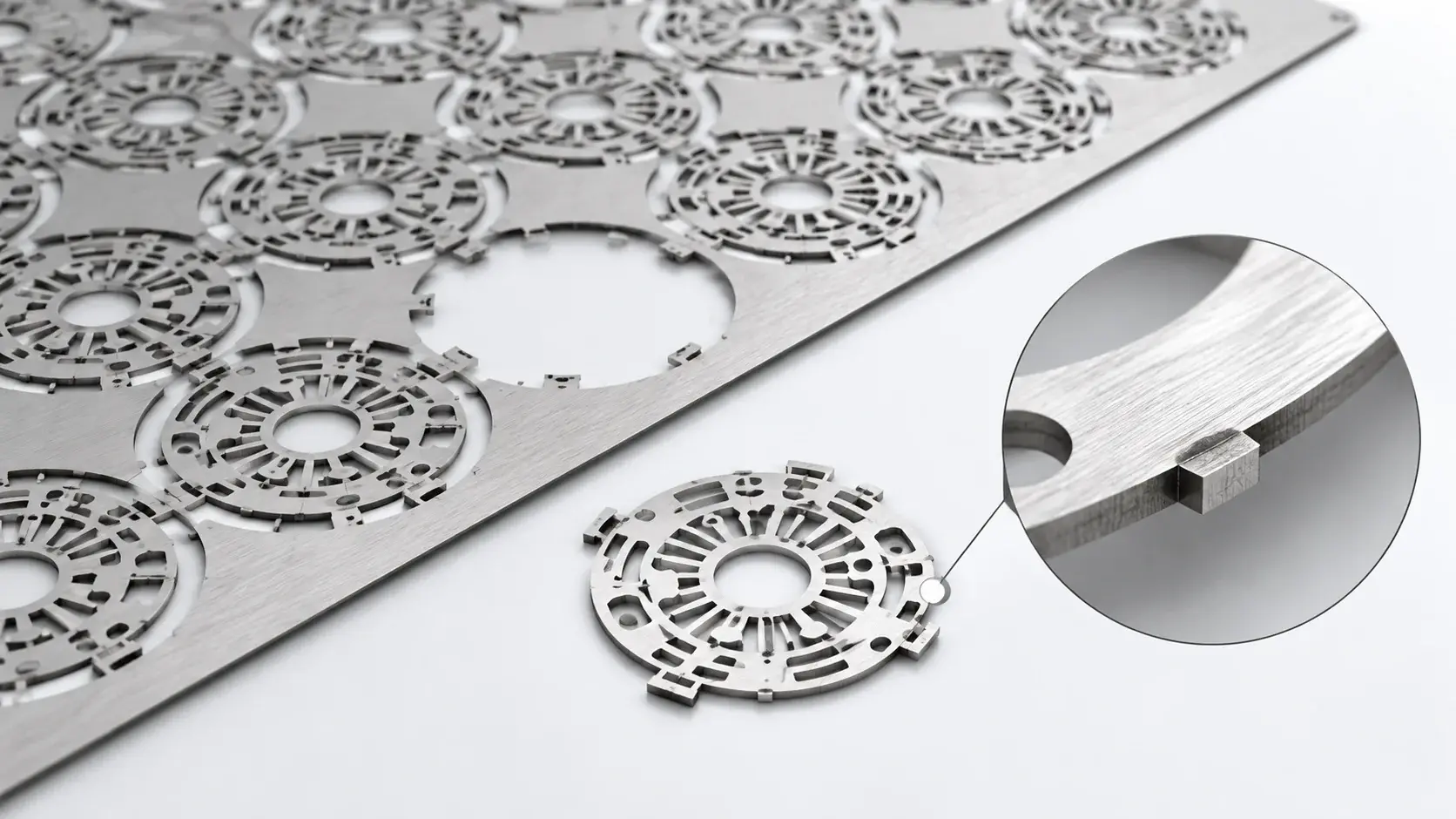
Sheet utilization describes how efficiently the supplier arranges parts within the usable area of a sheet. Part dimensions, orientation, spacing and handling features affect that arrangement.
Two components with similar finished metal area may occupy different amounts of production sheet. A layout that fits fewer parts can require more sheets for the same order.
Quantity and Order Stage
Prototype, pilot and repeat production orders may carry different preparation and inspection requirements. Some costs can be spread across more parts, while material and processing costs continue as production increases.
Ask for quantity-based quotes using the same drawing and quality requirements. Otherwise, a lower price may reflect a different scope rather than a volume benefit.
Tolerances, Features and Inspection
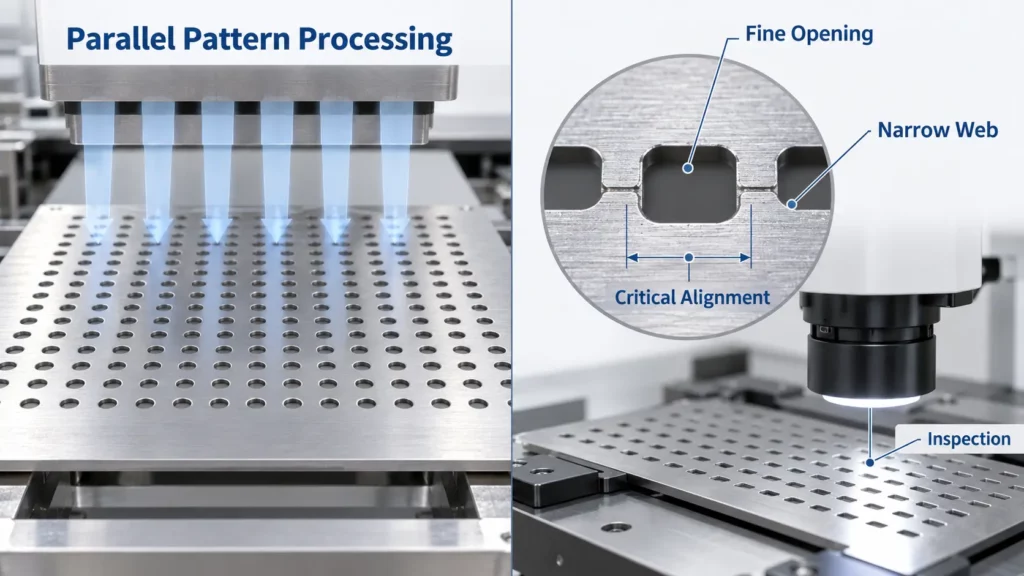
The cost impact of complexity depends on the type of feature. Adding repeated holes does not necessarily increase etching time in proportion to hole count, because the exposed pattern is processed across the sheet in parallel. However, dense features can still affect artwork, material utilization, inspection and yield. Very fine openings, narrow webs, critical alignment and controlled-depth features can still require additional review and process control.
Tighter tolerances may also increase inspection work and the risk of rejected parts. Identify dimensions that control fit or performance, and use suitable general tolerances elsewhere. Changes must remain consistent with the part’s engineering requirements.
For detailed manufacturing limits, see the photochemical etching materials and tolerance guide.
Secondary Processing, Packaging and Lead Time
An etched blank and a finished component are different quotation scopes. Forming, plating, polishing or special cleaning may add operations and require further inspection.
Packaging also matters for delicate parts. Specify whether parts should arrive individually separated, retained in a sheet or protected in a dedicated package.
Required delivery dates can affect material sourcing and production scheduling. Confirm whether an expedited service is available and whether it changes the quoted price.
How Does Sheet Utilization Affect Unit Cost?
Many preparation and processing activities take place at sheet level. This makes the number of usable parts per sheet an important cost lever.
A supplier cannot simply fill every available gap. The layout must allow for processing, handling and the required quality. Increasing the theoretical number of parts is useful only if the revised layout remains manufacturable.
A Simple Layout Example
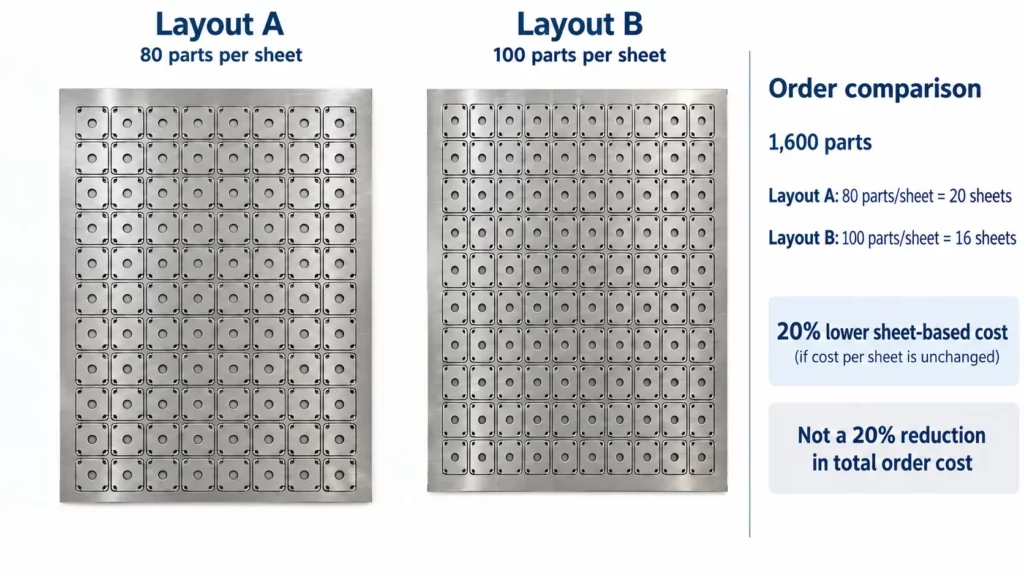
Consider an order for 1,600 identical parts. Assume two technically acceptable layouts use the same sheet size and processing route.
| Layout | Parts per sheet | Sheets needed for 1,600 parts |
|---|---|---|
| Layout A | 80 | 20 |
| Layout B | 100 | 16 |
Layout B requires four fewer sheets. If material and processing cost per sheet remain unchanged, that portion of the batch cost falls by 20%.
This is an illustrative calculation, not a production claim or price quotation. It assumes all planned parts meet the specification. Preparation, inspection, finishing and delivery charges may not decrease by the same percentage.
The example shows why sheet layout can matter more than a small change in the finished part’s metal area.
Planned Parts and Conforming Parts
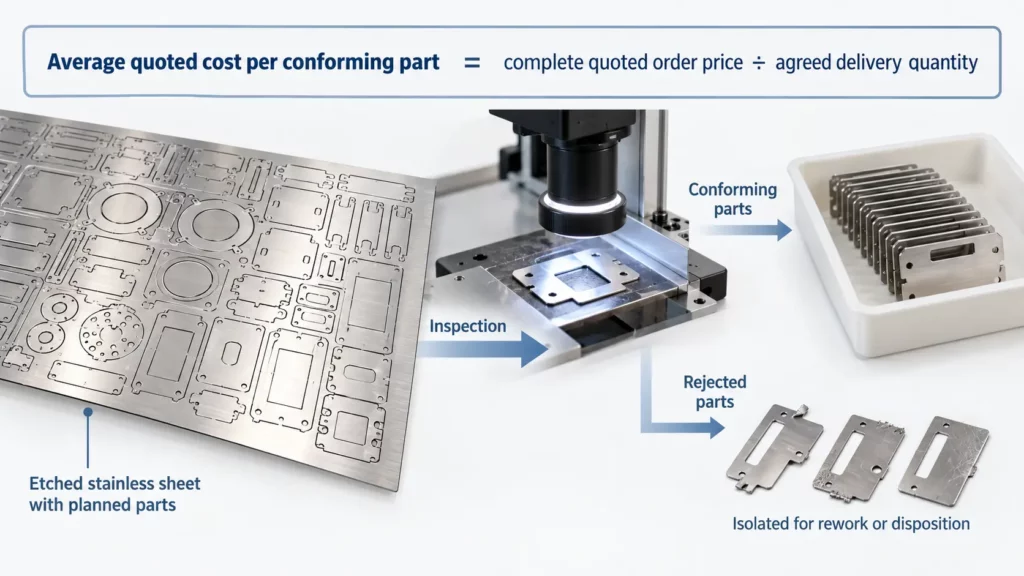
A layout count is not a guarantee that every produced part will pass inspection. Yield means the proportion of produced parts that meet the agreed specification.
Suppliers may account for expected yield when planning production and preparing a quote. This does not mean the buyer automatically pays separate charges for rejected parts. The quotation should define the conforming quantity to be delivered and the agreed price.
For buyers, a useful calculation is:
Average quoted cost per conforming part = complete quoted order price ÷ agreed delivery quantity
Use the same cost scope on both sides of a comparison. If one quote excludes freight or setup, add those agreed charges before calculating the comparable total.
Does a Larger Order Always Lower the Unit Cost?
A larger order can reduce the preparation cost allocated to each part. It does not guarantee a proportional reduction in every cost category.
A simplified cost model helps explain this:
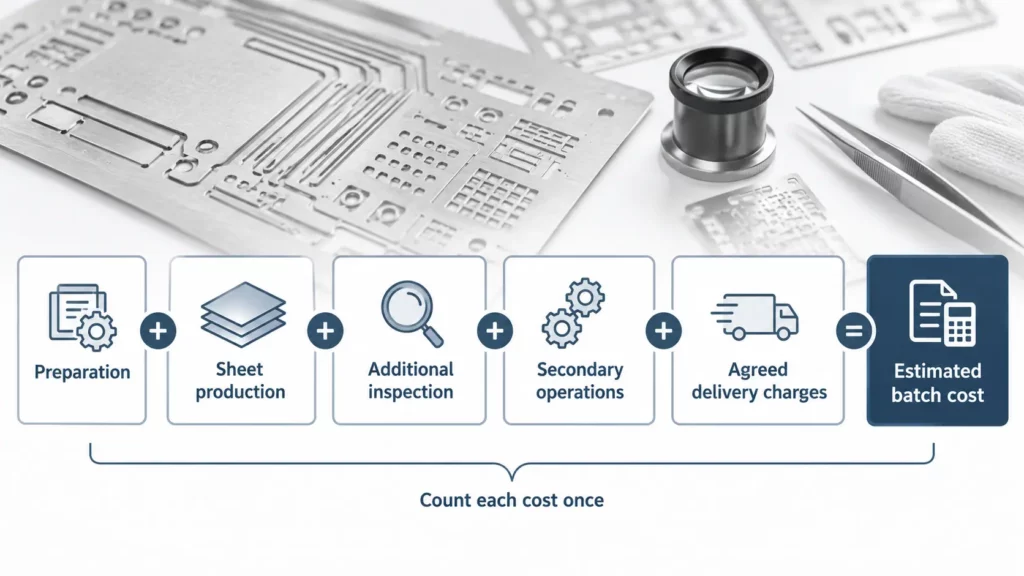
Estimated batch cost = preparation + sheet production + additional inspection + secondary operations + agreed delivery charges
Include each cost once. Inspection already covered by a production charge should not appear again as an added allowance.
Published research on the cost of photochemical machining uses a bottom-up approach to identify costs across manufacturing stages. The expression above is a simplified planning framework, not a current price model or TMNetch’s quotation formula.
Prototype and Production Quantities
A small prototype order may require drawing review and artwork preparation even when few parts are delivered. Dividing those charges across a small quantity can produce a higher effective cost per part.
Once preparation is complete, a larger order may spread some of those charges across more parts. Production still requires material, processing, handling and the specified quality checks.
Annual demand also differs from a single purchase quantity. An annual requirement delivered through many small batches may have a different cost from one consolidated order. Provide both the expected demand and release schedule when requesting a quote.
Stable Drawings and Repeat Orders
A repeat order may benefit from approved artwork and a known process route. However, changes to material, thickness, geometry or quality requirements may require a new review.
Control the drawing revision before ordering. Ask whether the repeat-order price assumes an unchanged specification, and how any new preparation charges will be handled.
How to Compare Photochemical Etching Quotes
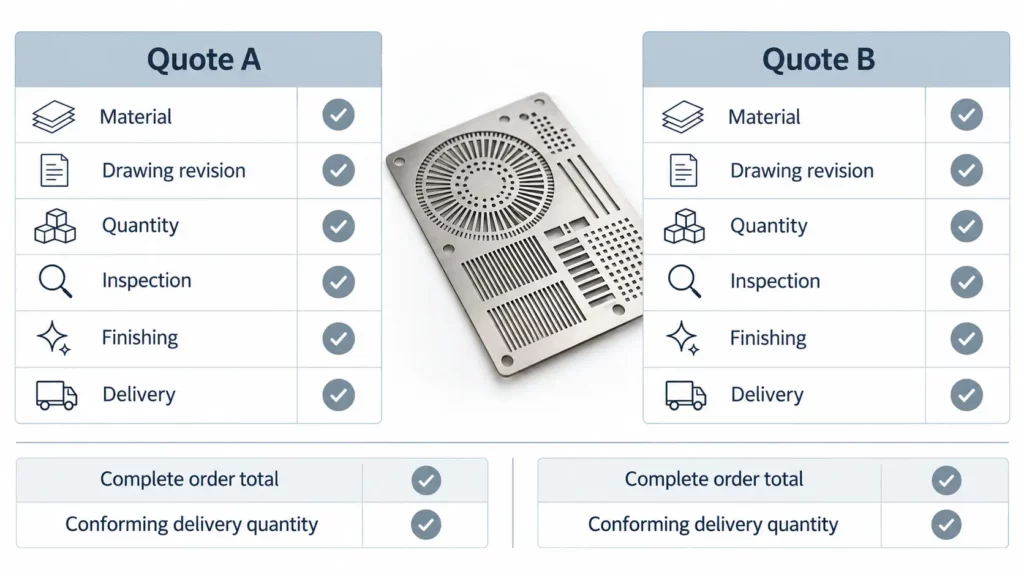
Compare prices after confirming that suppliers are quoting the same finished part and delivery scope.
| Comparison item | Confirm the same requirement |
|---|---|
| Material | Alloy grade, condition, thickness and any required certificate |
| Drawing | Revision, dimensions, critical features and tolerances |
| Quantity | Delivered conforming quantity and any staged deliveries |
| Inspection | Measurement requirements, sampling and reports |
| Finishing | Forming, plating, cleaning and other required operations |
| Delivery | Packaging, freight, currency, taxes or duties where applicable, and delivery terms |
Calculate the total for each option, including separate preparation charges. Do not assume that the lowest unit price produces the lowest complete order cost.
For repeat purchasing, distinguish the first-order total from later orders. A quote with a separate preparation charge may have a different cost pattern from one that includes preparation in the unit price.
Keep alternative designs or inspection options separate from the baseline quote. This makes it clear whether a saving comes from efficiency or a changed specification.
The full chemical etching buyer’s checklist covers quotation inputs and supplier evaluation in more detail.
Is Photochemical Etching Cheaper Than Laser Cutting or Stamping?
Photochemical etching can be economical for suitable thin, detailed parts, especially when tooling flexibility matters. It is not automatically the cheapest route for every design or quantity.
Laser cutting may suit a simple through-cut profile. Stamping may offer a competitive production cost for a stable design at sufficient volume. Each route must also meet the material, dimensional and edge requirements.
Compare the total cost of producing the specified finished part. Include relevant tooling, preparation, processing, finishing and inspection. There is no universal quantity at which one process becomes cheaper than another.
For an application-specific example, see chemical etching versus laser cutting for heat exchanger plates.
What Do You Need for a Cost Estimate?
Prepare these core details for a request for quotation, or RFQ:
- The latest drawing and available CAD files.
- Material grade, condition and thickness.
- Required quantity, repeat demand and release schedule.
- Critical dimensions, tolerances and inspection requirements.
- Required finishing, packaging and delivery date.
If the design is still developing, identify which requirements are fixed and which can be reviewed. Design for manufacturability, or DFM, assesses whether the proposed part suits the manufacturing process.
For a TMNetch project, submit your drawing and requirements for a quotation. Ask for confirmation of the material, quantity, quality requirements and quoted scope before comparing the price.
Frequently Asked Questions
Why Do Photochemical Etching Quotes Differ Between Suppliers?
Suppliers may use different assumptions about material, sheet layout, preparation, inspection and finishing. They may also include different delivery charges. Request the same specification and scope before judging whether a price difference is meaningful.
Does a Larger Order Always Reduce the Unit Cost?
No. A larger quantity can spread preparation charges across more parts, but other costs continue with production. Compare quantity breaks using an unchanged drawing, inspection plan and delivery scope.
Can I Get a Cost Estimate Without a Drawing?
A supplier may discuss a preliminary budget using dimensions, material, thickness and quantity. A detailed quote usually needs a drawing to assess geometry, tolerances and the production route. Confirm which assumptions remain open before using an estimate for purchasing.
Is Photochemical Etching Cheaper Than Laser Cutting or Stamping?
It depends on the component and order conditions. Compare routes using the same material, drawing, quantity and acceptance requirements. Include tooling and any operations needed to deliver the finished part.