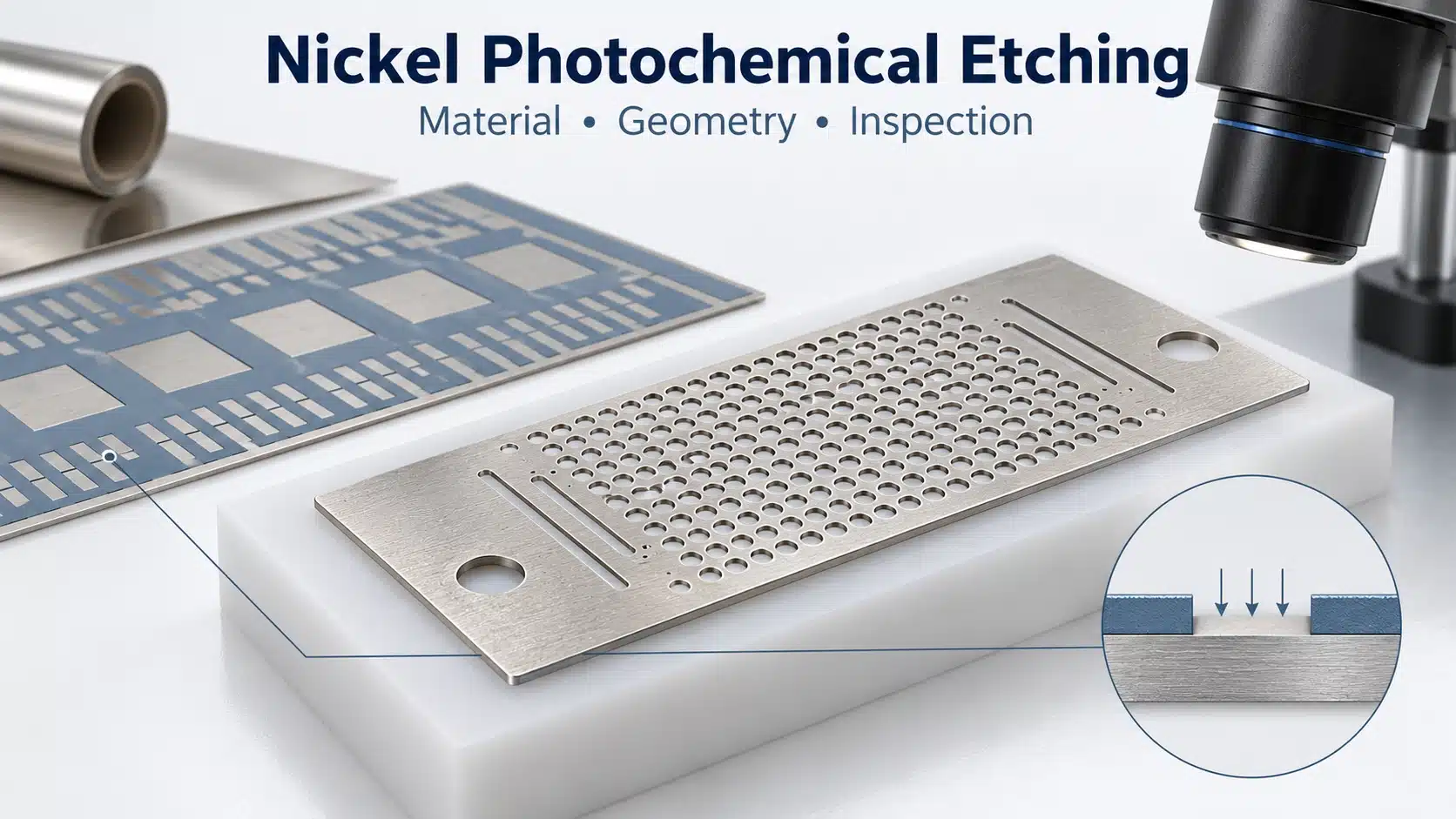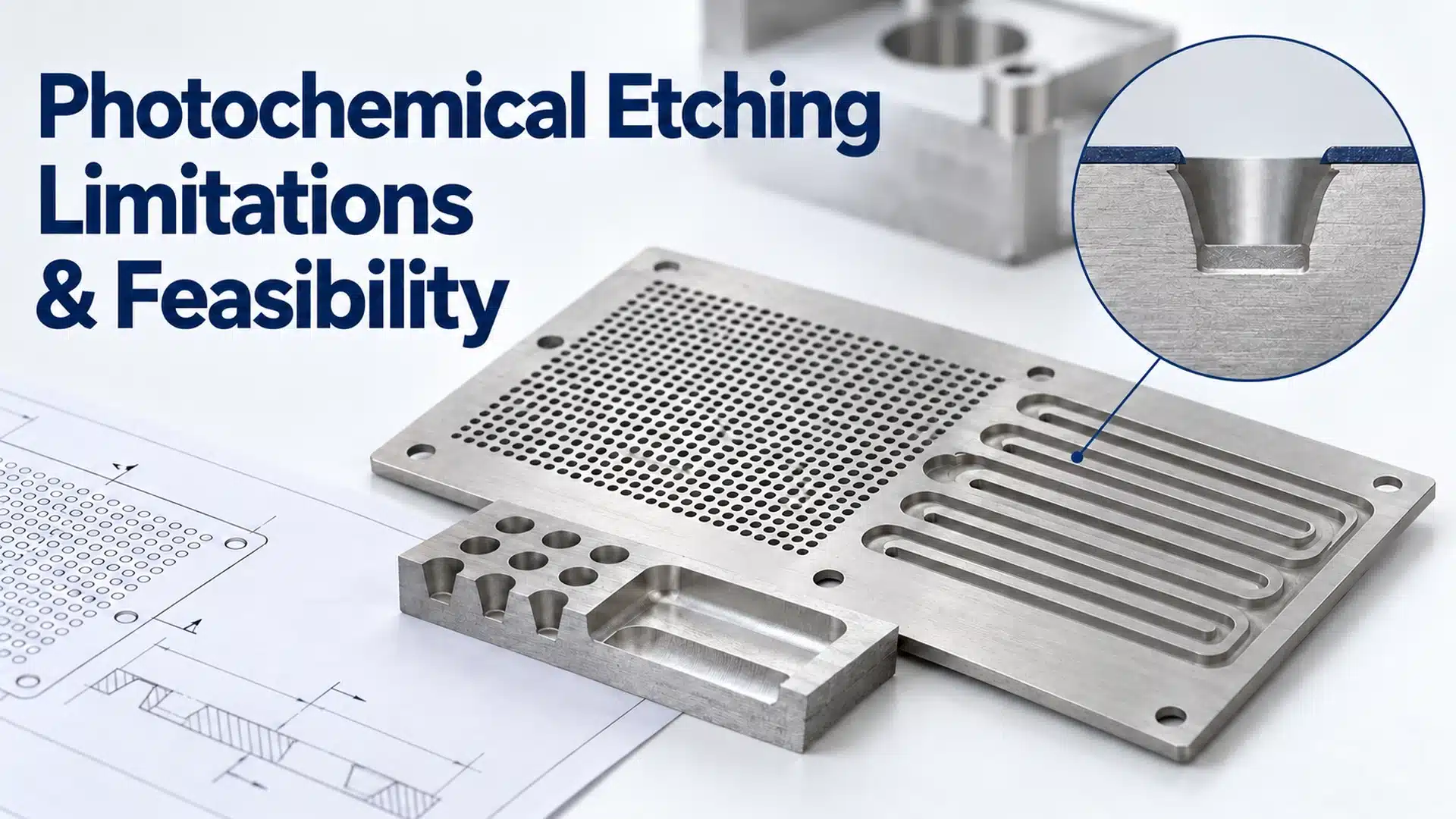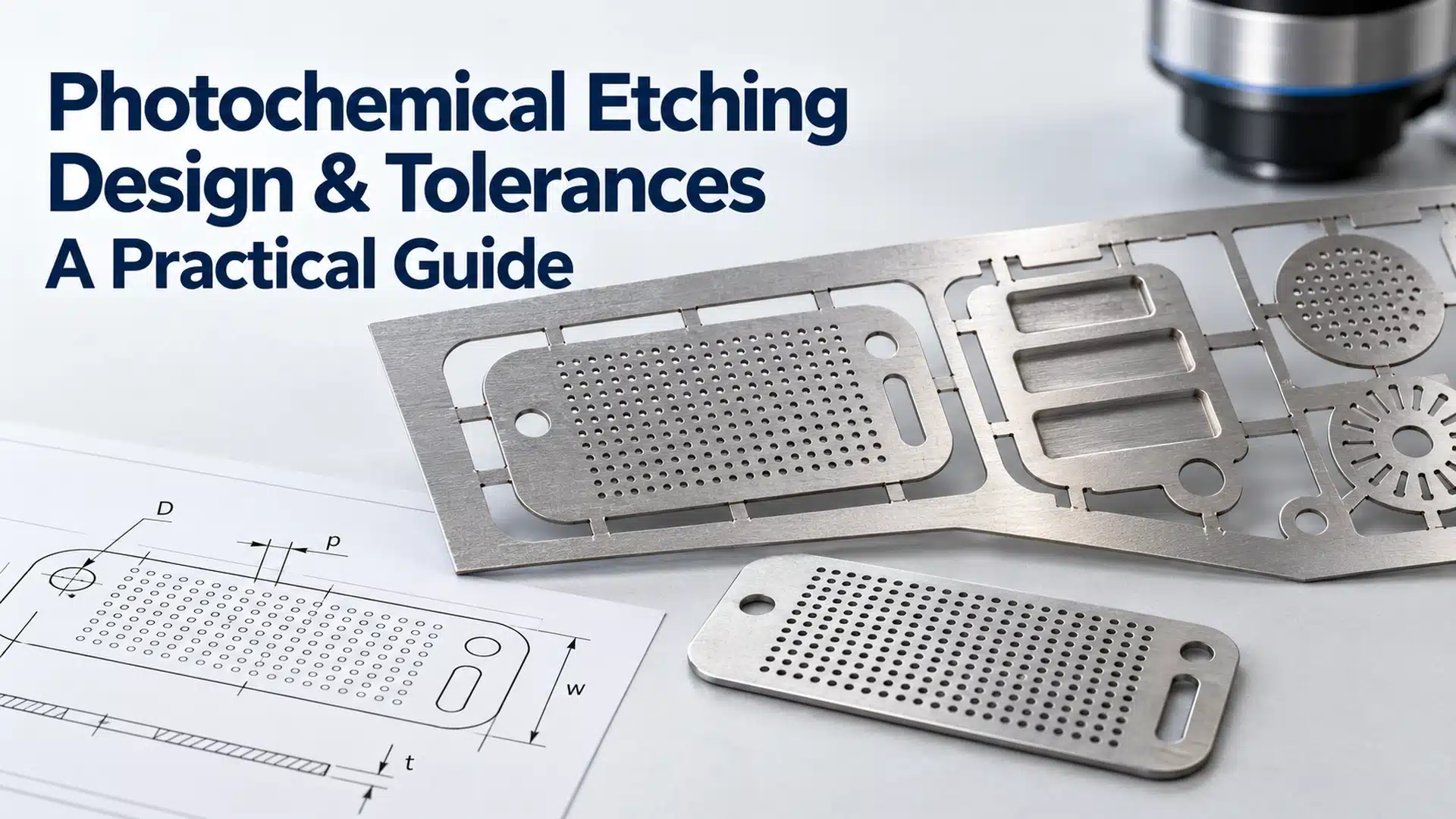

To choose a chemical etching company, verify that it can meet your part’s material, drawing, inspection and delivery requirements. Use the questions and evidence below to assess candidates and close open issues before approval. If you are still building a shortlist, compare chemical etching companies first.

This checklist focuses on suppliers of thin-metal photochemical components. For a specific project, discuss chemical etching services against a controlled drawing and defined supply scope.
Key takeaway:
Link each supplier claim to project evidence, then record what must be confirmed before the next approval stage.
Chemical Etching Supplier Qualification Checklist
Use this framework to structure your review. Select the evidence your project requires and assign someone to resolve each open item.
| Buyer question | Evidence to request | Confirm before proceeding |
|---|---|---|
| Can you process this material? | Grade, condition, thickness and relevant experience | The response covers the specified stock |
| Have you reviewed the drawing? | Marked drawing and proposed exceptions | Functional changes have buyer approval |
| How will you inspect the part? | Methods, coverage and report format | Checks match the final delivery state |
| Can you provide required quality records? | Applicable certificates and traceability records | Records cover the site and order |
| Who controls files and outside work? | Ownership terms and process responsibilities | Access, changes and accountability are defined |
| What supports production release? | Sample results and applicable qualification plan | Open issues have agreed dispositions |
| What does the quotation include? | Scope, exclusions and schedule stages | Offers cover equivalent deliverables |
Treat the table as a purchasing framework. Agree applicable requirements with the supplier before requesting formal approval.
Prepare a Complete Chemical Etching RFQ
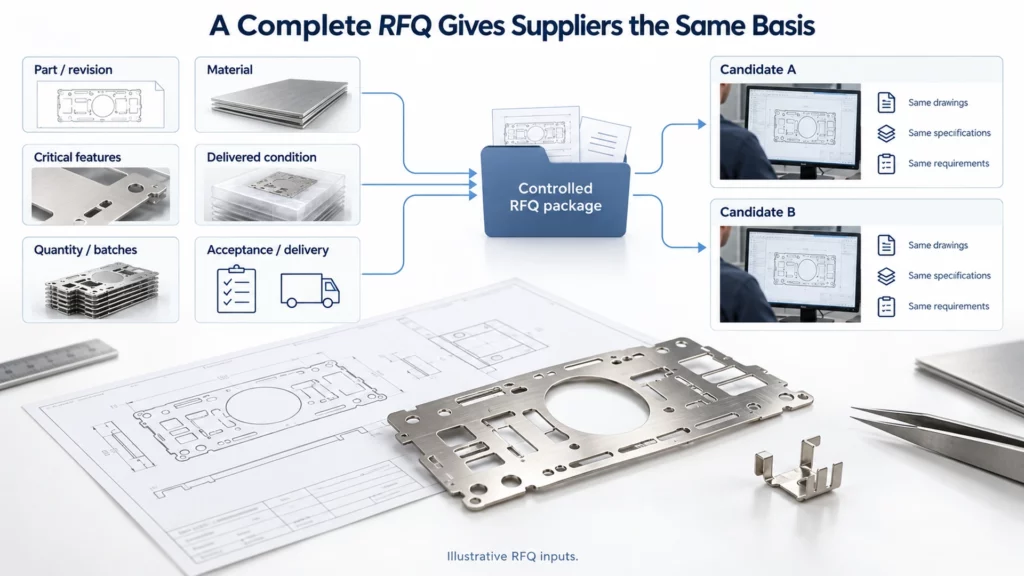
A request for quotation, or RFQ, should give every candidate the same basis for technical review and pricing.
Define the Part and Drawing Revision
Identify the controlling document and any unresolved requirements. Provide the inputs below as searchable text alongside the drawing files.
| Input | State clearly |
|---|---|
| Part identity | Part number, drawing revision and document precedence |
| Material | Grade, specification, condition and thickness |
| Critical features | Functional dimensions, references and permitted deviations |
| Delivered condition | Forming, finish, cleaning and subsequent operations |
| Acceptance | Inspection coverage, records and applicable customer requirements |
Define Quantity, Inspection and Delivery Scope
Separate prototype quantity, pilot needs, order quantity and expected annual demand. Describe planned delivery batches instead of treating the annual forecast as one purchase order.
Include packaging, destination and target dates. State required material records, dimensional reports and any customer-specific submissions. Ask each supplier to identify missing inputs and quote assumptions explicitly, so engineering can resolve differences before purchasing compares offers.
Verify Material Experience and Drawing-Specific Capability
Ask candidates to review your specified stock and geometry together. A general materials list leaves the project-specific assessment unfinished.
Confirm the Exact Grade, Condition and Surface
Ask whether the supplier has processed the specified grade, condition and thickness. Request a written feasibility response, including any trials needed before commitment.
Confirm who buys the raw material, what documentation is required and how it will connect to the supplied batch. Require approval for proposed substitutions. Include coatings, oxide layers, supplied surface condition and subsequent treatment in the review.
Ask for a Marked-Up DFM Review
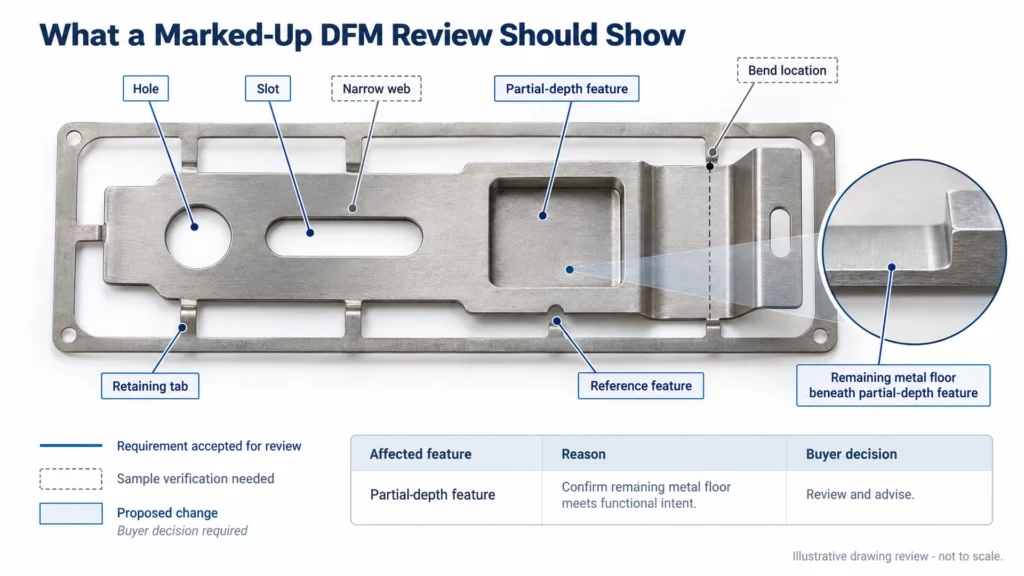
Request a design for manufacturability, or DFM, review on the controlled drawing. Ask the supplier to mark holes, slots, narrow webs, spacing, partial-depth features, retaining tabs, bends and reference features that need attention.
Separate accepted requirements, features needing sample verification and proposed changes. Each proposed change should identify the affected dimension, reason and required buyer decision.
Have authorized engineering staff approve functional changes and the production revision. Keep unresolved items visible in a dated action list.
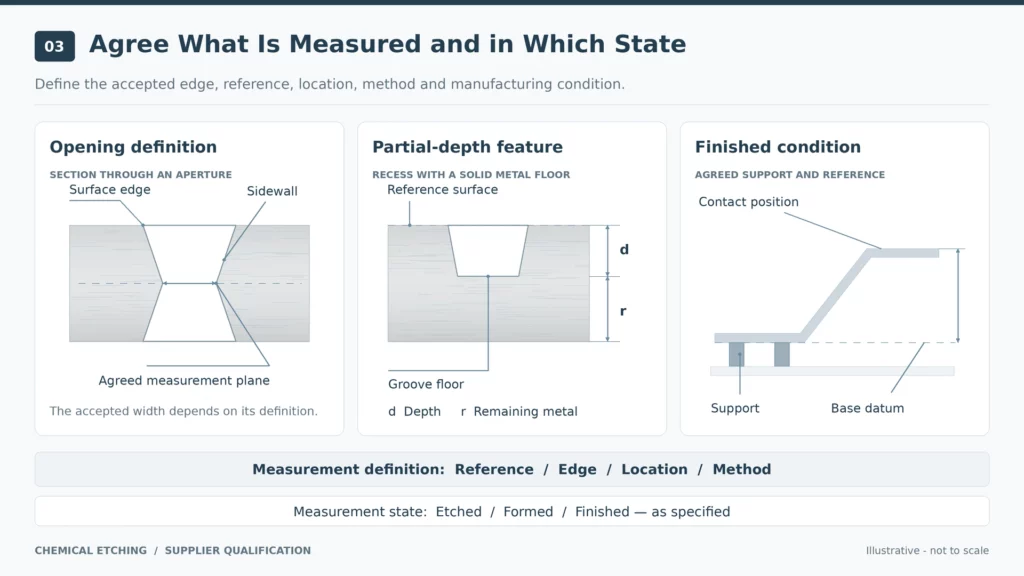
Agree How the Finished Features Will Be Measured
Confirm reference locations, edge definitions, inspection methods and measurement stages. Specify whether final dimensions apply after etching, plating, forming or another operation.
Request an inspection plan and representative report format. Review equipment suitability against the design information and measurement requirements. Agree inspection coverage, sampling or full inspection where applicable, and how disputed measurements will be repeated using consistent definitions and support conditions.
Verify Quality Evidence and Industry Requirements
Match quality evidence to the organization, manufacturing site and work being purchased. Keep certification review and part acceptance as separate decisions.
Check the Certificate Scope and Actual Manufacturing Site
ISO quality management standards address organizational management systems. Assess your part against its drawing, inspection and supply requirements as well.
Check the certificate’s legal entity, address, standard, scope, issuer and validity. Where needed, confirm current status with the issuer. Ask which site performs the work and whether the certificate covers the relevant activities.
Resolve differences between group-company documents, manufacturing addresses and outside processors before accepting the evidence.
Review Material, Lot and Inspection Traceability
Ask the supplier to show how incoming material identification connects to production lots and shipments. Request a redacted record example if customer confidentiality limits disclosure.
Check whether records identify the part number, drawing revision and inspection results. Ask how material substitution, rejected stock and repeat orders are controlled.
List the required material certificates, conformity statements and inspection reports separately. Agree what each document must contain and which batch it identifies.
Aerospace Supplier Qualification: Confirm the Required Evidence
For aerospace procurement, review drawing and specification revisions, material sources, characteristic results, required processors and approval responsibilities. Identify applicable first article requirements in the purchase documents.
The IAQG 9102 framework standardizes first article inspection processes and documentation for aviation, space and defense products. Confirm the version, coverage and submission requirements invoked by the project.
For other sectors, identify the additional evidence required by the customer. ISO 13485, for example, addresses medical-device quality management systems; part-specific acceptance still needs its own defined requirements.
Clarify Design Ownership and Subcontractor Responsibility
Define control of design information and responsibility for each manufacturing step before placing the order.
Define Drawing, Phototool and File Responsibilities
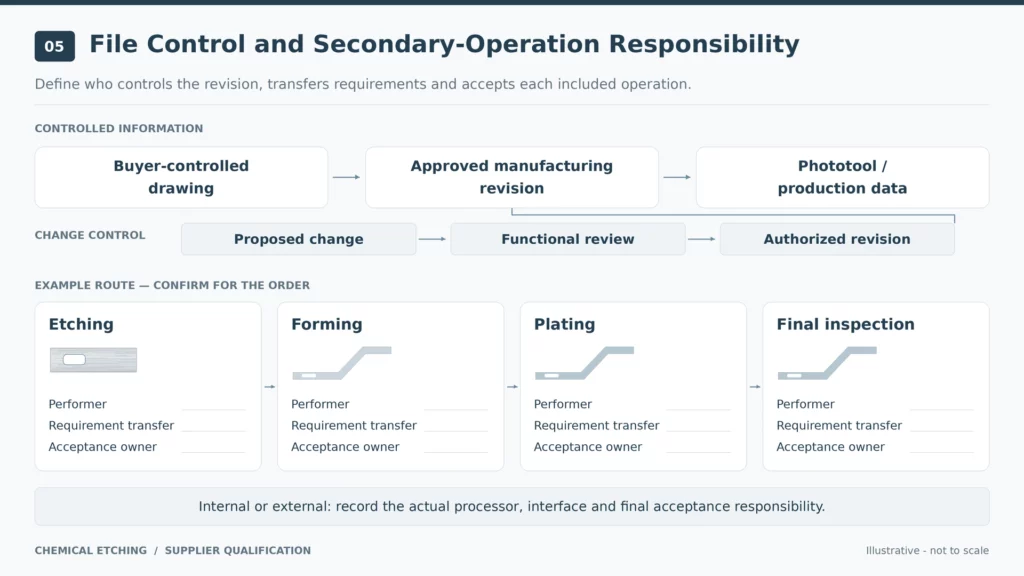
Agree ownership and control of drawings, phototools and process data separately. State who may approve modifications and which revision will apply to repeat orders.
Review file access, sharing with outside processors, retention and any required transfer arrangements. Record the agreed terms in the quotation, order, confidentiality agreement or supply agreement, as appropriate.
Distinguish the buyer’s design approval from the supplier’s manufacturing responsibilities. If the supplier proposes a design change, record who reviews its functional effect and authorizes use.
Confirm Who Performs and Verifies Secondary Operations
Ask whether plating, forming and cleaning are performed internally or externally. Request the proposed process route, including customer-approved sources where required.
Agree who passes specifications between processors, checks intermediate results and accepts the finished component. Identify who handles deviations and provides the final records.
Use the one-stop chemical etching services guide for broader process combinations. For qualification, obtain the actual responsibility arrangement for your order.
Compare Quotes and Lead Times on the Same Basis
Compare offers against the same material, drawing revision, quantity and finished condition. Check tooling and setup, samples, inspection, documentation, subsequent operations and packaging.
Ask suppliers to identify exclusions, change charges and price conditions. Use the separate guide to photochemical etching cost factors when reviewing the cost drivers.
Define schedule stages: information approval, material availability, samples, applicable first article or pilot work, production and transport. Confirm each stage’s starting point and dependencies. Keep manufacturing lead time and arrival date explicit in the agreed delivery plan.
Approve Samples Before Production Release
Define the purpose of each sample stage and the evidence needed for the next decision. Record the limits of every approval.
Agree What the Sample Must Prove
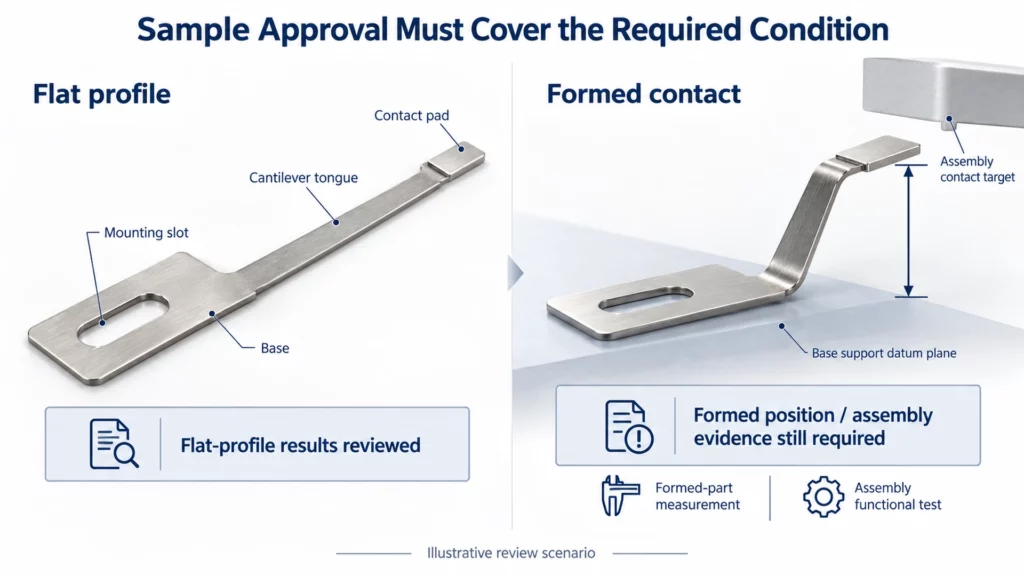
Specify the geometry, finish, assembly or functional requirements to verify. Request the sample’s drawing revision, actual material, process route, inspection results and unresolved issues.
Illustrative scenario: A formed contact passes the flat-profile checks, but its final contact position remains unverified. Keep that requirement open until the formed-part measurement and agreed assembly test are reviewed. Record exactly what the sample approval covers.
Plan Applicable First Article and Pilot Requirements
First article inspection, or FAI, requires its own agreed scope where invoked. Identify whether development samples represent the production material, route and delivered condition required for that evidence.
Boeing’s published first article planning requirements illustrate planning for responsible organizations, inspection methods, material and finish evidence, and reviews after relevant changes. Apply your customer’s requirements and specified documents to your project.
Agree whether pilot production is needed and what it must demonstrate. Define the records to review before authorizing routine supply.
Record Written Release and Control Later Changes
Use a release sequence with identifiable evidence at each stage:
| Stage | Evidence or decision |
|---|---|
| Requirements confirmed | Controlled drawing, material, acceptance and scope |
| Technical review closed | Approved deviations and verification arrangements |
| Samples verified | Reviewed dimensional, surface and functional results |
| Applicable FAI or pilot completed | Required records and resolved outstanding items |
| Production released | Written approval of configuration and delivery requirements |
| Later changes reviewed | Authorized decision on affected features and revalidation |
For repeat orders, confirm the approved revision and change-notification arrangements. Record who decides whether a change needs further verification.
Record the Qualification Decision and Resolve Red Flags
Treat unclear answers as items to investigate. Record the evidence requested and the action needed before proceeding.
| Observation | Follow-up action |
|---|---|
| Tolerance promise without drawing review | Request a written capability assessment and exceptions |
| Certificate logo without applicable scope | Obtain the certificate and manufacturing-site details |
| Quote omits inspection or finishing | Align the scope and confirm exclusions |
| Sample records lack material or revision identity | Obtain records linked to the supplied sample |
| Outsourcing responsibilities are unclear | Confirm processors, interfaces and final acceptance |
Record the decision as ready for the next stage, awaiting evidence, conditionally approved for a defined scope, or not approved. Assign an owner, target date and closure evidence to each open item. Resolve critical unmet requirements directly rather than offsetting them with a high overall score.
FAQs
What Evidence Should I Request Before Approving a Supplier?
Request the evidence your project needs: drawing review, material confirmation, inspection arrangements, traceability, applicable quality records and process responsibilities. Agree sample and production-release requirements before placing the relevant order.
Is a Quality Certificate Enough to Approve My Part?
A certificate addresses its stated management-system scope. Part approval also needs evidence against your drawing, acceptance criteria and delivery requirements. Check the actual site and applicable certificate details.
Does an Accepted Sample Automatically Approve Mass Production?
Define sample acceptance and production authorization separately. Record what was verified, outstanding conditions and the configuration approved for production. Complete any applicable first article or pilot requirements before release.
How Should Outsourced Plating or Forming Be Qualified?
Confirm the processor, specified operation, applicable approval requirements and required records. Agree who controls the interface and verifies final conformity, as discussed in the one-stop services guide.
Request a Drawing Review from TMNetch
Send your controlled drawing and revision, material grade and condition, thickness, quantities and critical dimensions. Include the required finish, subsequent operations, inspection records and delivery expectations.
Use TMNetch’s chemical etching services to request a drawing review. Confirm project feasibility, proposed deviations, quotation scope and the next verification steps with the engineering and quality teams before approving the order.