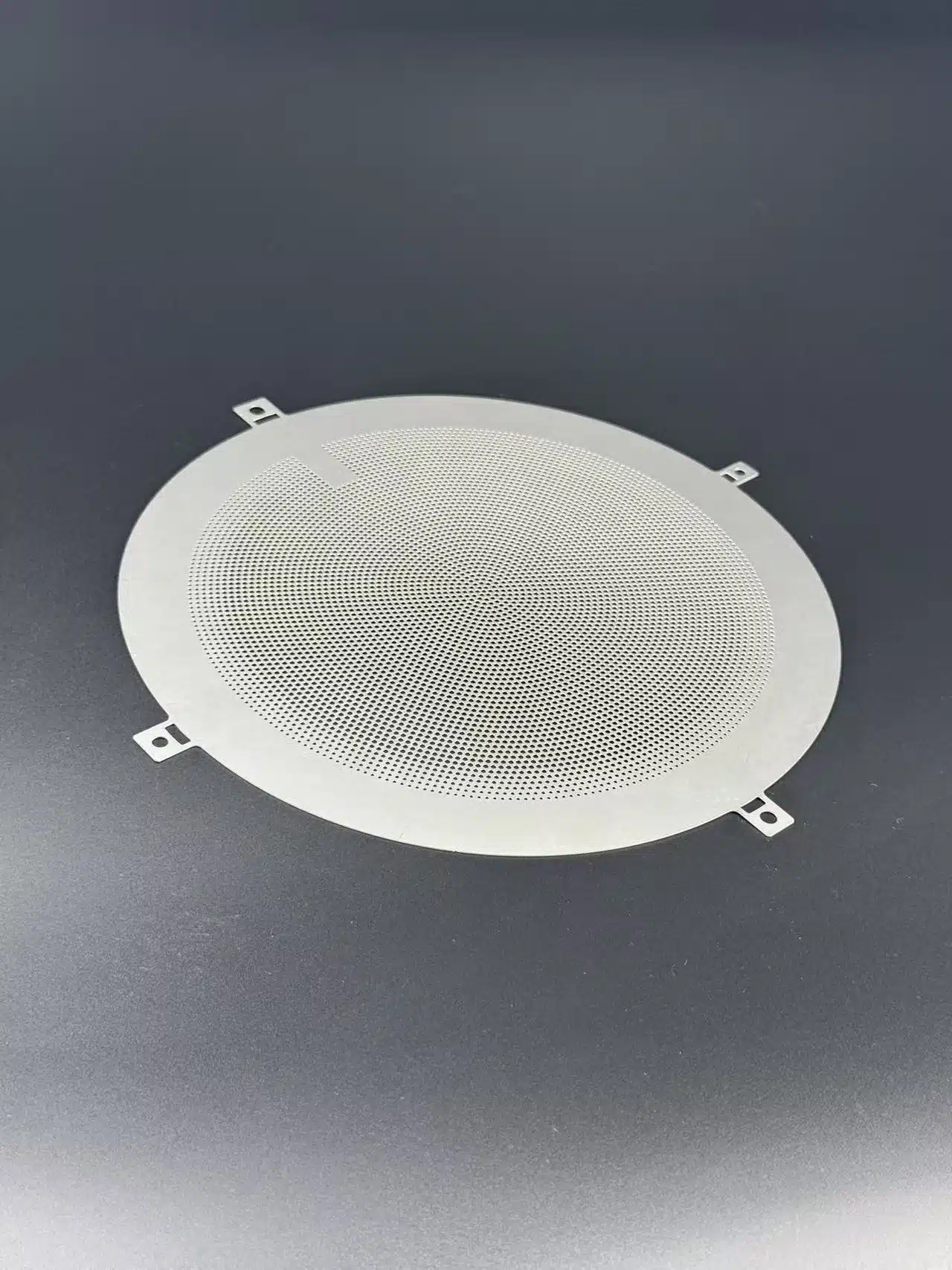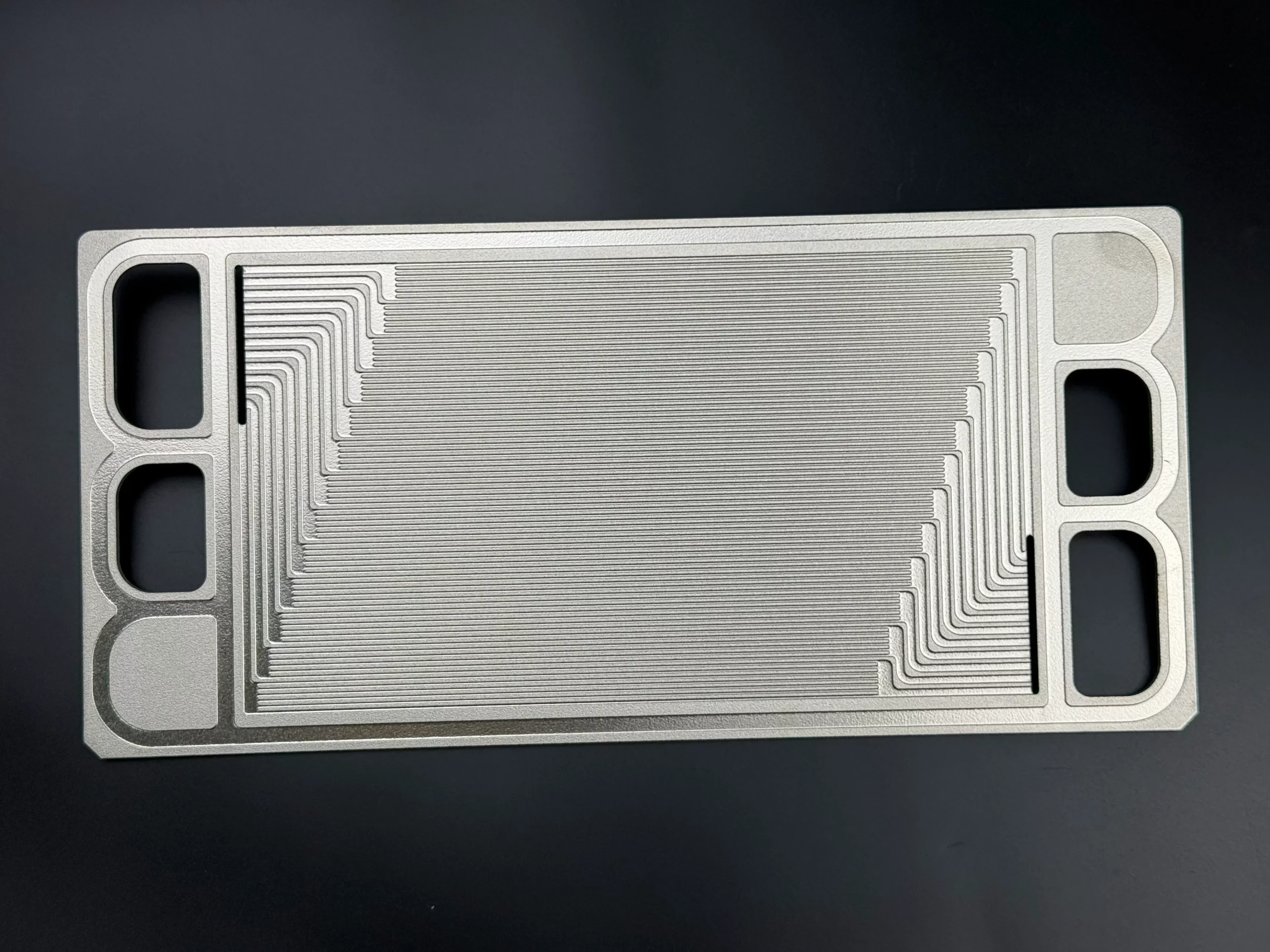

First decide what you need to buy: metal mesh sheet, a cut insert, or a finished speaker grille. Then shortlist a metal and finish for the expected exposure, weight and appearance. Use the opening pattern, part shape and order quantity to select one or two manufacturing routes to quote.
A metal speaker grille is an open metal panel in front of a speaker driver. Its openings allow sound to pass while the grille limits direct contact. The choices below help you turn that basic function into a material, a delivery condition and a practical manufacturing shortlist.
Metal Speaker Grille Materials
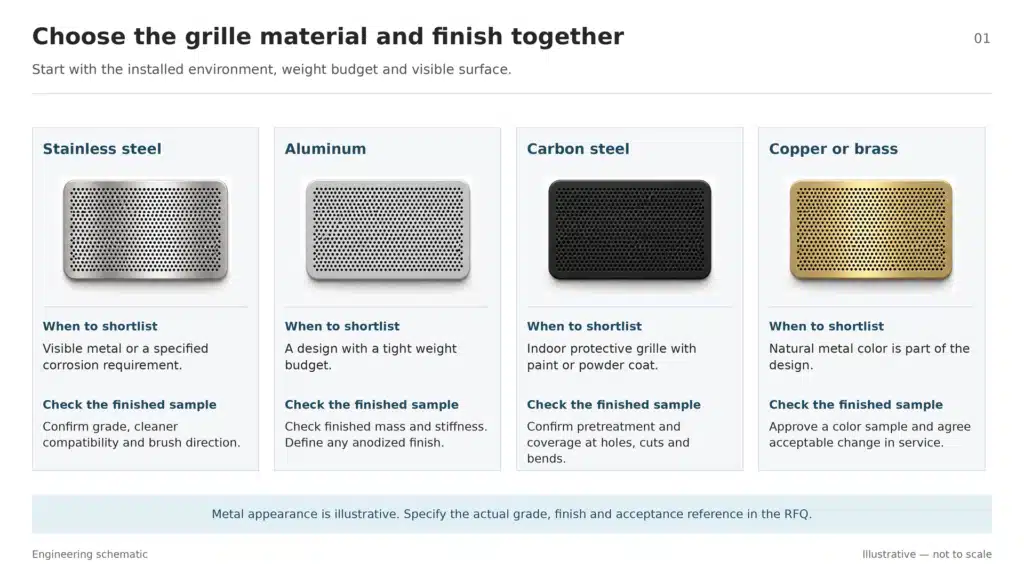
Start with the installed environment and the visible face. Shortlist a speaker grille material and finish as a pair, then check the finished part for weight, fit and appearance.
| Material | When to shortlist it | Finish and sample checks |
|---|---|---|
| Stainless steel | Exposed metal is part of the design, or the project specifies corrosion resistance. | Match the grade to the exposure. Check cleaner compatibility, brush direction and the approved appearance sample. |
| Aluminum | A portable product, vehicle interior or other assembly has a tight weight budget. | For an anodized finish, specify alloy, temper, pretreatment and target appearance. Check mass and stiffness on the finished part. |
| Cold-rolled carbon steel | An indoor protective grille can use a painted or powder-coated finish. | Specify the substrate, pretreatment and coating separately. Check coating coverage at edges, including cut edges, hole walls and bends. |
| Copper or brass | The natural metal color is part of the product design. | Approve a color sample and agree how much change is acceptable in service. Consider a clear protective finish if preserving the initial color matters. |
Use the installation location to narrow the list:
- Dry indoor equipment: Start with the visible finish and how often it will be cleaned. Check a finished sample against the appearance reference and verify compatibility with the planned cleaner.
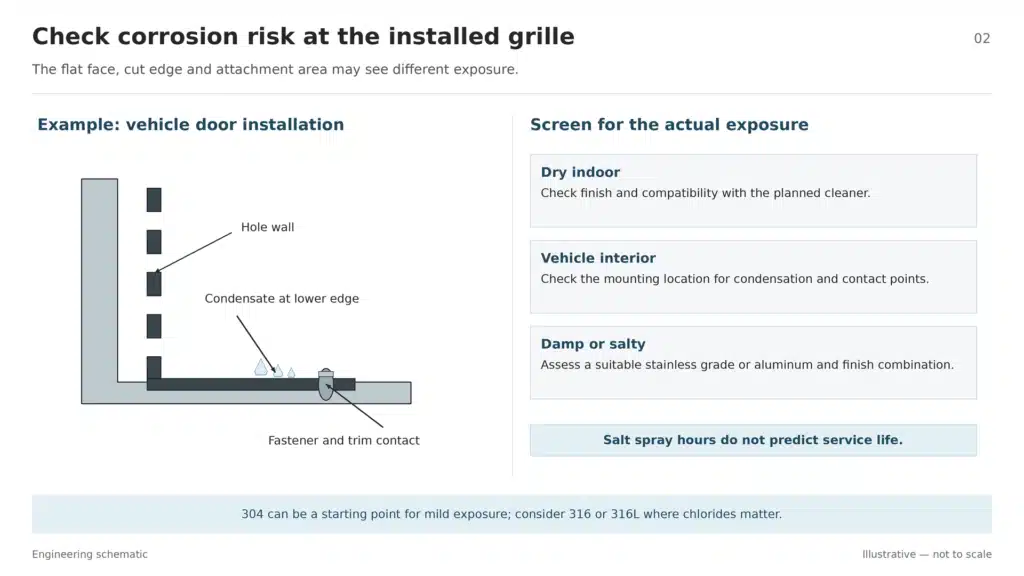
- Vehicle interiors: Distinguish a sheltered dashboard grille from a door installation where the project expects condensation. Review the exposure at the actual mounting position and check the assembled sample around fasteners and trim contacts.
- Damp or salty locations: Identify where water can collect and what salts or cleaners can reach the grille. Check the finished sample around holes, bends and attachment points, where the condition may differ from the flat face.
Which Speaker Grille Material Resists Corrosion?
Coated carbon steel can be a candidate indoors in dry conditions. Where moisture, salt or frequent cleaning is expected, assess a stainless grade or an aluminum-and-finish combination against that exposure. Type 304 is a starting point in mild conditions. Consider 316 or 316L when chlorides are relevant: the molybdenum in the 316 family improves resistance to chloride pitting compared with 304. Confirm the grade against the actual exposure.
If the project requires ASTM B117 testing, specify the finished specimen condition, exposure time and rejection criteria. The method provides a controlled test environment. Salt spray hours alone cannot predict service life.
Are Stainless Steel Speaker Grilles Durable?
Yes, when the grade suits the environment and the installed grille can carry the expected loads. Stainless steel grade selection addresses the corrosion side of that decision. For mechanical durability, review four features: sheet thickness, the width of metal between holes, unsupported span and the way the grille is fixed.
If the product has a push or impact requirement, check the assembled sample against it. Look for permanent deformation and confirm the clearance to the driver. A material certificate and an assembly test answer different questions.
Are Aluminum Mesh Speaker Grilles Lightweight?
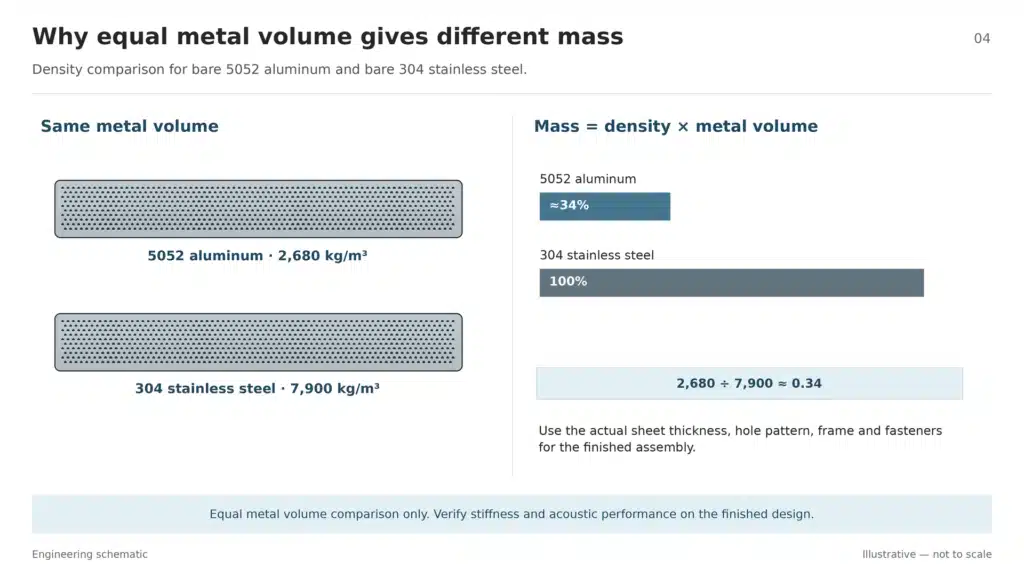
Yes. Bare 5052 aluminum has a typical density of 2,680 kg/m³, versus 7,900 kg/m³ for bare 304 stainless steel. At equal metal volume, the aluminum would have about 34% of the stainless steel’s mass. Compare actual thickness, openings, frame and fasteners before using that ratio to estimate assembly weight. Check stiffness on the finished design.
Keep acoustic approval separate from the weight calculation. Grille thickness and hole geometry can affect tweeter frequency response. If acoustic performance is an acceptance item, evaluate the installed grille and see how speaker grilles affect sound for design context.
Speaker Grille Metal Mesh Sheet vs. Finished Grille
A metal mesh sheet is stock sold by material, opening pattern and sheet or roll size. A cut insert adds a specified perimeter so the mesh fits a frame or recess. A finished grille adds whatever the installation requires, such as bends, mounting features and the final finish. Define the delivery state before asking suppliers to price the work.
Perforated Sheet and Woven Wire Mesh
| Mesh structure | What to specify | What to check |
|---|---|---|
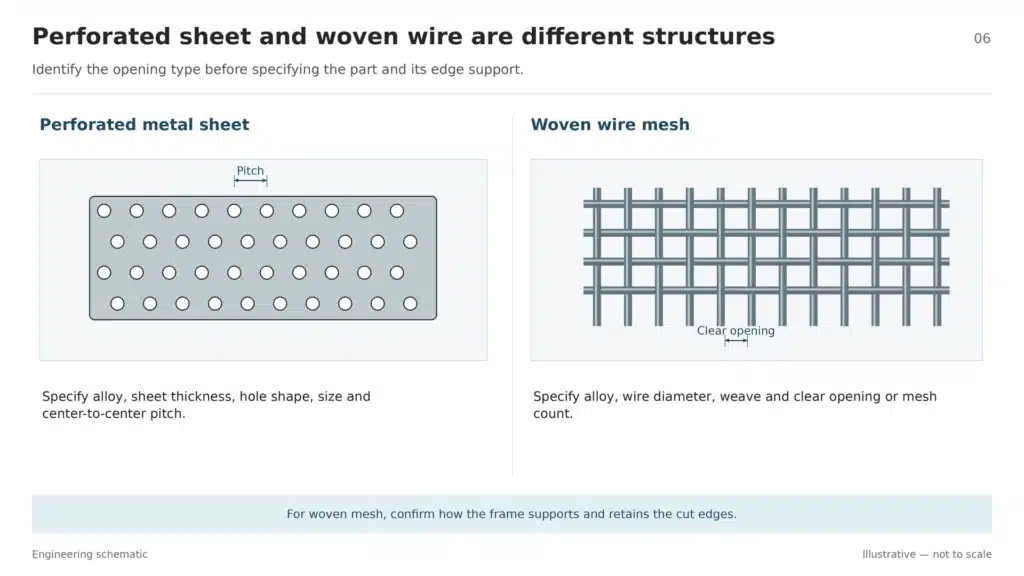
| Perforated sheet uses openings in continuous sheet metal. | Alloy, sheet thickness, hole shape and size, and pitch, the center-to-center spacing between holes | Whether a stock pattern fits or the openings must be made to drawing |
| Woven wire mesh uses interlaced metal wires. | Alloy, wire diameter, weave and opening size or mesh count | How the frame will support the mesh and retain the cut edges |
When to Specify a Finished Metal Speaker Grille
If stock woven mesh fits a separate frame, agree who cuts the insert, treats the edges and secures it in the frame. If the hole pattern must align with mounting features or a visible border, request a finished grille from a drawing that shows those relationships. Use the speaker grille design guide to settle hole size, pitch, open area and mounting dimensions before issuing the quote package.
How to Make Metal Speaker Grilles
Use the same drawing revision, sample quantity and expected production volumes when comparing routes. Ask each supplier to state whether its quote covers the finished grille or only the perforated blank.
| Manufacturing route | When to evaluate it first | What to confirm |
|---|---|---|
| Photochemical etching | Thin sheet with dense or irregular openings, or artwork still being revised | Alloy, thickness, smallest opening, narrowest metal between holes and finished edges |
| Mechanical punching or stamping | A repeating pattern fits available tooling, or the part also needs press forming | Who handles punching, forming, deburring and finishing |
| Laser cutting | The main prototype features are the perimeter or mounting slots | Stock thickness, cut edges and whether the quote includes the complete hole pattern |
| Cut and assemble stock mesh | A commercial pattern already meets the opening requirements | Stock availability, edge retention, assembly fit and finish |
What machines are used to make speaker grilles? Punching uses a press with a punch and die; laser cutting uses sheet-metal laser equipment; photochemical etching uses a phototool, photoresist processing and chemical etching equipment.
If two routes are feasible, compare photo etching and mechanical punching on the same drawing. For very small openings, check how micro-hole speaker grilles are made and measured.
TMNetch Case: Define the Edge Condition Before Approving the Part
In a documented TMNetch etching order, a customer questioned small connection points around the parts. They were intentional retaining tabs. TMNetch explained that the connections could be reduced where the design and process allowed. The customer accepted them as long as they did not affect the functional area.
Apply that acceptance logic to a grille drawing. Mark the visible and mating edges, show where a separation mark may remain, and agree on the acceptable finished contour. The order illustrates a general etching issue. Actual grille examples are available separately in TMNetch’s etched parts sample gallery.
What to Check Before You Request a Quote
- Deliverable: Stock mesh, cut insert or finished grille.
- Material: Alloy, sheet thickness or wire diameter, and expected exposure.
- Opening pattern: Shape, size, pitch or weave.
- Assembly: Drawing revision, outline, mounting features and fit.
- Finish: Visible face, treatment, appearance reference and edge requirements.
- Quantities and acceptance: Sample and production quantities, plus critical fit, finish or acoustic checks.
If etching fits your shortlist, send the drawing, candidate material, finish and quantities to request a quote for custom metal speaker grilles. Ask for a feasibility review of the opening pattern, the narrowest webs and the finished edge before approving the sample.