
Metalworkers and machinists face inappropriate speaker fit, too-thick mesh, and weak materials. These challenges often arise when sourcing custom speaker grills, especially when material thickness, open area, hole pattern, and mounting dimensions are not defined early.
If a grill does not fit correctly, it can block sound. Furthermore, using too thick a mesh in the grill speaker reduces sound clarity.
Sometimes, engineers use weak materials that can fail to protect the speaker. These problems can damage the speaker’s performance. That’s why it’s important to have proper knowledge to avoid these issues. Read this guide to explore the types of custom speaker grills and the right guidance to make them. So, keep reading!
Why Do Well-Designed Custom Speaker Grills Matter?
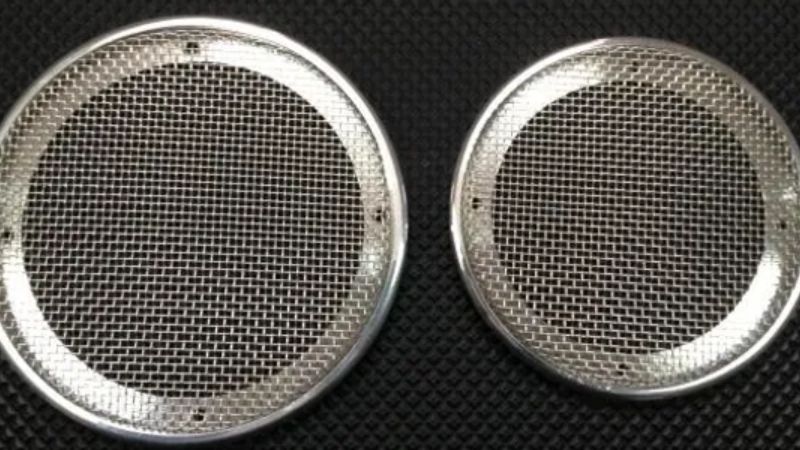
Speaker grills sit in front of the speaker driver. Their main job is to protect the speaker while allowing sound to pass through. If the design is not balanced, the grille may reduce sound clarity, create vibration, or affect the final product appearance. Read more about how speaker grills affect sound quality.
A well-designed speaker grill should meet four key goals: sound transmission, protection, appearance, and fit.
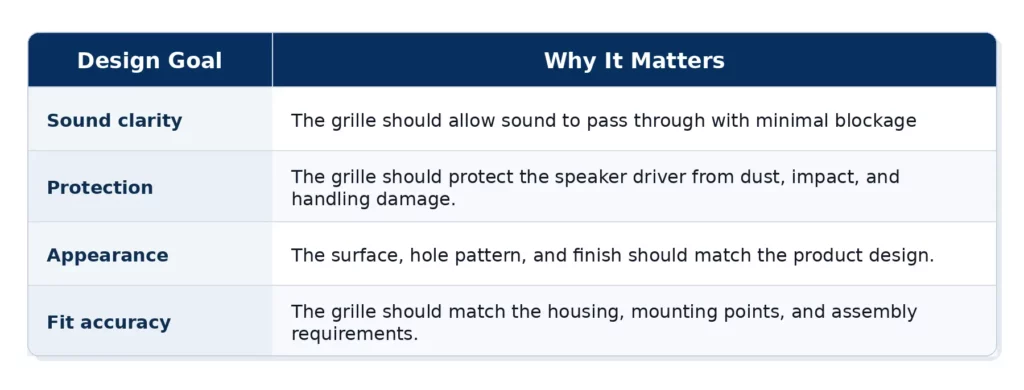
For consumer electronics, automotive interiors, home audio systems, and smart speakers, the speaker grill is often part of the visible product surface. This means it must perform well and look good at the same time.
Small details can make a big difference. Hole size, pitch, open area, edge quality, and surface finish can all affect how the final grille performs.
Types of Custom Speaker Grills Explained
Photo-Etched Metal Speaker Grills
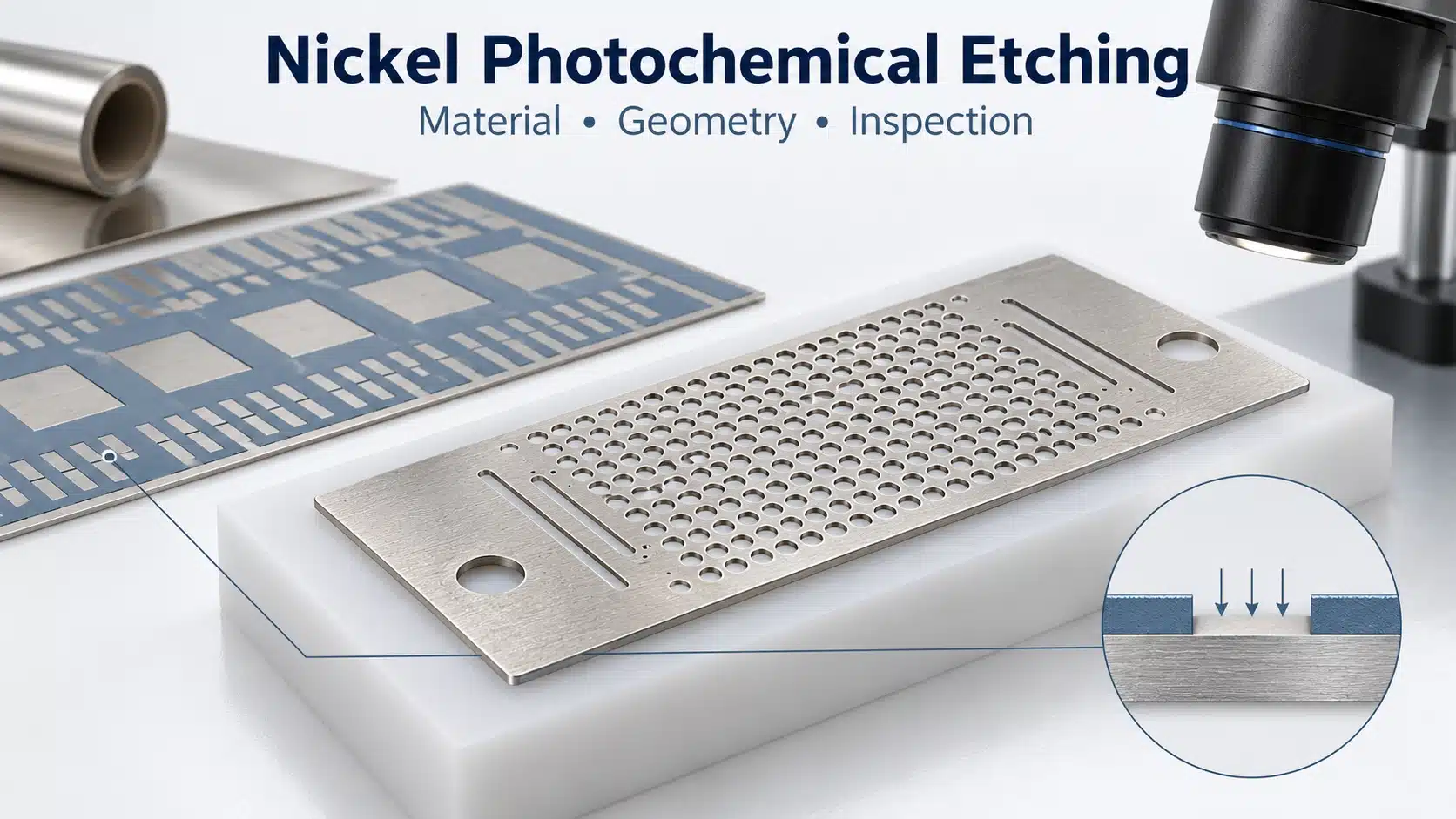
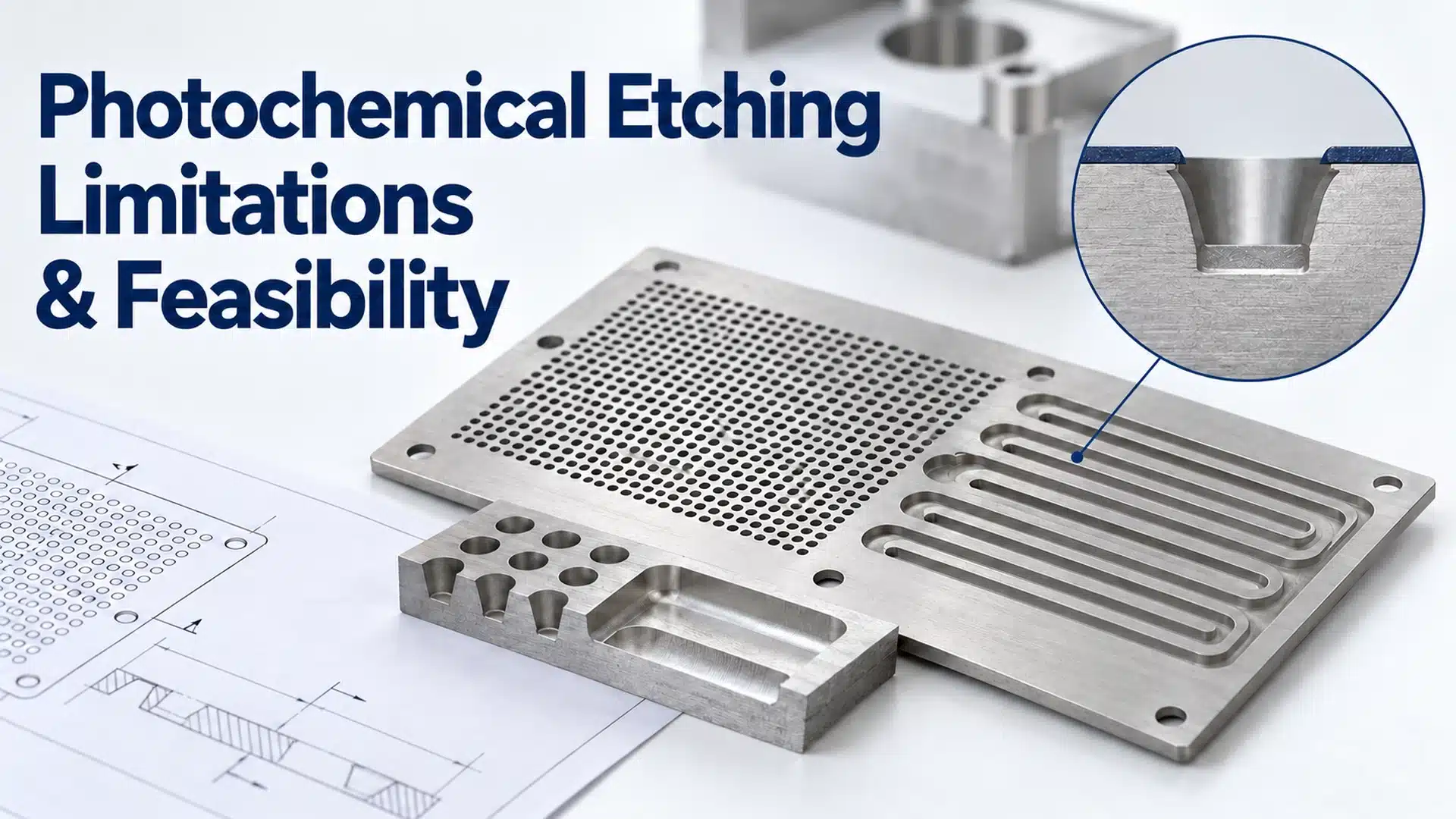
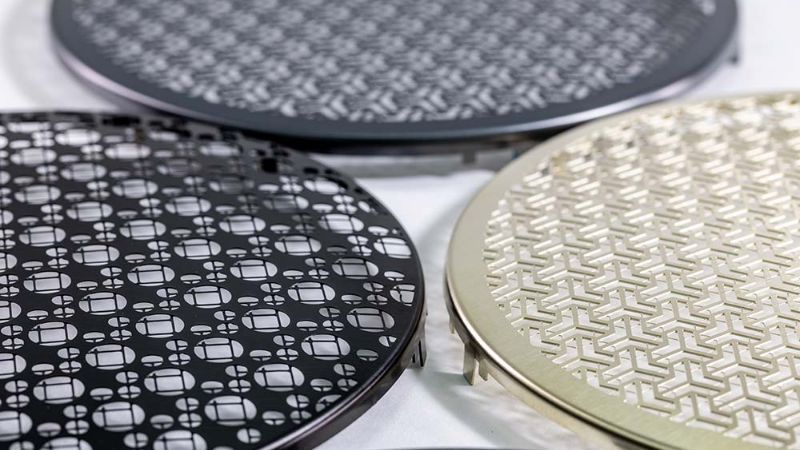
Photo-etched metal speaker grilles are made by applying a patterned resist to thin metal sheet and removing the exposed areas through photochemical etching. The required pattern is transferred to the metal surface, and the exposed areas are etched away to form holes, slots, logos, or decorative designs.
This method is suitable for custom speaker grills with fine details. It can create dense hole patterns, complex mesh layouts, logo patterns, and decorative openings without hard tooling.
Photo etching is often used when a speaker grill needs:
- Fine holes or narrow slots
- Complex custom patterns
- Thin metal material
- Clean and burr-free edges
- Flat parts with low mechanical stress
- Decorative or logo-integrated designs
- Prototype and small-batch flexibility
Compared with stamping or punching, photo etching does not apply strong mechanical force to the sheet. This helps reduce burrs, deformation, and tool marks on thin metal parts.
For speaker grills that need both acoustic function and premium appearance, photo etching is often a strong manufacturing option.
Perforated Metal Mesh Grilles
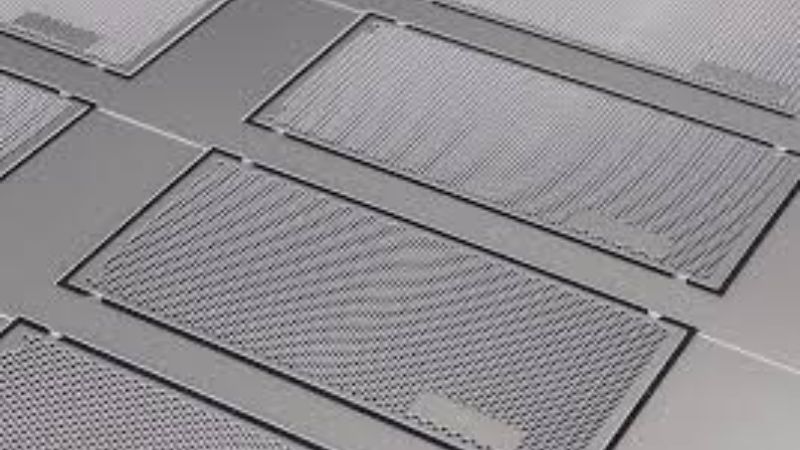
Perforated metal speaker grills are made by punching regular holes into metal sheet. They are often used for standard round-hole designs and larger protective panels.
This type of grille is strong and practical. It works well when the hole pattern is simple and the required detail is not very fine.
However, perforated metal may have limitations when the design requires very small holes, dense spacing, complex logos, or decorative patterns. Tooling cost and minimum hole size can also affect design flexibility.
If you are comparing these two methods, you can read our guide on photo etched vs perforated metal speaker grilles.
Wooden Speaker Grills
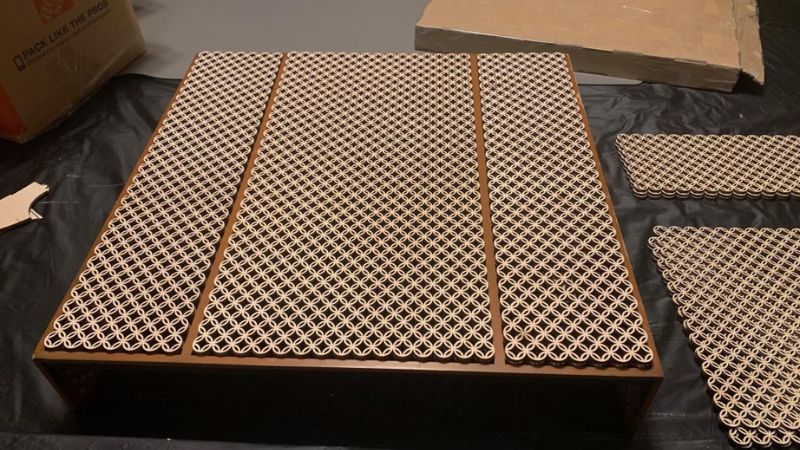
Wooden speaker grills are often used in retro audio products, furniture-style speakers, or decorative home audio systems. They can create a warm and natural look.
However, wood is not the best choice for every speaker project. It can be thicker than metal, harder to make into very fine patterns, and less suitable for compact electronic products.
For precision OEM speaker covers, metal is often easier to control in thickness, pattern accuracy, and surface finish.
Fabric Speaker Grills
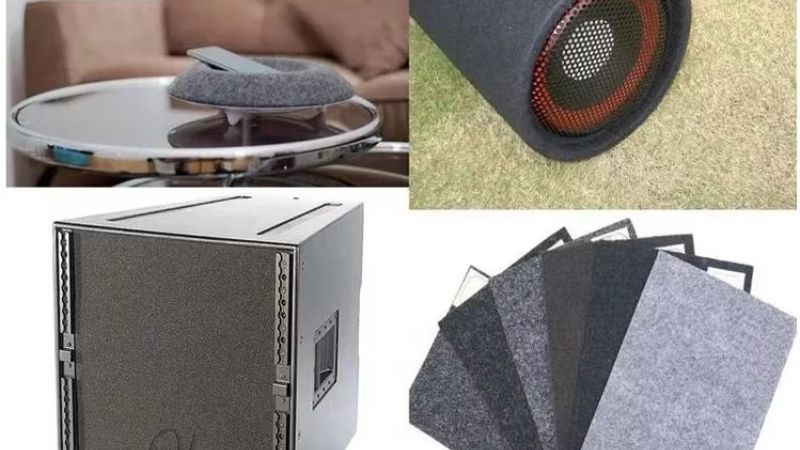
Fabric speaker grills are common in home audio systems, portable speakers, and decorative speaker products. They are lightweight and can give a softer visual appearance.
Fabric can help hide the speaker driver and match a product’s style. However, it offers less mechanical protection than metal. It may also collect dust, absorb moisture, or wear over time.
Fabric grills are usually better for indoor products where impact resistance is not the main concern.
Waffle-Pattern Speaker Grills
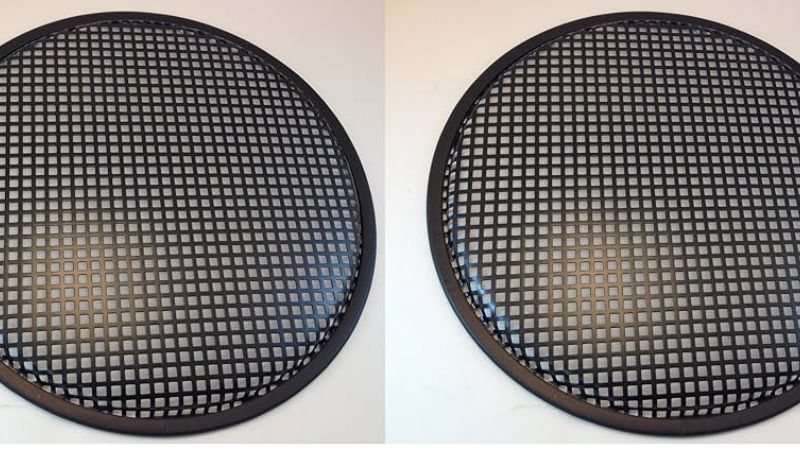
Waffle-pattern grills feature a grid honeycomb design. They balance protection and airflow to optimize sound. This design reduces vibrations and improves bass response. These grills are used in custom DIY builds.
Unique Benefits of Custom Speaker Grills
The custom speaker grills are not mainly designed to work as a protection cover. They improve sound quality and enhance visual design. A well-designed speaker grill lasts longer. Here are a few advanced benefits of using custom speaker grill metal.
Improve Sound Quality
A speaker grill should protect the speaker without blocking too much sound. To achieve this, engineers need to consider open area, hole size, hole pitch, and material thickness.
If the open area is too low, the grille may restrict sound transmission. If the sheet is too thick, it may affect acoustic transparency. If the holes are not arranged well, the grille may create unwanted sound reflection or blockage.
A custom design allows the hole pattern to be adjusted for both protection and sound clarity.
Support Product Appearance and Brand Identity
A speaker grill is often one of the most visible parts of an audio product. It can make the product look simple, premium, rugged, modern, or decorative.
Custom metal speaker grills can support:
- Decorative hole patterns
- Logo designs
- Brushed surface finish
- Polished surface finish
- Black coating
- Custom color finishing
- Premium front panel appearance
For branded products, the grille can become part of the visual identity. A custom pattern can help the product stand out while still meeting functional needs.
Perfect Fit for Product Assembly
Standard speaker grills may not match the exact housing, mounting method, or size requirement of a product. This can create problems during assembly.
A custom speaker grille can be designed according to the product drawing. Engineers can define the shape, hole pattern, mounting holes, edge profile, and tolerance requirements.
This is important for products with:
- Curved or irregular housings
- Limited assembly space
- Special mounting points
- Thin front panels
- Decorative visible surfaces
- High consistency requirements
A better fit can also reduce vibration, looseness, and assembly defects.
Long-Term Protection for Your Speaker
The speaker driver is a sensitive part. A good grill helps protect it from dust, touch, impact, and external damage.
Material selection is important here. Stainless steel offers strong durability and a premium appearance. Aluminum is useful when the product needs a lightweight front cover. Brass and copper alloys may be selected for decorative or special functional requirements.
Surface finishing can also improve corrosion resistance, scratch resistance, and visual quality. For export projects, proper packaging helps prevent surface damage during shipment.
How to Design and Manufacture Custom Speaker Grills?
Custom speaker grill manufacturing should start with the application, not only the appearance. The best design depends on where the grille will be used, how it will be assembled, and what performance it must support.
Below is a practical design and manufacturing process for OEM projects.
Step 1: Define the Application
The first step is to confirm where the speaker grill will be used. Different applications have different requirements.
Common applications include:
- Automotive speaker covers
- Smart speaker grilles
- Home audio speaker panels
- Portable speaker grilles
- Headphone and earphone components
- Professional audio equipment
- Consumer electronics front panels
For example, an automotive speaker grille may need higher strength and better surface durability. A smart speaker grille may need a decorative hole pattern and a clean visual finish. A portable device may need a lightweight material and compact design.
Step 2: Choose the Right Material
Material affects strength, weight, appearance, corrosion resistance, and cost. It also affects how the grille can be manufactured.
Common metal options include:
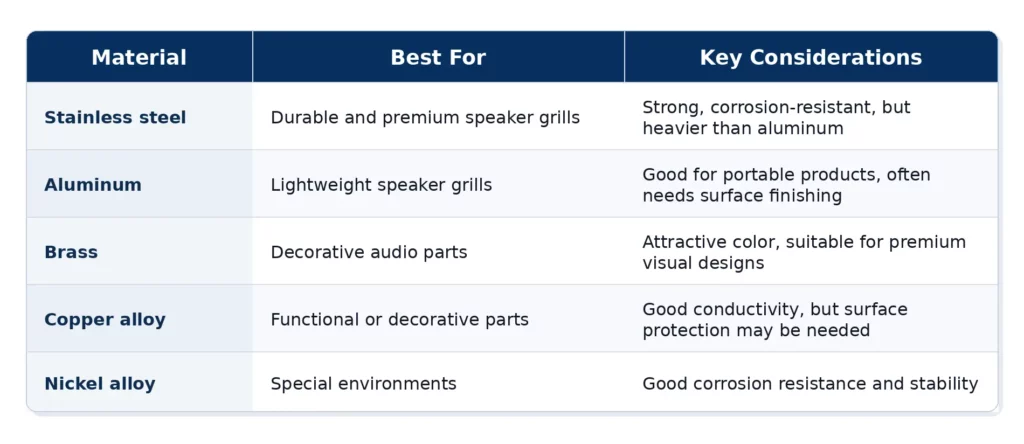
For projects that require strength, corrosion resistance, and a clean visible surface, stainless steel etching may be suitable.
Step 3: Confirm Thickness, Hole Size and Open Area
The grille design should balance sound transmission and protection. This means the hole pattern cannot be selected only for appearance.
Engineers should define:
- Material thickness
- Hole diameter or slot width
- Hole pitch
- Open area
- Edge distance
- Mounting hole position
- Frame strength
- Surface finish requirement
A higher open area usually helps sound pass through more easily. However, too much open area may reduce strength. Smaller holes may look cleaner, but they may increase manufacturing difficulty or reduce acoustic transparency if the pattern is too dense.
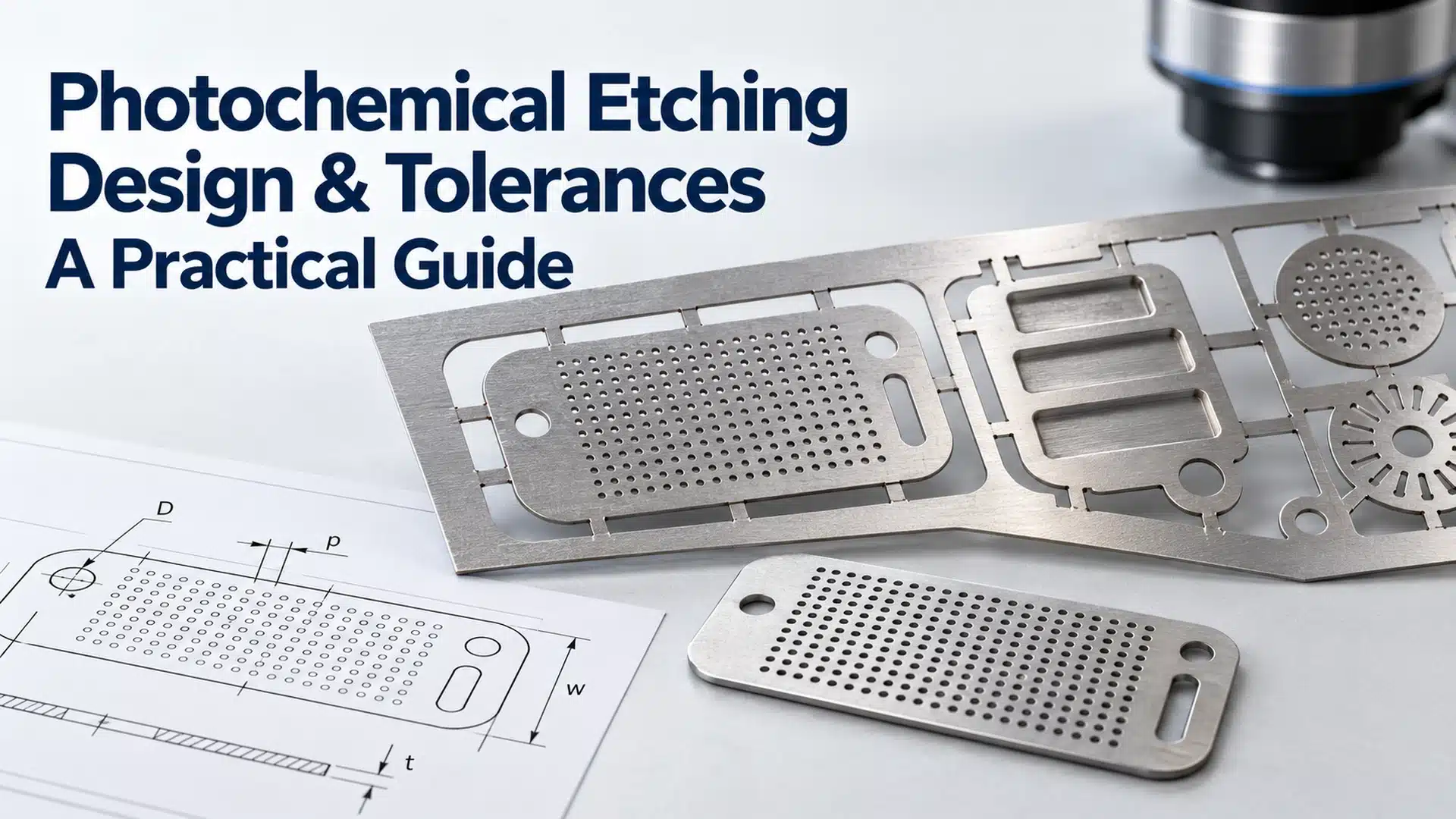
This is why speaker grille design should be reviewed together with the production method. For fine holes, complex patterns, and burr-free edges, photo etching can be a practical choice.
Step 4: Prepare CAD Drawing or Sample
A clear drawing helps reduce misunderstanding and speed up quotation. For custom speaker grill manufacturing, customers can provide a CAD file or physical sample.
Useful files and information include:
- DXF file
- DWG file
- STEP file
- PDF drawing
- Physical sample
- Material grade
- Sheet thickness
- Hole size and hole pattern
- Required tolerance
- Surface finish
- Quantity
- Application environment
If the design is still in development, request a speaker grille design review and provide the drawing, material, thickness, hole pattern, surface finish, quantity, and application requirements.
Step 5: Prototype and Test Fit
Before mass production, a prototype can help check whether the speaker grill works in the real product.
The sample stage can verify:
- Sound clarity
- Visual appearance
- Assembly fit
- Hole pattern quality
- Surface finish
- Mounting stability
- Vibration risk
- Packaging method
Prototype testing is especially useful for new products, decorative designs, and parts with fine holes or strict visual requirements.
If the first sample needs adjustment, the drawing can be revised before batch production. This helps reduce production risk.
Step 6: Finishing, Inspection and Packaging
After etching, some speaker grilles require secondary finishing processes such as polishing, painting, plating, forming, cleaning, or protective finishing to meet appearance, corrosion-resistance, assembly, and handling requirements.
Common options include:
- Polishing
- Painting
- Plating
- Black coating
- Brushing
- Deburring if needed
- Cleaning
- Custom packaging
Inspection is also important. For visible parts, surface quality matters as much as dimensions. Scratches, stains, deformation, or uneven finish can affect the final product appearance.
For export projects, protective packaging can help reduce handling damage during shipping.
How to Choose a Custom Speaker Grill Manufacturer
Choosing the right custom speaker grill manufacturer can reduce design risk, sample delays, and quality problems. A good supplier should understand both the product function and the manufacturing process.
Instead of only comparing price, buyers should check whether the supplier can support design review, material selection, prototyping, inspection, and stable production.
Technical Design Review
A strong supplier should be able to review the design before production. This includes checking whether the material, thickness, hole size, hole pitch, and edge distance are suitable.
For speaker grills, the supplier should also understand open area, acoustic transparency, surface quality, and assembly fit.
This early review can help avoid common problems such as weak edges, poor sound transmission, deformation, or difficult production.
Suitable Manufacturing Method
Different manufacturing methods suit different speaker grille designs. Compare the main custom speaker grille manufacturing methods before selecting photo etching, perforation, stamping, or laser cutting.
Photo etching is suitable for thin metal speaker grills with fine details, complex patterns, logos, and clean edges. Stamping or perforation may be better for high-volume standard hole patterns. Laser cutting may be useful for larger openings or thicker parts, but it may not be the best choice for dense micro-hole patterns.
The supplier should help you choose the method based on design, material, thickness, tolerance, appearance, and volume.
Material and Finish Options
A custom speaker grill supplier should support the materials and finishes needed for your product.
Important questions include:
- Can the supplier process stainless steel, aluminum, brass, or copper alloy?
- Can the supplier support the required thickness?
- Can the surface finish match the product appearance?
- Can the supplier control scratches and stains?
- Can the packaging protect visible surfaces?
For speaker grills used on visible product surfaces, finishing and handling are critical.
Prototyping and Batch Production
Prototype support is important for custom designs. It allows engineers to test fit, sound performance, and visual quality before ordering larger quantities.
A reliable supplier should also support stable batch production after sample approval. This means the parts should remain consistent from batch to batch in size, pattern, surface quality, and packaging.
Export and Documentation Support
For overseas OEM buyers, export support also matters. A supplier should understand packaging, delivery, communication, and documentation requirements.
Depending on the project, buyers may request:
- Inspection report
- Material certificate
- Drawing confirmation
- Sample approval record
- Packaging requirement
- Certificate of conformity if needed
These details help reduce communication risk during production and shipment.
TMNetch
TMNetch manufactures custom photo-etched speaker grilles for OEM projects based on customer drawings and application requirements. They are famous for combining durability, precision, and sound performance. The company works with home audio enthusiasts, boutique audio brands, and professional studios.
The brand focuses on creating grills that protect speakers and deliver great sound quality. They pay attention to every detail, from material selection to final finishing. Their grills are made to last and designed to enhance the speaker’s appearance.
TMNetch supports design review, material selection, prototyping, photochemical etching, finishing, inspection, and packaging for custom speaker grille projects. Engineers can submit a speaker grille drawing for manufacturability review with the material, thickness, aperture pattern, open-area requirement, finish, critical dimensions, and production quantity.
SoundShield
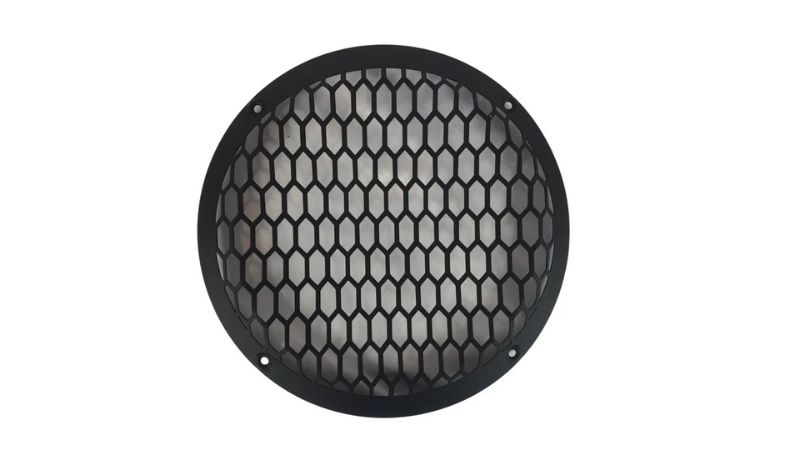
SoundShield is a reputable brand that makes custom grills for home and audio systems. They are known for durability, stylish designs, and precise engineering. SoundShield mainly focuses on strong protection, reliable sound, and aesthetic appeal. They cover DIY enthusiasts, boutique audio brands, and audio professionals.
Their services include material selection, design consultation, and prototype testing. They provide precise patterns and templates for custom grill shapes. The brand also guides customers to install the grill and optimize the sound.
Their support ensures that every grill fits perfectly. However, they have limitations in designing the custom speaker grill metal.
GrillWorks
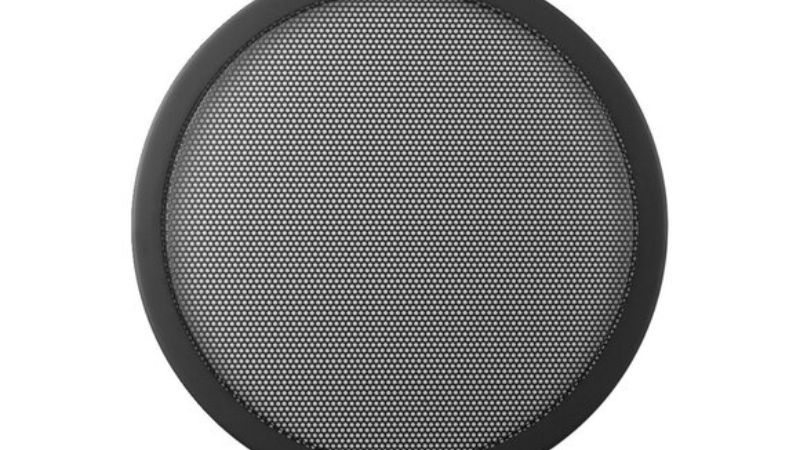
GrillWorks focuses on functional and stylish speaker grills. They provide metal, wood, fabric, and hybrid options. The brand’s main objective is to ensure quality and long-term reliability. GrillWorks serves both small boutique brands and larger audio businesses.
They provide consultation for material and mesh selection. Their team helps with design, cutting patterns, and installation techniques. They also provide protective coatings, finishing services, and advice for cleaning.
GrillWorks ensures that grills are visually appealing. However, their speaker grill customization is too expensive compared to other brands.
AudioCraft
AudioCraft is a leader in providing customizable speaker grills. The brand mainly focuses on boutique audio systems, home setups, and studio equipment. The brand stands for precision, innovation, and customer-focused support. Their grills combine protection, style, and sound quality.
They provide services like design consultation, material selection, and prototype testing. Customers get help choosing mesh types and grill design. AudioCraft also provides installation guidance and maintenance support.
The brand approach ensures that grills fit perfectly and look professional. Yet, they have some limitations in material. They don’t offer customers the option to select advanced material.

FAQs
Are speaker grills important?
Yes, speaker grills are important. They keep the speakers safe. A grill covers the soft parts of a speaker so they do not fill with dust. Grills also stop children or pets from touching the inside parts. Some grills are made of metal or cloth, and they can look nice too. They give protection and style at the same time.
What is the point of speaker grills?
Speaker grills protect the speaker driver from dust, impact, and accidental touch while allowing sound to pass through. They also improve the product’s appearance and help the speaker fit better into the final design.
Does painting a speaker grill affect sound?
Yes, painting a speaker grill can affect sound. It’s only if the paint layer is too thick. When paint covers the small holes, it blocks air and sound from moving. This can make music sound less clear. If the paint is thin and even, the change is very small.
Do grills affect your speech?
Yes, grills can affect speech a little. A grill in front of a speaker may block some sound waves. It can make the voice less clear. Most speaker grills are designed to let sound pass easily, so people can still hear words clearly.
Final Thoughts
A successful custom speaker grille balances acoustic transparency, protection, appearance, fit, and manufacturability. Material, thickness, aperture size, open area, mounting geometry, manufacturing process, and surface finish should therefore be defined as one system rather than as separate decisions. For OEM projects, completing a manufacturability review before prototyping can reduce redesign, assembly problems, and production risk.