
Titanium etching has remained one of the most trustworthy processes in helping with precision results for a wide range of industries from medical to aerospace to electronics. With the titanium etching process, manufacturers can obtain highly defined patterns with great precision and by using the titanium etching machine, the production is standardized.
If you’ve been wondering how to etch titanium? Then look no further! TMNetch provides titanium etching services for thin, flat, and complex titanium components. The service can support drawing review, process planning, prototyping, production, cleaning, and inspection based on the project requirements.
What is Titanium Etching?
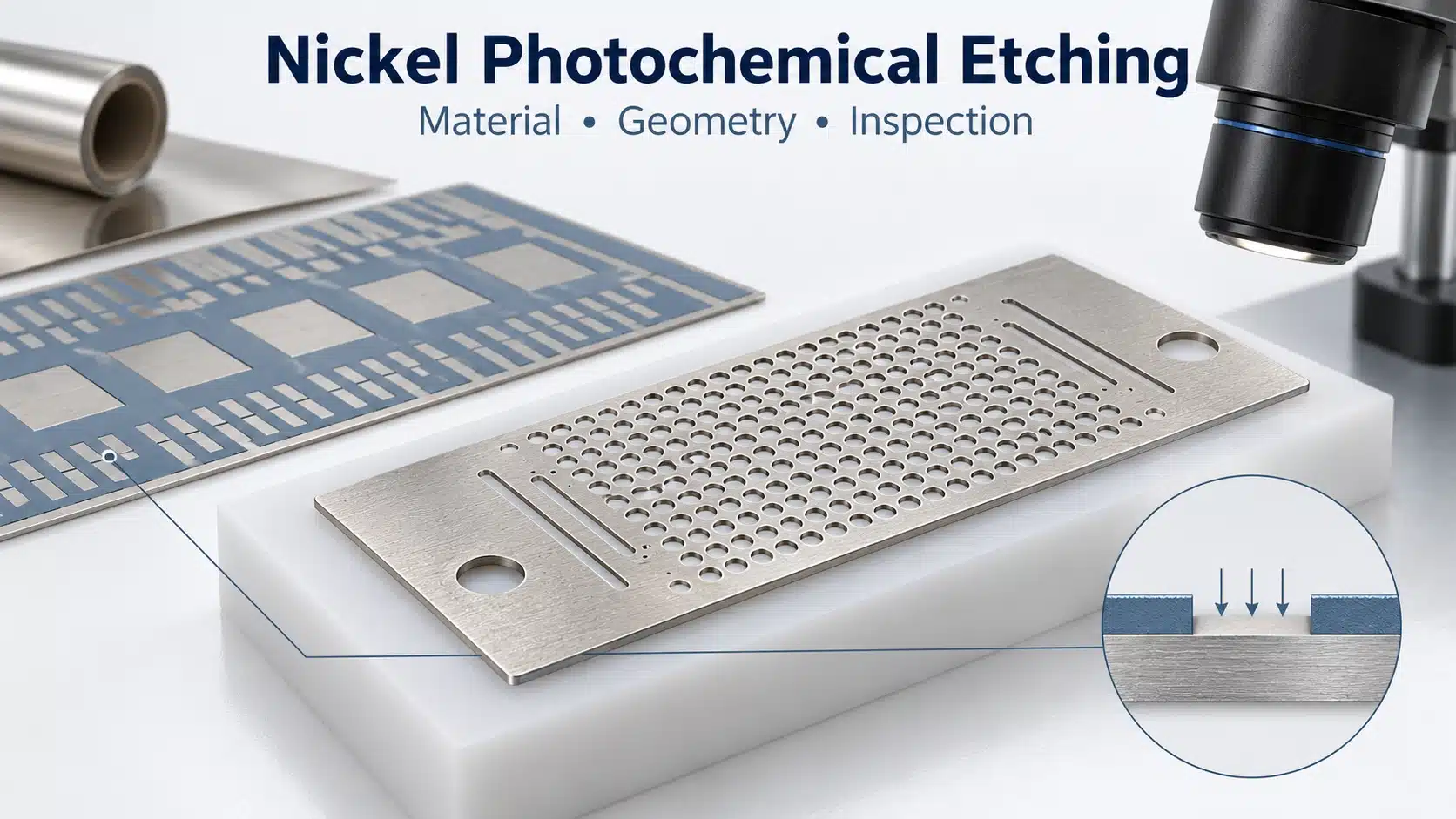
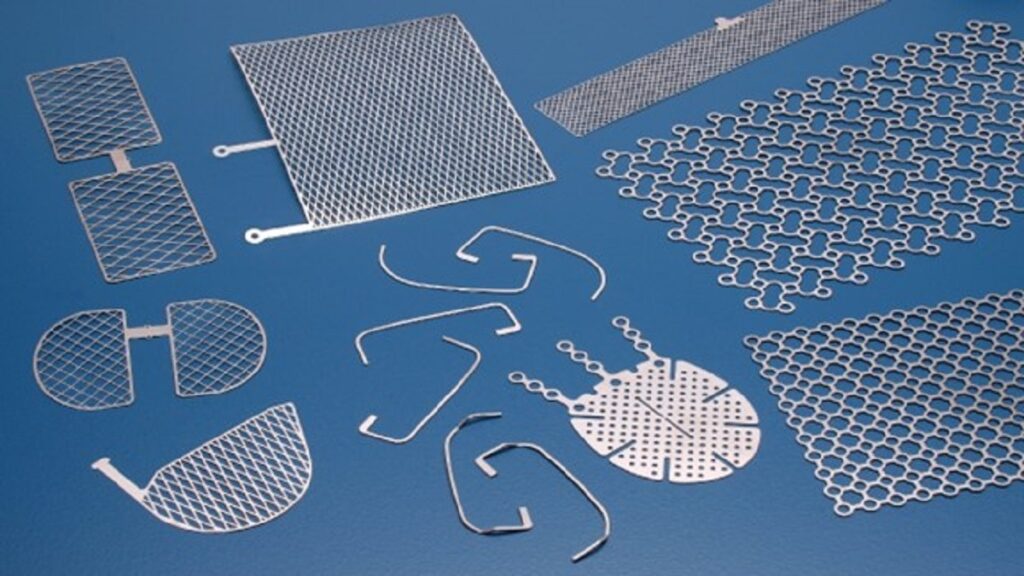
Titanium etching is a controlled metal removal process used to create precise patterns, holes, slots and profiles in titanium sheets or foils. In industrial production, titanium parts may be manufactured through photochemical etching, also called photo etching or chemical etching. The process uses a patterned resist to protect selected areas while controlled chemistry removes the exposed metal.
The process uses a photoresist mask to protect selected areas of the titanium surface. The exposed metal is then removed by controlled chemical etching. After etching, the resist is stripped, and the part is cleaned and inspected.
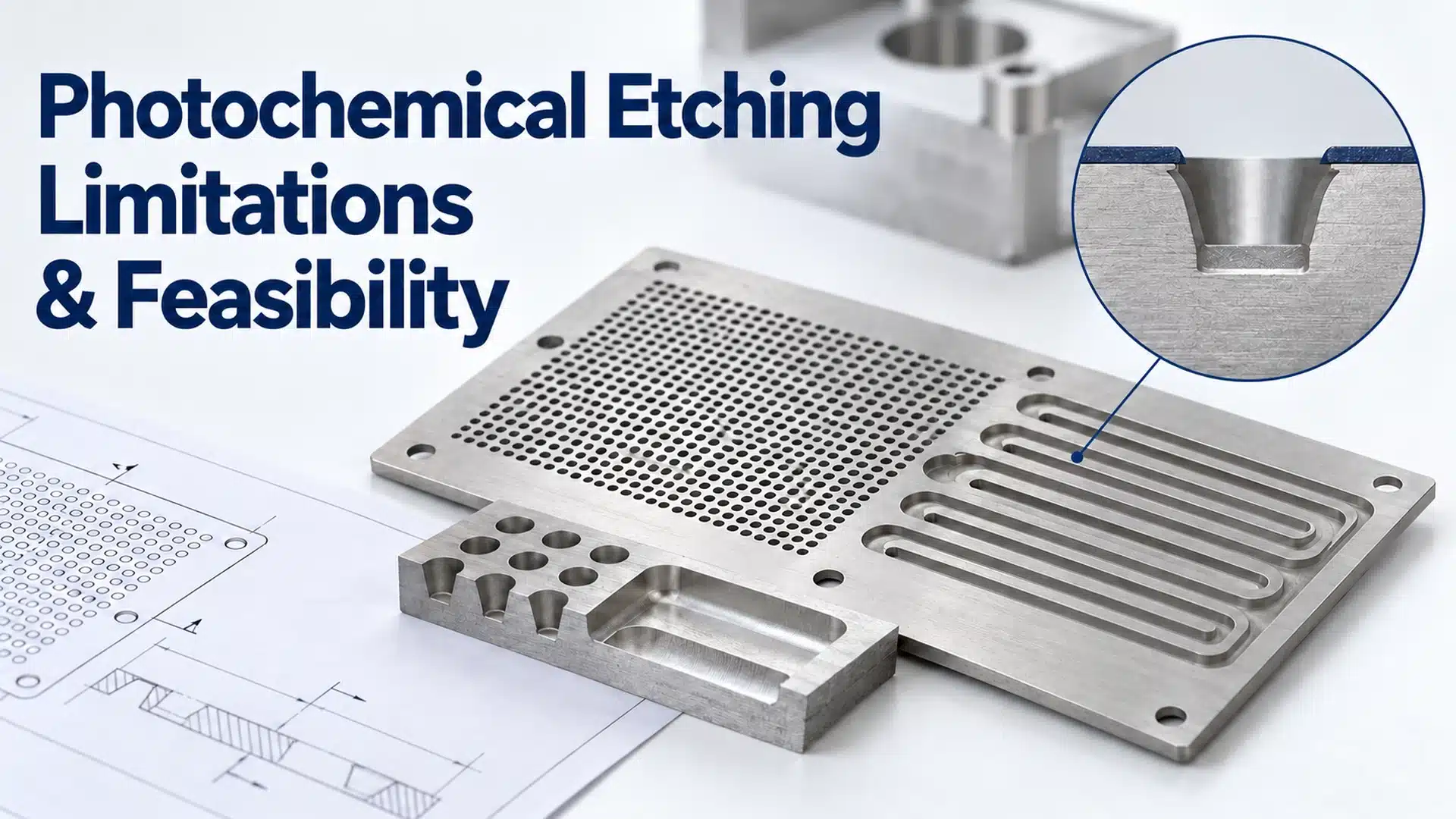
For thin and complex titanium parts, chemical etching offers clear advantages. It is a non-contact process, so it does not create mechanical stress in the material. Chemical etching does not use a focused heat source, so it avoids the heat-affected zone associated with thermal cutting. However, it can produce side etching, and achievable features depend on the material, thickness, pattern, and tolerance. Review the tolerances and limits of photochemical etching before finalizing the drawing.
This makes titanium etching suitable for aerospace, medical, electronics, fuel cell and precision industrial applications. It is especially useful when buyers need thin titanium parts with fine openings, complex geometries or burr-free edges.
Why Is Titanium Difficult to Etch?
Titanium is difficult to etch because it naturally forms a stable oxide layer on its surface. This oxide layer gives titanium excellent corrosion resistance. It is one reason titanium is widely used in medical, aerospace, marine and chemical environments.
However, the same protective surface also makes titanium harder to process with standard chemical systems. Compared with copper, brass or stainless steel, titanium needs more careful control of surface preparation, masking, etching chemistry and process timing.
This does not mean titanium cannot be etched. It means the process must be managed by an experienced facility. The etching line must control cleaning, photoresist adhesion, exposure, development, etching rate, rinsing and final inspection.
If the surface is not prepared well, the photoresist may not bond evenly. If the etching process is not controlled well, the part may show uneven edges, poor dimensional accuracy or surface residue. For precision titanium components, these defects can affect assembly, coating, electrical contact or long-term performance.
Titanium’s oxide layer is also why many buyers choose suppliers with specific titanium etching experience instead of general metal etching experience. A process that works well for stainless steel or copper may not automatically work well for titanium.
Titanium Etching Process Explained
Understanding all chemical etching titanium is a necessity in the heart of precision titanium fabrication. It’s not just a chemical reaction, it’s a complex procedure that involves material science, safety measures and extremely high-tech equipment. Here is a full explanation of how it works, and why it is better than other methods.
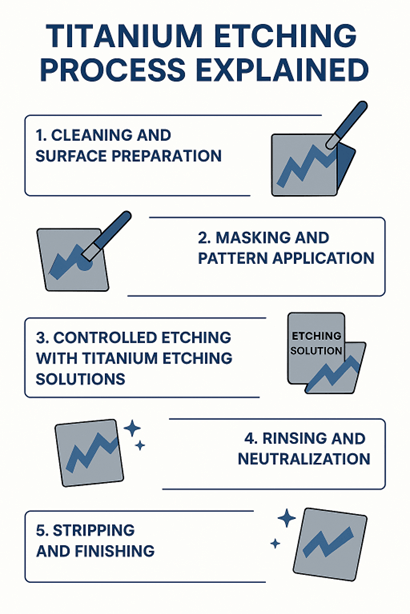
Step 1: Cleaning and Surface Preparation
Prior to chemical etching of titanium, the titanium gradient has to be free of any contaminations e.g., oils or oxides or particles. The surface is typically pretreated with ultrasonic cleaning, alkaline baths or plasma treatment. Proper cleaning of the titanium etching solution ensures it reacts uniformly with the exposed titanium, avoiding patchlike reactions and resulting poor adhesion.
Step 2: Masking and Pattern Application
A masking can be included which draws the protective layer over areas that are to be etched in the titanium sheet. This is generally done by using photoresist coatings, dry film resists, or stencils. Photolithography is widely utilized in fields requiring microscale detail. The accuracy of this step directly impacts the accuracy of the titanium etching process and especially its applications in electronics and aerospace industries.
Step 3: Controlled Titanium Etching with Etching Titanium Solutions
The chemical etching titanium stage is where the transformation takes place. A titanium etching solution is applied in controlled conditions (usually this electricity is in the form of a carefully balanced mixture of acids). Temperature, agitation rate, and concentration are varied according to the thickness and the grade of the titanium. Reliable and safe results parameters are automatically controlled by the TMNetch advanced titanium etching machine for reproducibility. The chemical etching process provides engineers with sharp corners, complex shapes and consistent depths, thanks to the controlled material removal.
Step 4: Rinsing and Neutralization
When chemical etching titanium to the desired depth is reached, the titanium sheet is washed with deionized water and a neutralizing agent to terminate the reaction. This is necessary to stabilize the surface and to prevent over-etching. If they are not washed off, they stay on the part and can damage it (corrosion, contamination, etc.) or its performance.
Step 5: Stripping and Finishing
Subsequently, the mask is washed way whereby the resultant etched pattern remains. It finish polishing, passivation or any treatment such as coating resistance to the application of wear, improving the strength and life of the parts. The company depends on even more quality checks for its medical and aerospace parts because of their rigorous safety and performance requirements.
Titanium Etching Solutions and Process Control
A reliable titanium etching process depends on process control, not only equipment. Buyers should evaluate whether the supplier can control the full production route from material preparation to inspection.
Etchant Chemistry Control
Titanium requires specialized chemical processing. The etching chemistry must remove titanium at a controlled rate while maintaining stable edge quality.
For safety and quality reasons, suppliers usually do not disclose full production chemistry. What matters for buyers is whether the supplier can prove repeatability, tolerance control and surface cleanliness.
Temperature and Concentration Control
Etching speed changes with temperature and chemical concentration. If these variables drift, feature size may shift. This can lead to tolerance problems, especially for thin parts with many fine openings.
Stable process control helps reduce part-to-part variation. It is especially important for repeat orders, multi-panel production and small features.
Spray and Agitation Control
Spray pressure or agitation affects how fresh etchant reaches the exposed titanium surface. Poor flow can create uneven etching across the panel.
For parts with dense holes, fine slots or flow channels, uniform etchant access is important. Uneven etching can create inconsistent openings or local dimensional drift.
Rinsing and Residue Control
After etching, the part must be cleaned thoroughly. Chemical residue can affect coating, bonding, welding or electrical performance.
This is important for medical parts, electronic components and hydrogen energy applications. In these industries, surface condition can affect both function and reliability.
Inspection and Documentation
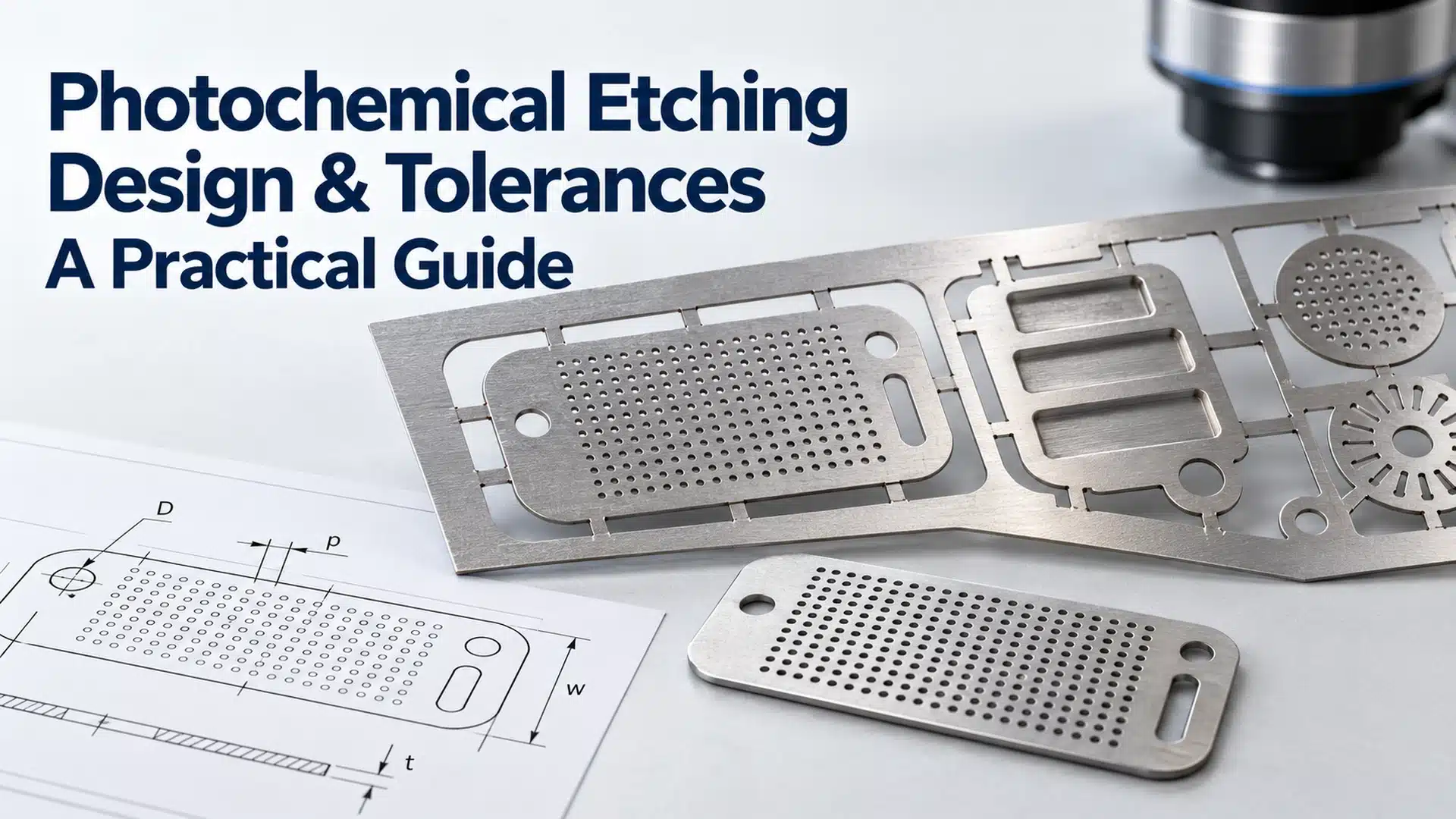
A qualified supplier should support drawing review, tolerance confirmation, material traceability, and inspection documentation. Buyers should also confirm experience with the required titanium grade, thickness, surface condition, and inspection plan. Use this chemical etching supplier checklist before approving a prototype or production order. For high-risk parts, buyers may request first article inspection or project-specific inspection reports.
This is where a titanium etching supplier adds value beyond the etching step itself. The supplier should help reduce design risk before mass production.
Why the Chemical Etching Titanium Process Stands Out
Titanium etching as your preferred method in contemporary manufacturing. The titanium etching process is unique when compared to other methods, due to the synthesis of accuracy, flexibility, and productivity.
- Fine Precision: Provides a micro level that allows you to create most detailed and precise design in a critical field.
- Design Freedom: Allows for the production of intricate shapes without costly tooling, simplifying customization.
- Material Integrity: Preserves the integrity of titanium, with no stress or heat distortion during etching.
- Excellent scalability: Applicable to not only small prototype production but also large-volume manufacturing, achieving constant quality.
- Surface Finish: Creates smooth surfaces that typically do not require additional finishing like those created using mechanical methods.
- Industry Versatile: Heavily used across aerospace, medical, electronics and the automotive industry, it consists of a range of possibilities.
With this capability in mind TMNetch OEMs automation, monitoring, and safety features for its titanium etching machines making the process more consistent and safer across industry lines. From medical implants to aerospace turbine blades, the reliable and consistent titanium etching process is ideal for any application.
How To Etch Titanium Safely and Efficiently
Knowing how to etch titanium is an important skill for engineers and enthusiasts. Here are the basic guidelines:
- Select the Proper Solution: You must use a special titanium etching solution to get the right results.
- Be Safe: Wear gloves, goggles and other safety equipment when using chemicals.
- Wear the Right Mask: Ensure that the chemical you are working with on board is not compatible with what the mask made of.
- Limit Exposure: The etch is what it will be, based solely upon time and temp as defined.
- Rinse and Inspect: Rinse thoroughly following etching, and inspect for defects.
TMNetch has support learning cool stuff and having the right tools to teach anyone that is looking to learn how to etch titanium.
Benefits of Titanium Etching
The use of titanium etching, as opposed to other techniques, provides several advantages:
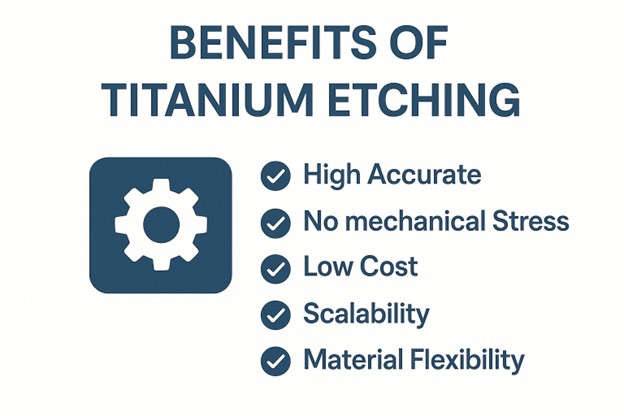
- High Accurate: With micron level precision, for industries with demanding aspect details of complex parts.
- No mechanical Stress: Will not warp or crack since it isn’t subjected to any force or heat, only chemistry is used.
- Low Cost: Minimises expensive tooling costs, reducing cost and making smaller and larger production runs viable.
- Scalability: A titanium etching machine scales to high volume manufacturing without compromising the quality.
- Material Flexibility: Excellent for aerospace and medical-grade titanium alloys and other demanding applications.
With TMNetch titanium etching solutions, enterprises have access to very efficient systems that realize these advantages.
Applications of Titanium Etching
Aerospace Components
Titanium is widely used in aerospace because it offers high strength-to-weight ratio and corrosion resistance. Chemical etching can support thin titanium components that need complex openings, lightweight patterns, or low mechanical stress. CNC machining is usually better for thick or three-dimensional features, while stamping may suit stable, high-volume designs. This aerospace manufacturing process comparison explains when each method fits.
Common examples include screens, shims, brackets, spacers, filters and lightweight precision plates. Since chemical etching does not introduce mechanical stress, it is useful for thin parts that must remain flat.
For aerospace buyers, key sourcing factors include material traceability, dimensional inspection, surface cleanliness and repeatability.
Medical Device Parts
Titanium is used in medical devices because of its biocompatibility and corrosion resistance. Chemical etching can produce thin medical meshes, precision plates, instrument parts, screens, and other flat titanium components. Medical projects may require additional controls for material traceability, cleaning, inspection, and documentation. Review TMNetch’s photo etching capabilities for medical parts before submitting a regulated application.
For medical parts, surface condition is critical. Burrs, residue and uncontrolled edge defects can create quality risks. Chemical etching can help reduce burr-related problems compared with mechanical punching or stamping.
Medical projects may require stricter documentation, cleaning control and inspection standards. Buyers should confirm these requirements before production.
Electronics and EMI Shielding
Titanium can be used in selected electronics applications where corrosion resistance, strength and thin-wall structures matter. Etching can create shielding parts, contacts, springs, grids, frames and precision conductive components.
For electronics buyers, important factors include flatness, edge quality, conductivity requirements and compatibility with later surface treatment.
If electrical performance is critical, the part may require coating, plating, cleaning, or another finishing step after etching. These operations must match the titanium grade, contact requirements, and operating environment. Review the available etching and surface-finishing services during the drawing stage.
Fuel Cell and Hydrogen Energy Components
Titanium is relevant to hydrogen energy because of its corrosion resistance and mechanical strength. In some fuel cell and electrolyzer projects, titanium can be used for flow plates, current collectors, porous plates, mesh structures or corrosion-resistant precision parts.
For these parts, etching quality can affect flow distribution, sealing, contact resistance and coating performance. Thin titanium sheets may require clean channels, accurate openings and stable surface preparation.
Chemical etching can be useful for prototype and small-batch hydrogen energy components because it allows flexible flow-field changes without hard tooling.
Automotive Precision Parts
Automotive titanium parts are less common than stainless steel or aluminum parts because titanium is more expensive. However, it can be used where weight reduction, corrosion resistance or high strength is important.
Chemical etching can support thin titanium components in sensors, filters, shielding parts, precision springs and special assemblies. It is also useful during development when engineers need fast design changes before tooling investment.
TMNetch Services in Titanium Etching
At TMNetch, we offer full technology titanium etching services that are both safe and serve you through friendly expertise. We provide industry specific solutions made simply with confidence that help people reach their full potential.
- High Tech Titanium Etchers: Ideal for etching to exact sizes for smaller and full scale production.
- Safe and Effective Titanium Etching Solution: Our chemical etching titanium solutions are based on high quality chemicals designed for safety and effectiveness.
- Expert Advice: Training, help and advice on how to etch titanium in best practices.
- Applications by Industry: Supplying more precision quality parts to high volume giants like aerospace, medical, electronics and automotive.
- Scalable Services: From prototyping through production, maintaining the highest level of quality, every step of the way.
FAQs About Titanium Etching
Q1:Can titanium be etched?
Yes, titanium can be etched, but it requires controlled industrial processing. Titanium forms a stable oxide layer, which makes it harder to etch than common metals such as copper or stainless steel. Photochemical etching is suitable for thin titanium sheets, foils, meshes, filters and precision flat parts.
Q2:What is Titanium Etching Good For?
Chemical Etching Titanium is used to produce a variety of detailed components for aerospace, medical device, electronics, and automotive industries. Or, for sensitive applications demanding intricate design, because of the accuracy and easy process.
Q3:What are the disadvantages of etching?
Etching is mainly suitable for thin, flat metal parts. It is not ideal for thick 3D parts, deep pockets, threaded features or heavy structural parts. It can also create side etching, so feature size, material thickness and tolerance should be reviewed before production.
Q4: Is Titanium Etching superior to laser cutting?
Titanium Etching is favorable due to lack of contact with heat and deformation of mechanics, therefore it enables accuracy and smooth apparatus. The speed of CO2 laser cutting can be more efficient than fiber laser, but may have damage issues on sensitive substrates.
Q5: What are the Potential Uses of Titanium Etching in the Industry?
Aerospace, medical, electronics, and automotive industries are the main dependents of Titanium Etching. It allows the use of light, biocompatible, and safe components for components demanding high-performance and safety requirements.
Conclusion
Titanium is strong, light and corrosion resistant, but it is also more difficult to etch than many other metals. Its protective oxide layer requires controlled process knowledge, careful surface preparation and stable production conditions.
For thin and complex titanium parts, chemical etching offers important advantages. It can create burr-free edges, avoid heat damage and reduce mechanical stress. It also supports flexible design changes during prototype and small-batch production.
The best results come from matching the process to the part design. Material grade, thickness, minimum feature size, tolerance, half-etch requirements and surface finishing should all be reviewed before production.
If your project needs custom titanium mesh, precision plates, etched flow fields, or other thin titanium components, TMNetch can review the drawing and recommend a practical manufacturing route. Send your titanium part drawing with the material grade, thickness, dimensions, tolerances, quantity, surface requirements, and inspection needs.