
Chemical etched aerospace parts are often the better choice for thin, flat and complex components that require burr-free edges and minimal mechanical stress. CNC machining is better for thicker, 3D, structural, or machined aerospace components. Stamping is often the better route for high-volume sheet metal parts when the design is stable and hard tooling cost can be justified.
For aerospace buyers, the best process depends on the drawing. You should compare material, thickness, tolerance, feature density, edge quality, annual volume, design maturity, and documentation needs before choosing photochemical etching, CNC machining, or stamping.
Why Process Selection Matters for Aerospace Components
Aerospace components often work in demanding systems. They may need low weight, stable dimensions, clean edges, reliable conductivity, corrosion resistance, or repeatable assembly fit.
The wrong process can increase cost and risk. A thin shielding part with many small openings may become expensive if each feature must be machined one by one. A design that is still changing may become costly if hard stamping dies are made too early.
Process choice also affects documentation. Aerospace buyers often need material traceability, dimensional inspection, first article inspection, drawing revision control, and supplier qualification. AS9100 is a quality management standard for aviation, space, and defense organizations, based on ISO 9001 and expanded for aerospace quality and safety needs.
This is why the lowest unit price is not always the best decision. A better question is: which process can make this part reliably, at the required quality level, at the required volume?
What Is Photochemical Etching for Aerospace Parts?
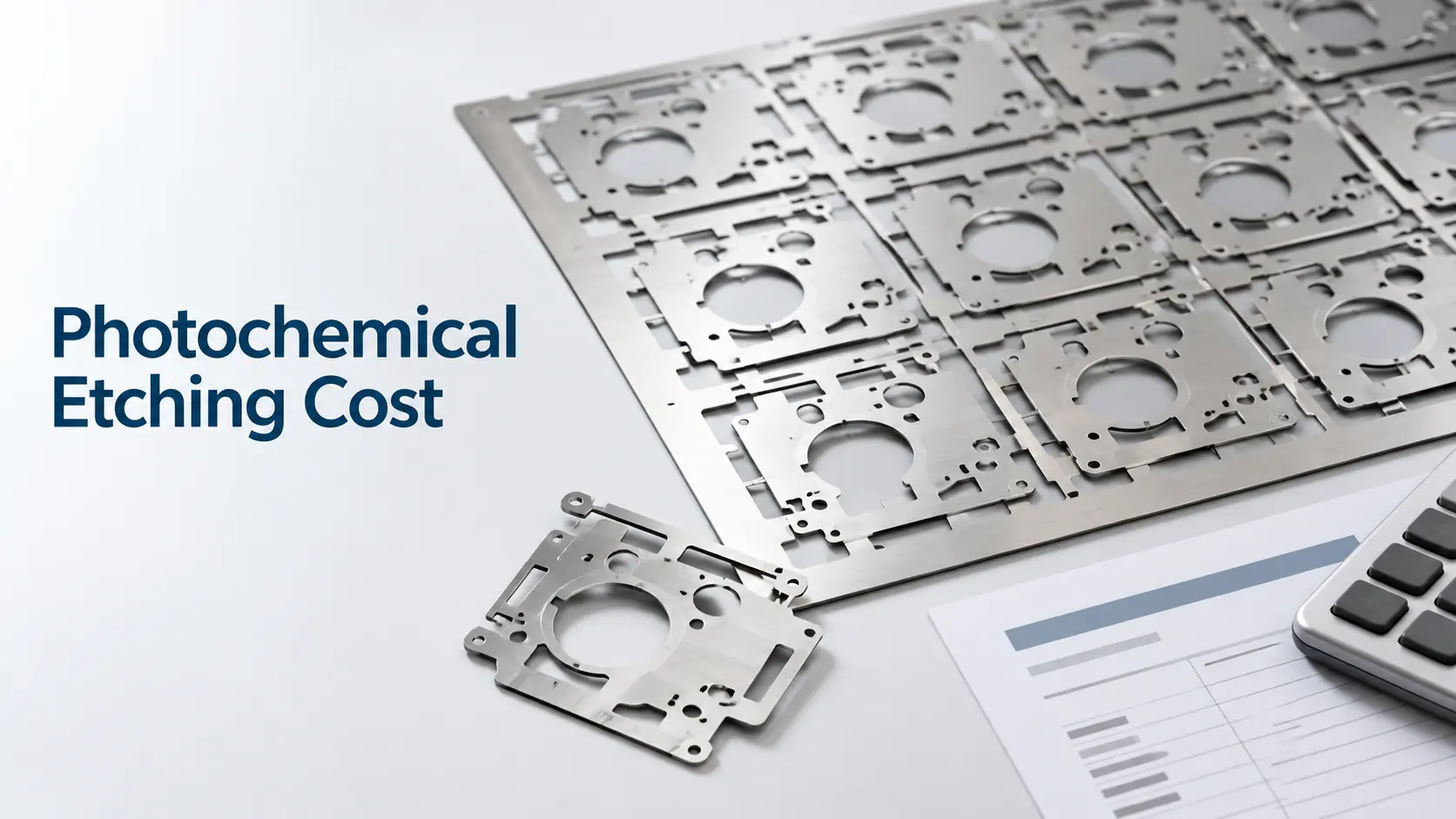
Photochemical etching, also called photochemical machining or photo etching, produces chemical etched aerospace parts through patterned photoresist and controlled metal removal. The process is suitable for detailed components made from thin sheet metal. It can produce complex sheet metal parts with fine detail, and it is often used as an alternative to stamping, punching, laser cutting, waterjet cutting, or EDM for thin-gauge precision parts.
The basic process starts with a metal sheet. A photoresist layer is applied to the surface. The part pattern is exposed and developed. Then the exposed metal is chemically removed. Finally, the resist is stripped, and the parts are cleaned and inspected.
TMNetch describes photo etching as a chemical manufacturing process for accurate metal components. Its photo etching page states that the process is stress-free and burr-free, and that chemicals selectively remove metal without physical force touching the parts.
Why It Fits Thin and Complex Aerospace Parts
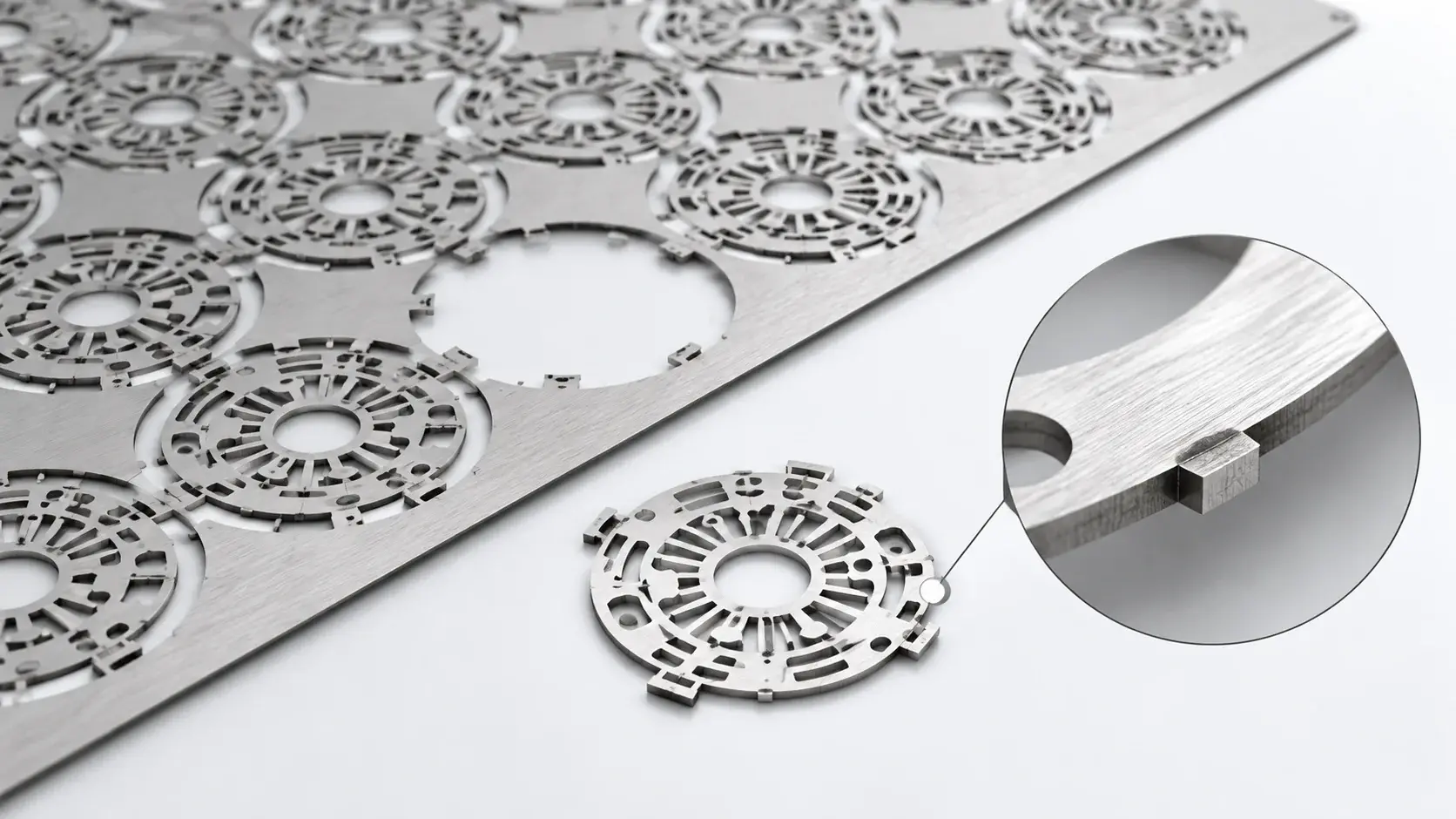
In our production experience, aerospace photochemical etching is most useful when the part is thin, flat, and complex. It is especially useful when the design includes many slots, holes, mesh openings, micro channels, or repeated features.
The process does not rely on cutting force, hard dies, or heat-based cutting. This helps protect fine features, lightweight geometry, and delicate metal sections during production.
For buyers comparing photochemical etching, CNC machining and stamping, TMNetch’s aerospace photochemical etching capabilities are most relevant when the component is thin, flat, feature-dense and sensitive to mechanical cutting burrs or distortion.
Typical Chemical Etched Aerospace Parts
Chemical etched aerospace parts may include EMI/RFI shielding components, precision shims and spacers, custom metal filters and screens, sensor parts, terminals, connector contacts, flat springs, shielding strips and encoder disks.
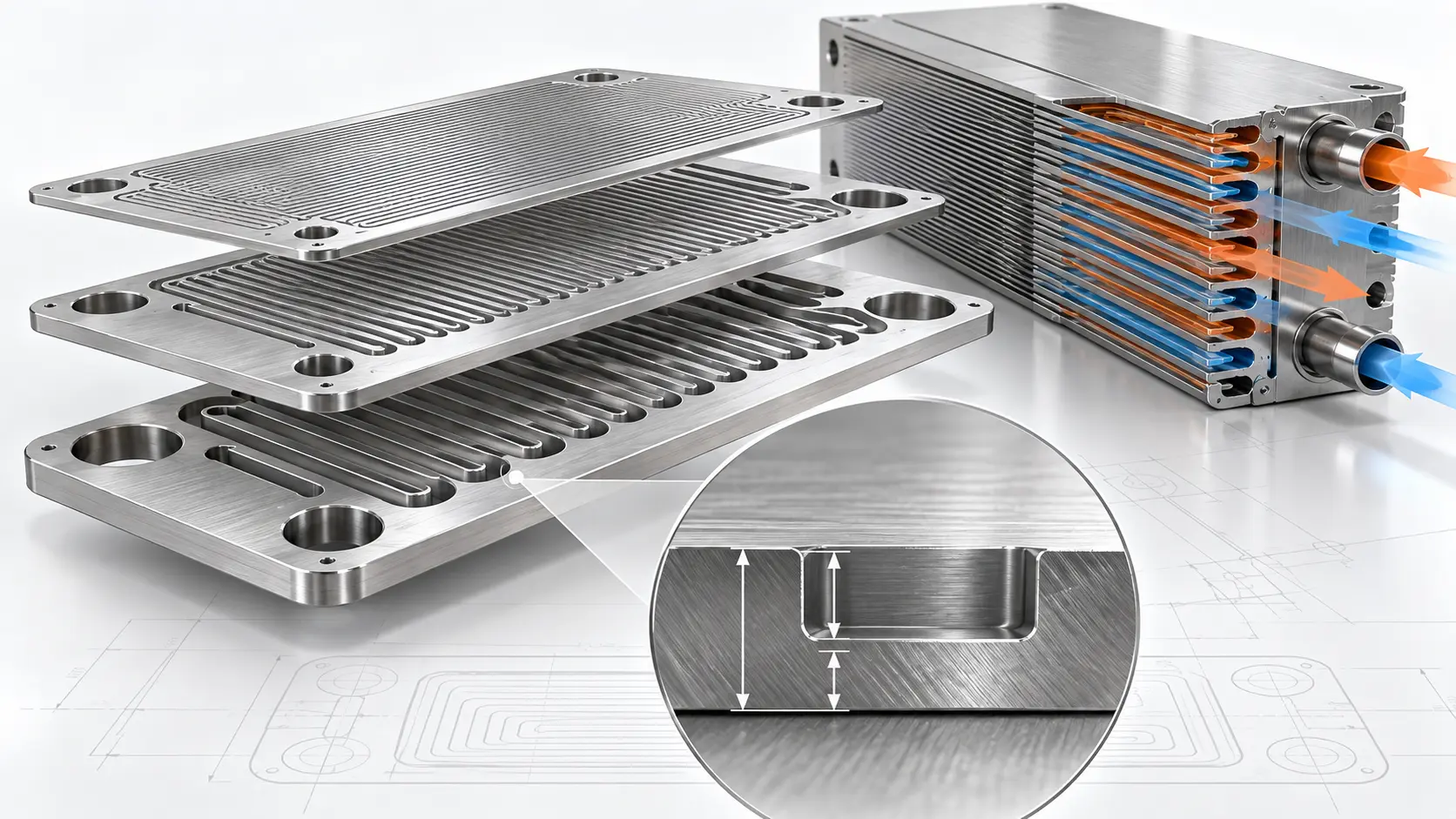
TMNetch’s aerospace etching page lists aerospace photo-etched components such as contact rings, heat sinks, grounding contacts, terminals, contacts and connectors, fuel cell components, heat exchangers, flat springs, pinholes, heat exchanger plates, shielding strips, filters, encoder disks, board-level shielding, and sensor components.
What Is CNC Machining for Aerospace Components?
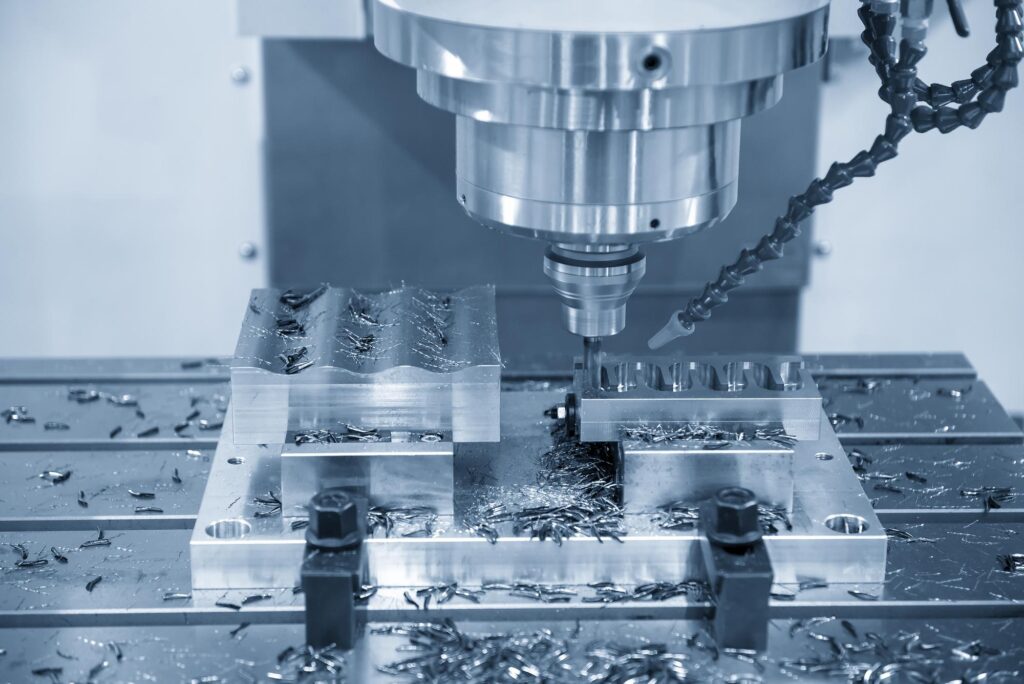
Computer numerical control, or CNC machining, uses computer-controlled machine tools to remove material. The process can include milling, turning, drilling, boring, threading, and other subtractive operations.
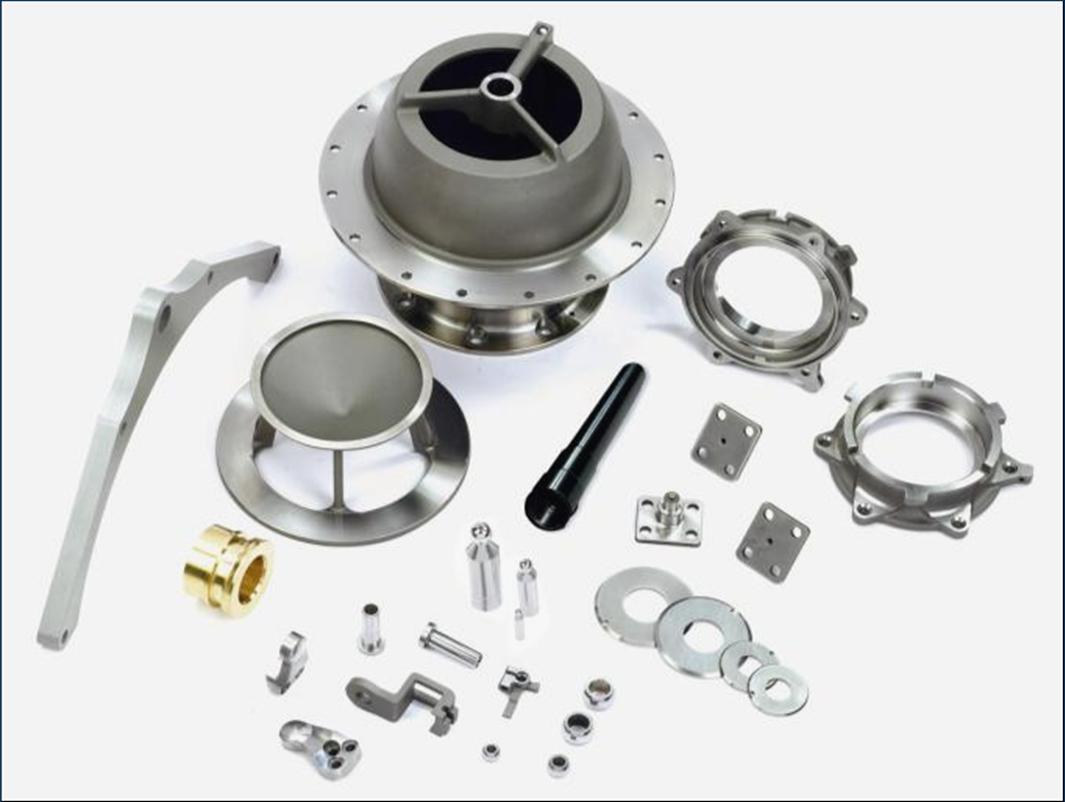
CNC machining is often the right choice when an aerospace component needs 3D geometry. It is also useful for thicker parts, machined pockets, threads, bosses, holes, tight machined surfaces, and structural or semi-structural features.
For example, CNC machining may be better for housings, brackets, blocks, manifolds, mounting parts, or load-bearing components. These parts may not be practical to make from flat sheet metal.
CNC Limitations for Thin Etched-Style Parts
CNC machining is strong, but it is not always the best route for thin, flat, feature-dense metal parts. If a part contains hundreds of small holes or slots, machining each feature can increase cycle time and cost.
Tool access can also become a limitation. Thin parts may need careful fixturing to avoid vibration or distortion. Burrs may also require secondary finishing, depending on the material, tool condition, and geometry.
For this reason, photochemical etching vs CNC machining is not a simple “better or worse” question. It is a geometry and volume question.
What Is Stamping for Aerospace Components?
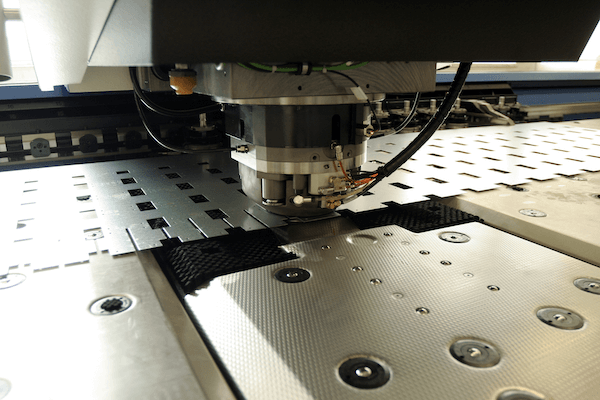
Metal stamping places flat sheet metal into a stamping press, where a tool and die form or cut the metal into a new shape. Stamping can include punching, blanking, embossing, bending, flanging, and coining.
Stamping can be suitable for high-volume sheet metal parts with stable geometry. Once tooling is validated, precision metal stamping services may provide faster cycle times and lower unit cost, although tooling investment and design-change costs must be included.
It is useful for clips, brackets, covers, formed sheet parts, and repeated components where the design will not change often. It can also support formed features that flat photochemical etching cannot provide alone.
Stamping Limitations for Aerospace Development
Stamping usually requires hard tooling. This means the upfront cost can be high. If the aerospace design is still changing, each design revision may require die modification.
Stamping may also create burrs, forming stress, springback, die wear, or dimensional variation if the process is not controlled well. These issues do not make stamping a poor process. They simply mean stamping is strongest when volume is high and the design is mature.
For early-stage aerospace development, photochemical etching may be a better first route for thin sheet parts because photo tooling is more flexible than hard dies.
Photochemical Etching vs CNC Machining vs Stamping: Key Differences
The table below gives a practical comparison for aerospace component manufacturing.
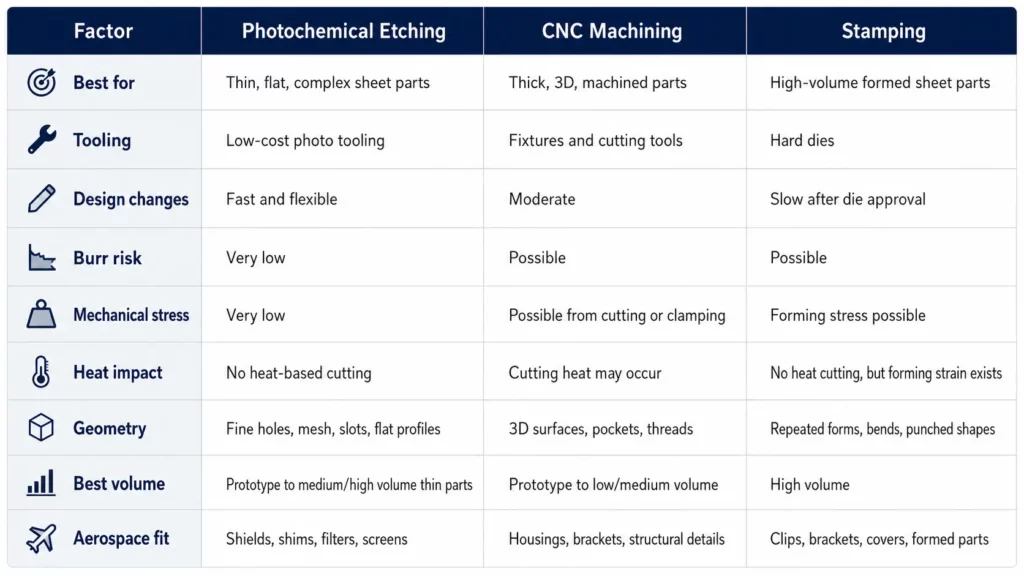
Photochemical etching is not a full replacement for CNC machining or stamping. It is better for a specific group of chemical etching aerospace parts: thin, flat, complex, and feature-dense metal components.
CNC machining is usually better when the part must be thick, structural, or three-dimensional. Stamping is usually better when annual volume is high and the geometry is stable.
Which Process Should You Choose?
Use this decision table before RFQ.
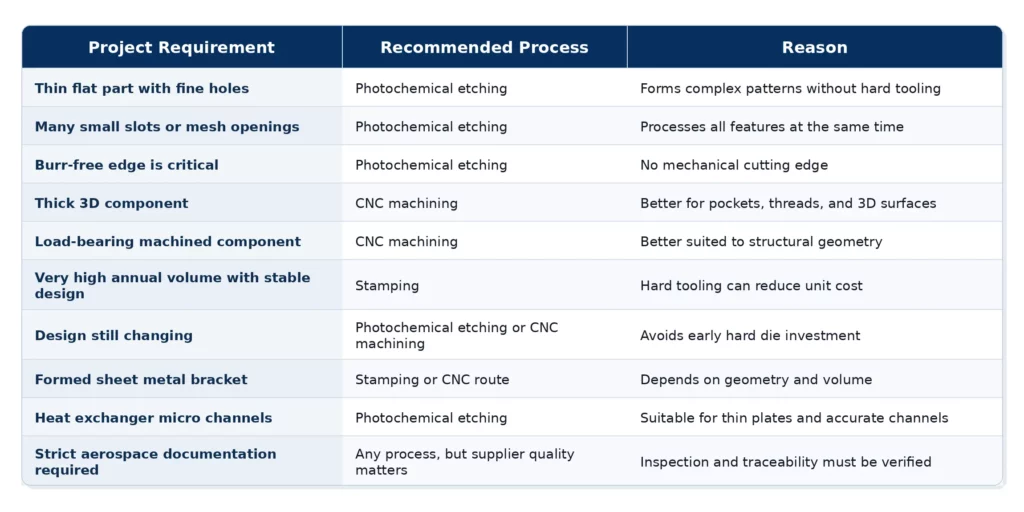
If the drawing is thin, flat, complex, and still under revision, photochemical etching is often worth reviewing before committing to CNC machining or hard stamping dies.
If the part is thick, load-bearing, or needs machined 3D details, CNC machining may be the safer route. If the part design is fixed and volume is high, stamping may provide the best long-term unit cost.
When Are Chemical Etched Aerospace Parts the Better Choice?
Chemical etched aerospace parts are the better choice when the part design fits the strengths of photochemical etching. The process is strongest when the part is made from sheet metal and needs fine features without cutting force.
When the Part Is Thin and Flat
Photochemical etching is well suited for shims, spacers, gaskets, shielding strips, flat springs, filters, screens, and thin electrical contact parts.
These parts often need clean edges and repeatable dimensions. If the same drawing includes many fine features, photochemical etching can reduce the need for multiple mechanical operations.
When the Design Has Many Fine Features
The process is useful for holes, slots, mesh openings, micro channels, repeated arrays, and fine profiles. Since the pattern is chemically removed across the sheet, many features can be processed at the same time.
This is useful for avionics shielding, sensor components, fuel system screens, thermal management plates, and heat exchanger plates.
When Burrs, Stress, or Distortion Create Risk
In aerospace photochemical etching projects, we usually review part thickness, feature density, edge requirements, material grade, and inspection needs before confirming the manufacturing route.
If burrs may interfere with electrical contact, sealing, bonding, filtration, or assembly, chemical etching may be a strong option. If mechanical stress or distortion may affect part flatness, photochemical etching should also be considered.
When Prototyping and Design Changes Matter
Early aerospace projects often change. A slot may move. A hole pattern may change. A shim thickness may need adjustment.
Photochemical etching can support design changes without the same level of hard die investment required for stamping. This makes it useful from prototype review to production planning.
Aerospace Quality Requirements Buyers Should Check
Aerospace buyers should not choose a manufacturing route only by process name. Supplier quality control is just as important as process selection.
Material Traceability
Confirm the material grade, thickness, temper, batch, and certificate requirements. For aerospace metal etching, the material must match the drawing and application environment.
This is especially important for stainless steel, aluminum, copper, titanium and nickel alloys because each material responds differently to etching. Review the broader guide to photochemical etching materials, tolerances and process limits before finalizing the manufacturing route.
Dimensional Inspection
Define critical dimensions before production. Review tolerances, inspection methods, and reporting format.
A first article inspection can verify whether a new or revised process produces parts that meet drawing and specification requirements. FAI is commonly used in aerospace, automotive, medical, and regulated manufacturing contexts.
Edge and Surface Quality
Review edge condition, surface cleanliness, etch profile and readiness for plating, coating or forming. If the part requires several operations, evaluate whether a coordinated etching and secondary-processing workflow can control final dimensions after each stage. These details matter for aerospace components that require contact, sealing, filtration, shielding, or thermal transfer.
For etched aerospace components, also check whether the supplier can control both geometry and surface condition after etching.
Supplier Qualification and Documentation
Ask about quality systems, inspection reports, revision control, drawing control, traceability records, and process control. If the project requires aerospace-grade documentation, confirm this before ordering.
A supplier may be technically capable of etching a shape but not prepared to provide the required aerospace documentation. Use this chemical etching supplier checklist to compare material control, inspection, traceability, production capacity and secondary processing before qualification.
How TMNetch Supports Chemical Etched Aerospace Parts
TMNetch supports aerospace photochemical etching for thin, complex, precision metal parts. Its aerospace etching page lists micro channel etching, stackable parts, AS9100 accreditation, and a range of aerospace photo-etched components.
Based on TMNetch chemical etching capability data, we can support high-precision metal parts with accuracy as tight as ±0.025 mm, part sizes up to 600 × 1500 mm, and high-volume output up to 1,800 m²/day. TMNetch also lists five fully automated 39-meter lines and rigorous inspections on its chemical etching page.
The same page states that TMNetch supports material thicknesses from 0.01 mm to 2.5 mm and materials including stainless steel, aluminum alloys, nickel and brass, titanium alloys, nickel alloys, molybdenum, and specialized metals.
For aerospace projects, final capability still depends on material, thickness, geometry, tolerance, surface requirements, and documentation needs. This is why drawing review should happen before production.
Send your drawing, material grade, thickness, tolerance, annual volume and inspection requirements to TMNetch. Our team can evaluate whether chemical etched aerospace parts, CNC-machined components or stamped parts offer the most suitable manufacturing route for your project.
FAQ About Chemical Etched Aerospace Parts
What are chemical etched aerospace parts?
Chemical etched aerospace parts are precision metal components made by selectively removing metal with a controlled chemical etching process. They are often thin, flat, complex parts used in shielding, filtering, sensing, spacing, heat transfer, and electrical contact applications.
Is photochemical etching better than CNC machining for aerospace components?
Not always. Photochemical etching is better for thin, flat, complex sheet metal parts that need burr-free edges and low mechanical stress. CNC machining is better for thicker, 3D, structural, or machined aerospace components.
When should aerospace buyers choose CNC machining?
Choose CNC machining when the part needs 3D surfaces, pockets, threads, thick material, structural strength, or machined faces. CNC is also useful for low-volume high-value parts where each part requires precise machining from a block, bar, or plate.
When is stamping better than photochemical etching?
Stamping is often better when the design is stable, annual volume is high, and hard tooling cost can be justified. It is also useful when the part needs formed features or bends that cannot be made by flat chemical etching alone.
What aerospace components are suitable for photochemical etching?
Suitable parts may include EMI/RFI shielding components, filters, screens, shims, spacers, flat springs, sensor parts, connector contacts, thermal plates, heat exchanger plates, micro-channel plates, encoder disks, and other thin precision aerospace metal parts.
Does photochemical etching create burrs?
Photochemical etching normally avoids mechanical cutting burrs because no cutting tool directly shears the edge. Buyers should still check edge condition, etch profile, surface cleanliness, and inspection reports before approving production.
What quality documents should buyers request?
Buyers may request material certificates, dimensional inspection reports, first article inspection reports, drawing revision control, traceability records, surface inspection results, and other documentation required by the aerospace project.
Which materials can be chemically etched for aerospace components?
Common materials include stainless steel, aluminum alloys, copper alloys, nickel alloys, titanium alloys, molybdenum, and other specialty metals. Final material suitability depends on the supplier’s etching capability and the project requirements.
Conclusion
No single process fits all aerospace components. Photochemical etching is often the best choice for thin, flat, complex, burr-free aerospace metal parts. CNC machining is better for thicker, 3D, machined, or structural components. Stamping is better for high-volume sheet metal parts with stable geometry.
The best choice depends on geometry, material, thickness, tolerance, annual volume, edge quality, documentation needs, and design maturity.
For chemical etched aerospace parts, send the drawing, material grade, thickness, tolerance, annual volume, surface requirements and documentation needs for an aerospace etching project review before selecting photochemical etching, CNC machining or stamping.