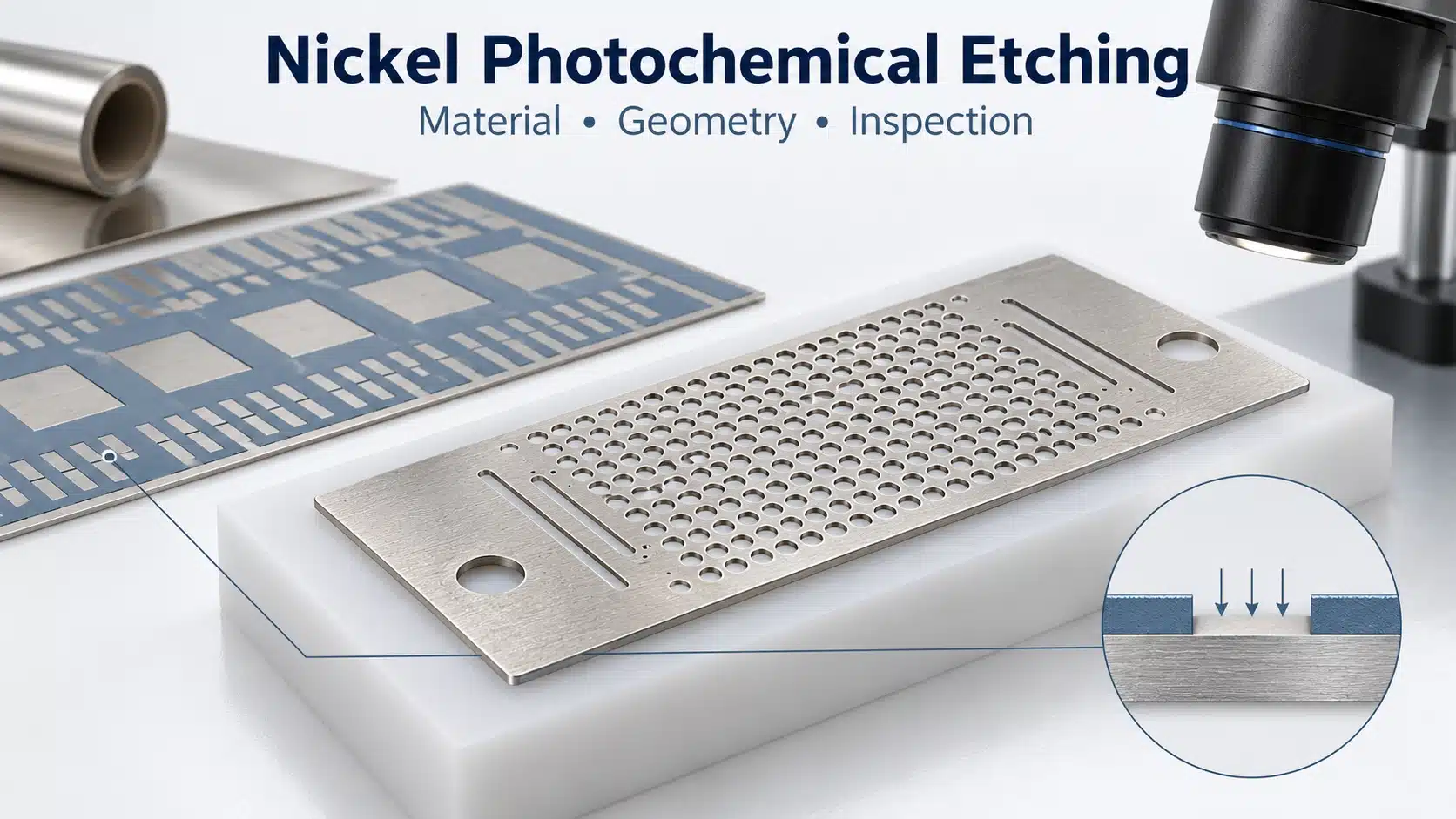

Acid etching metal uses a controlled chemical reaction to remove selected areas from a metal surface. In industrial manufacturing, chemical etching combines controlled etchant chemistry with masking or photoresist to create holes, slots, profiles, markings, and other precision features without mechanical cutting.
What does acid etching do to metal?
It removes exposed metal through a controlled chemical reaction. An acid-resistant mask protects selected areas, while the exposed sections dissolve to form holes, slots, markings, patterns, or precision features. In precision industrial production, photochemical etching adds photoresist, phototooling, UV exposure, and controlled chemical removal to produce repeatable metal components from sheet and foil.
Understanding Acid Etching Metal
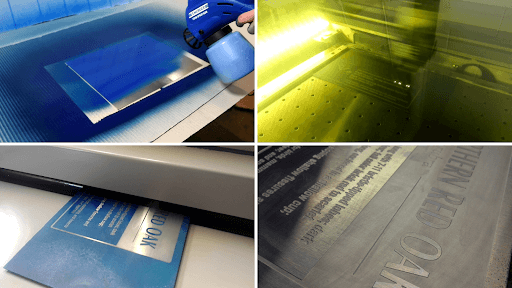
In traditional acid etching on metal, we use strong acid or mordant acids to cut into metal parts that are unprotected to create a design. The process is simple. After covering the metal with an acid-resistant substance called resist, the artist would leave areas blank or scratch through the resist to develop images. Acid is then applied to the image or design, and the exposed metal would dissolve away in the acid solution. This means the areas on top of the resist would have no effect from the acid etching metal process, as those areas were protected by the resist coating.
Common Etchants Used In Acid Etching
Different etchants are more effective for specific metals and applications. The acid choice affects etching speed, surface finish, and safety needs. These needs apply before, during, and after the acid etching metal process.
- Ferric Chloride
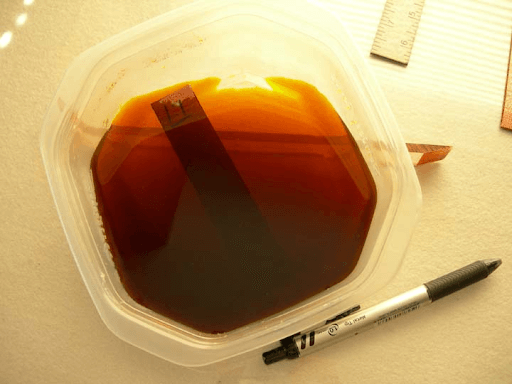
Ferric chloride is one of the most common chemical etchants that is used in metal etching. Ferric chloride solution yielded great results on copper, brass, and stainless steel. Its solution is more stable and less likely to release toxic fumes than any of the other acids in acid etching.
- Nitric Acid
Nitric acid can etch several metals, including stainless steel. It also helps clean metal and create precise patterns. It works faster than ferric chloride but needs careful handling.
- Hydrochloric Acid
Hydrochloric acid is another type of etching chemical. Hydrochloric acid reacts quickly with many metals. This reaction can produce hydrogen gas. Therefore, proper ventilation is necessary. Hydrochloric acid does an excellent job of removing oxide layers as well as leaving the substrate with a clean, etched surface.
- Sulfuric Acid
Sulfuric acid is slower than nitric acid and hydrochloric acid, and produces smooth surface finishes. Sulfuric acid works especially well with aluminum and zinc applications. 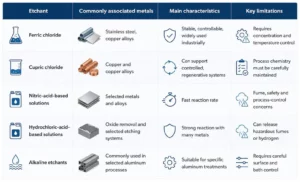
The correct etchant for metal acid etching should be selected by a qualified process engineer based on the metal grade, thickness, feature geometry, tolerance, production volume, and waste-treatment requirements.
Metals Used In Acid Etching
Different metals respond to the etching process differently because alloy composition, surface condition, thickness, and chemical compatibility affect material removal. Engineers comparing stainless steel, copper, brass, aluminum, nickel alloys, and other metals can use this photochemical etching materials guide as a starting point for material selection.
Stainless Steel
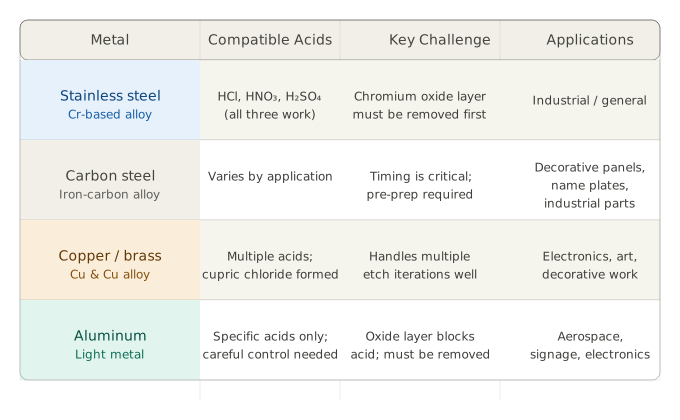
Any of the acids we described: hydrochloric acid, nitric acid, or sulfuric acid, will etch stainless steel nicely. The chromium content in stainless steel creates a protective layer that requires heavier acids. To etch stainless steel evenly, thoroughly prepare the surface, removing the protective layer.
Carbon Steel
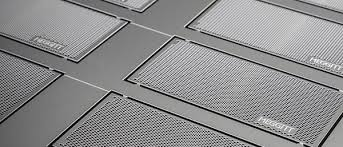
The timing of the etching process is very important with carbon steel, and it is imperative to prepare the metal beforehand. The steel, once prepared and acid etched, will provide consistent results throughout the entire surface area. Carbon steel can be used for decorative panels, name plates, components for industrial purposes, etc.
Copper/Brass
Copper and copper alloys are widely used in precision etched components because they can be processed into fine openings, profiles, contacts, and other detailed geometries. Projects using copper should evaluate alloy grade, thickness, feature geometry, and tolerance against the available copper etching process.
Aluminum
Aluminum requires certain acids and careful control over the process to etch properly. Successful aluminum etching depends on overcoming the metal’s natural oxide layer, which otherwise inhibits acid attack. Proper surface preparation must remove this layer to allow the acid to penetrate evenly.
Acid Etching Process: Step by Step
The acid etching metal process requires careful preparation and precise method execution to get the best result. Each step in the process contributes to the quality and the final look of the etched surface.
Surface Preparation
The first step is to clean and prepare the metal surface.
Oil, dust, oxidation, and fingerprints can weaken resist bonding. Other surface contaminants may cause the same problem. Poor cleaning can let the etchant reach protected areas. This may cause uneven edges or unwanted metal removal.
Surface preparation may include degreasing, chemical cleaning, light brushing, rinsing, and controlled drying. The exact method depends on the material and production needs.
Industrial metal etching requires close control of this step. Surface quality affects resist adhesion, feature accuracy, and the part’s final finish.
Applying the Resist Coating
After cleaning, an acid-resistant coating, known as a resist, is applied to the metal surface.
The resist protects selected areas from the etching solution. Only the exposed metal will be removed during the chemical reaction.
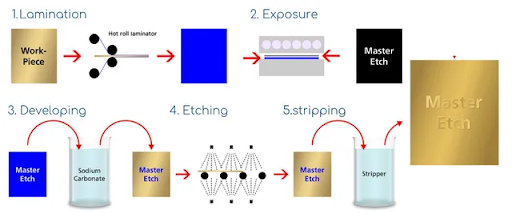
Simple decorative projects may use acid-resistant paint, vinyl, tape, or markers. Industrial chemical etching usually uses light-sensitive photoresist film. It offers better accuracy, consistency, and process control.
Manufacturers may apply photoresist to one or both sides of the metal. The choice depends on surface etching, half-etching, or complete through-etching.
The resist must form a clean and even layer. Bubbles, dust, wrinkles, or poor adhesion may cause defects during etching.
Creating and Transferring the Pattern
Once the resist has been applied, the required design is transferred onto the coated metal.
For simple projects, the pattern may be drawn, cut, or scratched into the resist. However, industrial acid etching uses a digital drawing or CAD file to create a precise phototool.
The coated metal is placed between the phototools and exposed to ultraviolet light. The exposed photoresist changes through a chemical reaction. This process forms the required pattern on the metal surface.
During the developing stage, the resist is removed from the areas that need to be etched. The remaining resist protects the parts of the metal that must stay unchanged.
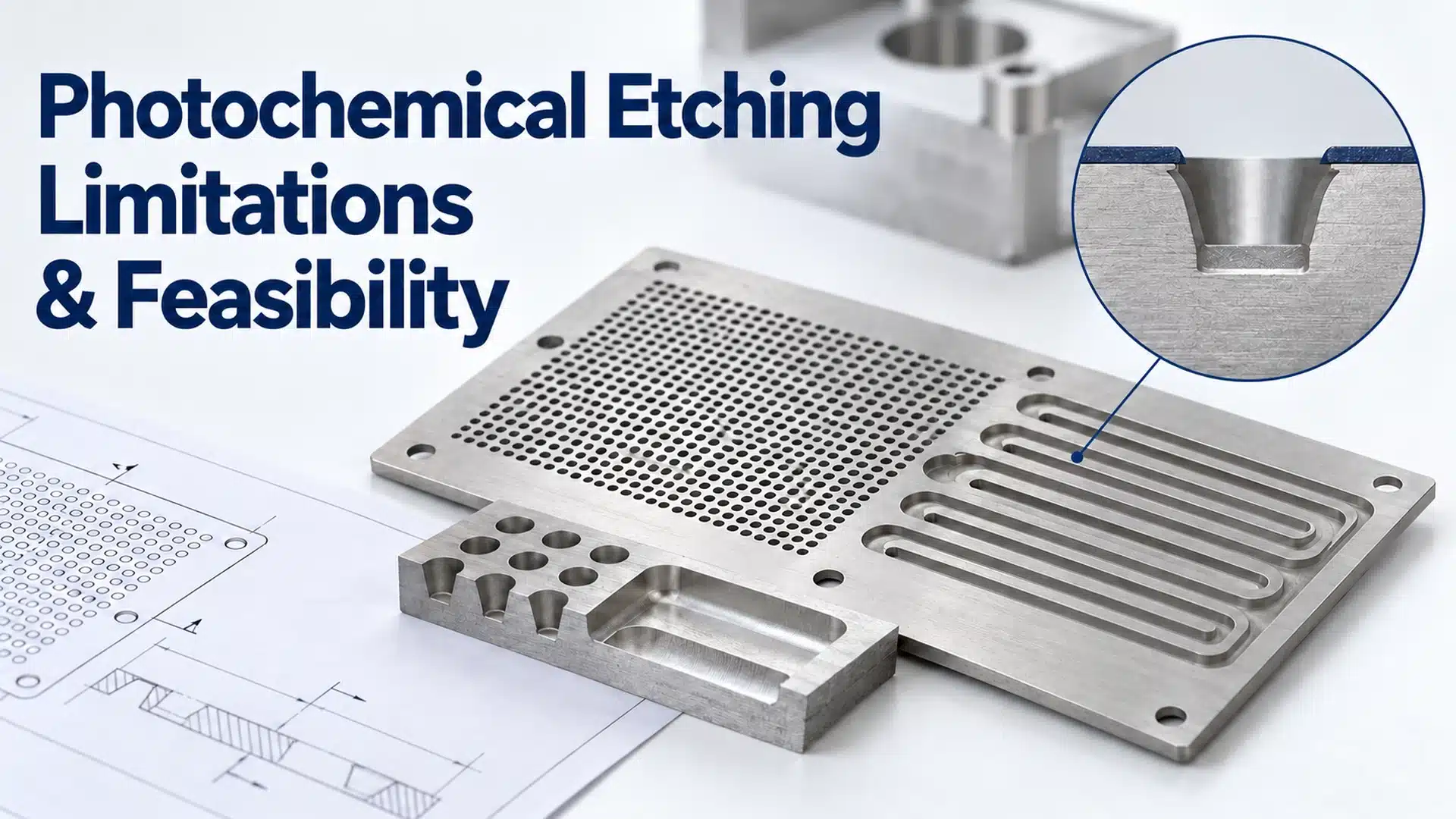
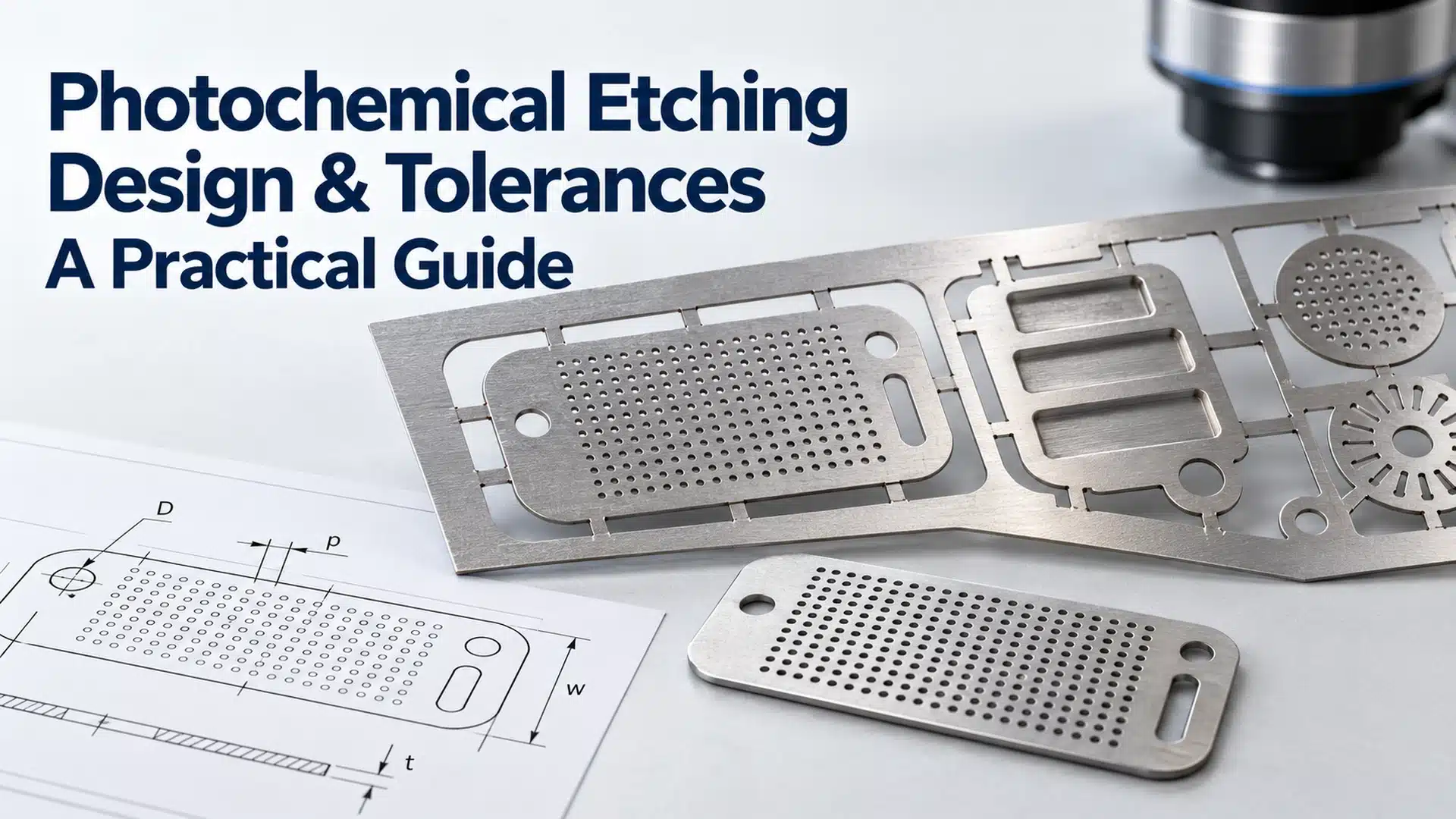
For double-sided etching, the patterns on the front and back must be aligned accurately. Manufacturers may also adjust the phototool dimensions to compensate for undercutting, which is the sideways removal of metal beneath the resist. Because undercut, minimum feature size, spacing, and achievable tolerance are closely related to material thickness and geometry, engineers should review the applicable photochemical etching tolerances and design limits before finalizing a production drawing.
Before etching begins, the developed pattern is inspected for blocked openings, damaged resist, missing details, and alignment errors.
At TMNetch, customer drawings are reviewed before production to identify potential issues involving feature size, front-to-back alignment, undercutting, and dimensional compensation.
The Chemical Process
The prepared metal is then placed in contact with the selected etching solution.
The etchant reacts with the exposed metal and gradually removes it, while the areas covered by resist remain protected.
In small-scale projects, the etchant may be brushed onto the surface, or the metal may be placed in a chemical bath. In industrial production, automated machines usually spray the etching solution onto one or both sides of the metal sheet.
Several factors affect the etching result, including:
- Metal type and grade
- Material thickness
- Etchant chemistry and concentration
- Solution temperature
- Spray pressure or agitation
- Etching time
- Feature size and geometry
If the etching time is too short, some unwanted metal may remain. If it is too long, excessive undercutting may enlarge holes, reduce line width, or affect dimensional accuracy. Undercut and other photochemical etching limitations should therefore be considered together with material thickness, feature size, spacing, and required edge geometry.
Industrial manufacturers monitor the etchant condition, temperature, spray distribution, and processing speed.
The process can create through-etched features, half-etched areas, bend lines, identification marks, logos, and multi-depth structures.
Finishing and Disposal
After the required amount of metal has been removed, the part is taken out of the etching process and thoroughly rinsed.
The remaining resist is then stripped from the surface using a suitable cleaning solution. Remove all residual etchant, resist, and chemical deposits. Any residue may affect the finished part’s appearance or performance.
The etched parts are then inspected for:
- Overall dimensions
- Hole and slot sizes
- Line width
- Etching depth
- Edge quality
- Surface condition
- Pattern accuracy
- Remaining chemical residue
Industrial etched parts may also require secondary operations such as metal plating, passivation, polishing, forming, bending, painting, welding, or custom packaging. When multiple operations are required, a one-stop chemical etching and finishing workflow can reduce handoffs between suppliers and simplify process coordination. The finishing sequence should be defined according to corrosion resistance, electrical contact, solderability, appearance, and assembly requirements.
Finally, workers clean the parts and separate them from the production sheet if needed. They then package the parts to prevent scratches, bending, moisture, or contamination during transport.
Used etching solutions and rinse water may contain acids, dissolved metals, or hazardous substances. Workers must collect, treat, and dispose of them under applicable environmental and chemical safety rules.
TMNetch Etching Services
TMNetch provides custom chemical etching services for precision metal components in copper, stainless steel, aluminum, and other compatible materials.
TMNetch was established in 2011. Since then, it has supplied etching solutions to customers across many industries.
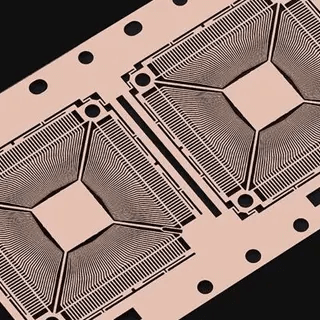
- Copper etching with tolerances as tight as ±10% of material thickness
- Stainless steel etching that includes half-etching and full-etching services
- Aluminum etching for lightweight and high-strength applications
- Part sizes that could make up to 1500mm x 600mm.
- Double-depth etching capabilities on one side
TMNetch manages complete acid etching metal projects, from design review to finished parts. The company also supports international shipping.
Submit your metal etching drawing for a manufacturing review, including the material grade, thickness, critical dimensions, minimum holes or slots, required quantity, and finishing requirements. The engineering team can then evaluate whether chemical or photochemical etching is suitable for the part.
FAQs About Acid Etching Metal
Is acid etching permanent?
Yes, acid etching creates permanent changes to the metal surface. The acid removes material from the metal. It creates markings that will not wear through or fade over time.
How much does acid etching cost?
The costs of acid etching metal depend on the size, complexity, quantity, and type of metal. Simple name plates and signs will be less expensive than the more complex decorative panel. If you are in production mode, the per-part costs drop significantly at volume.
Is laser etching better than acid etching?
There is no single best method of etching metal. Laser etching is quicker and works with more materials, but has higher equipment costs. Acid etch metal processes are less costly for initial setup and are on a cost per square inch basis, more economical for larger areas. Ultimately, the decision will depend on unique application considerations.
What are common etching mistakes?
Common etching mistakes include poor surface cleaning and uneven resist coating. Other errors include wrong etchant selection, poor pattern alignment, and excessive etching time. These issues can cause rough edges, incomplete patterns, enlarged holes, undercutting, and uneven dimensions.
Wrapping Up
The acid etching metal process creates permanent patterns, markings, holes, slots, and other precision features. A controlled chemical reaction removes exposed material. Areas protected by resist remain unchanged.
When controlled well, acid etching improves the function and appearance of metal parts. It creates complex features without mechanical stress, burrs, or a heat-affected zone. Final quality depends on accurate patterns, proper etchant choice, stable process settings, and thorough inspection.