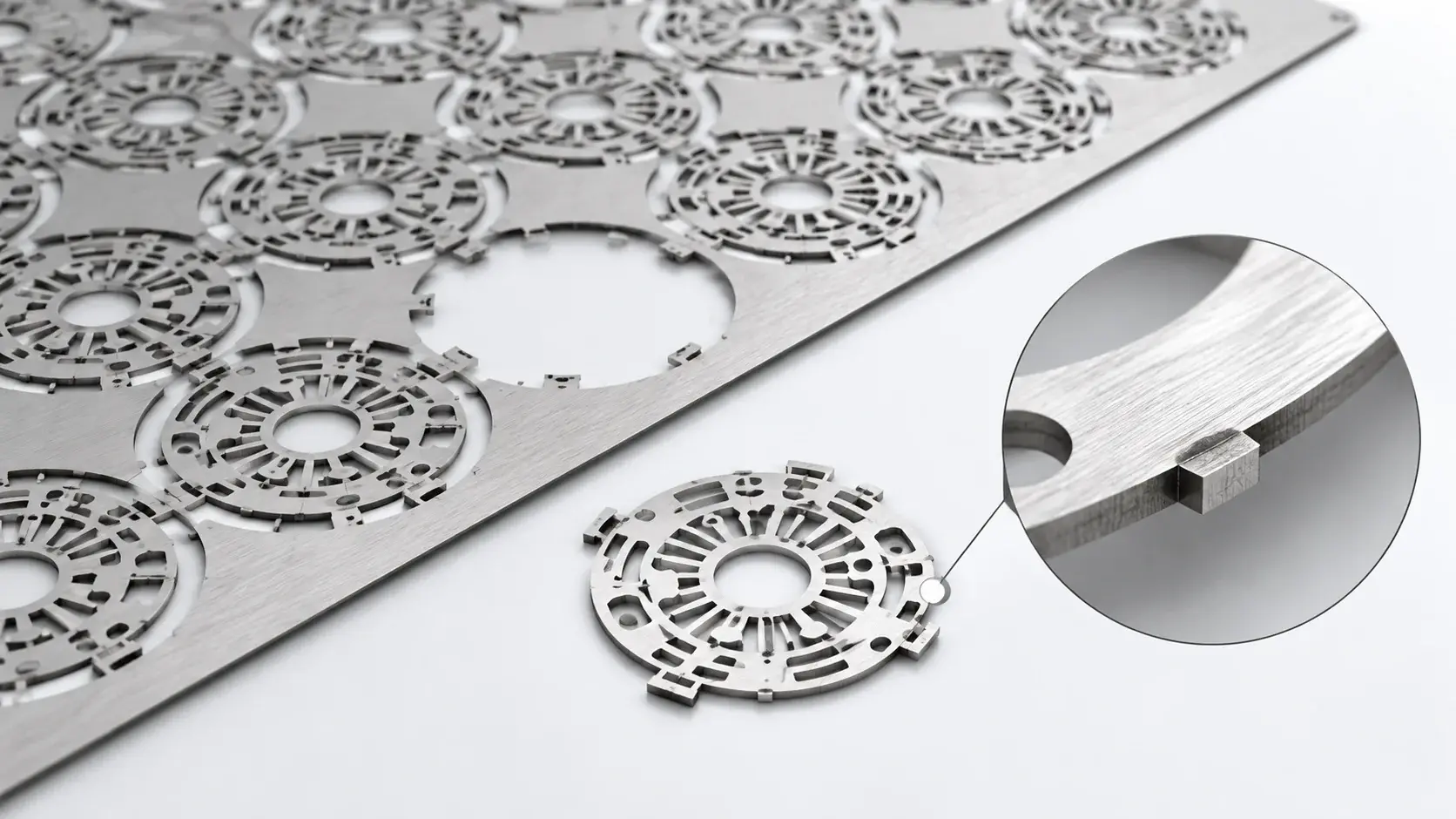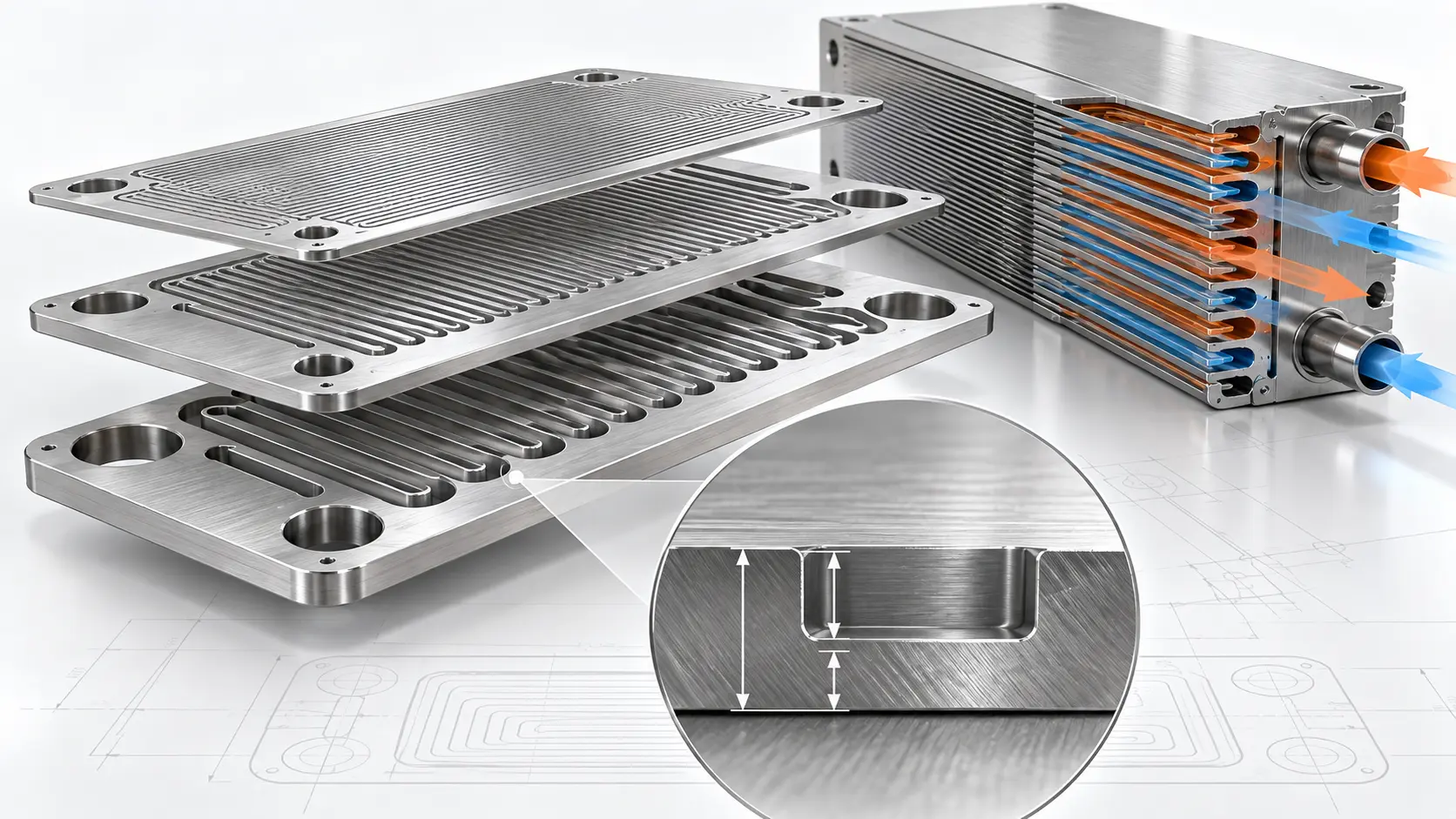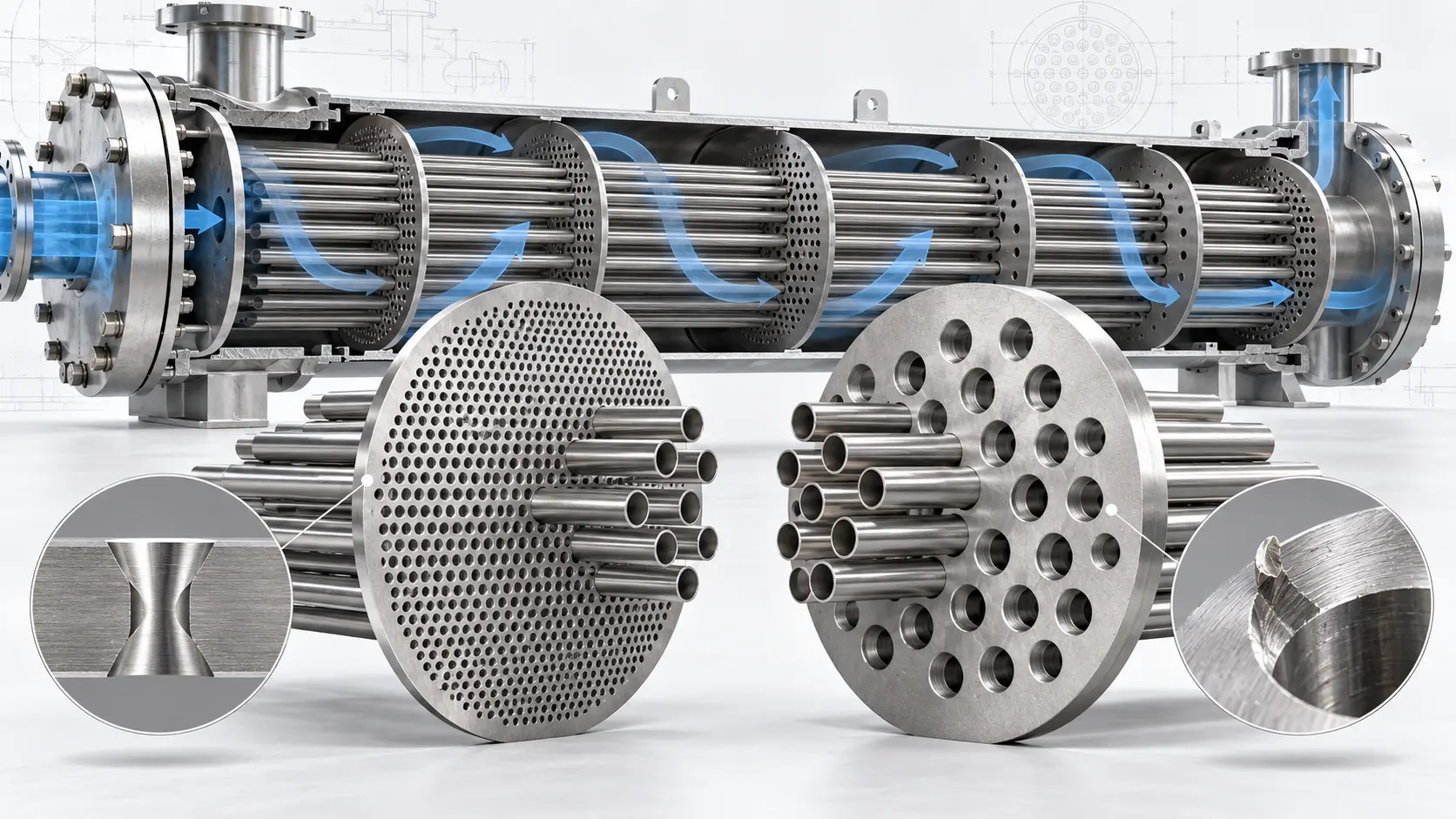

Photochemical etching is a precision manufacturing process that uses a photoresist stencil and controlled chemical dissolution to produce detailed components from metal sheet and foil. It is also called photo etching, photochemical machining, or PCM.
The process uses photoresist, ultraviolet light, artwork, and controlled chemical removal to create holes, slots, profiles, channels, and repeated patterns. It does not use mechanical cutting force or focused cutting heat.
However, photochemical etching is not suitable for every metal component. Material thickness, feature size, undercut, edge shape, etch depth, surface condition, and process control all affect the final result.
These factors are not signs that the process is inaccurate. They define the practical design window within which photochemical etching works effectively.
For a broader introduction, read our guide to the chemical etching process, applications, and benefits.
Key Takeaways
- Photochemical etching is mainly used for flat metal sheet and foil.
- Minimum feature size is closely related to material thickness.
- Chemical removal occurs downward and sideways, which creates undercut.
- Etched walls and corners do not normally have the same profile as machined features.
- Deep, narrow, and tightly spaced features require more process control.
- Controlled-depth features are possible, but PCE cannot create every true 3D shape.
- Tolerance depends on the material, thickness, geometry, etch depth, and inspection method.
- Every critical design should be reviewed before production.
What Does “Limitation” Mean in Photochemical Etching?
A process limitation is a condition that affects what a manufacturing method can produce or control. It does not always mean that a feature is impossible.
Some limitations can be managed through artwork compensation, suitable feature proportions, stable process conditions, or better inspection planning. Other limitations come from the basic nature of the process and cannot be fully removed.
For example, undercut is a natural result of chemical removal. A manufacturer can allow for it when preparing the artwork, but chemical etching will still not create the same wall profile as milling.
The importance of each limitation depends on the actual part. A narrow slot in a thin sheet may behave differently from the same slot in a thicker sheet. Material, thickness, depth, spacing, and tolerance must therefore be reviewed together.
Why Does Photochemical Etching Have Design Limits?
Photochemical etching removes exposed metal while photoresist protects the areas that must remain.
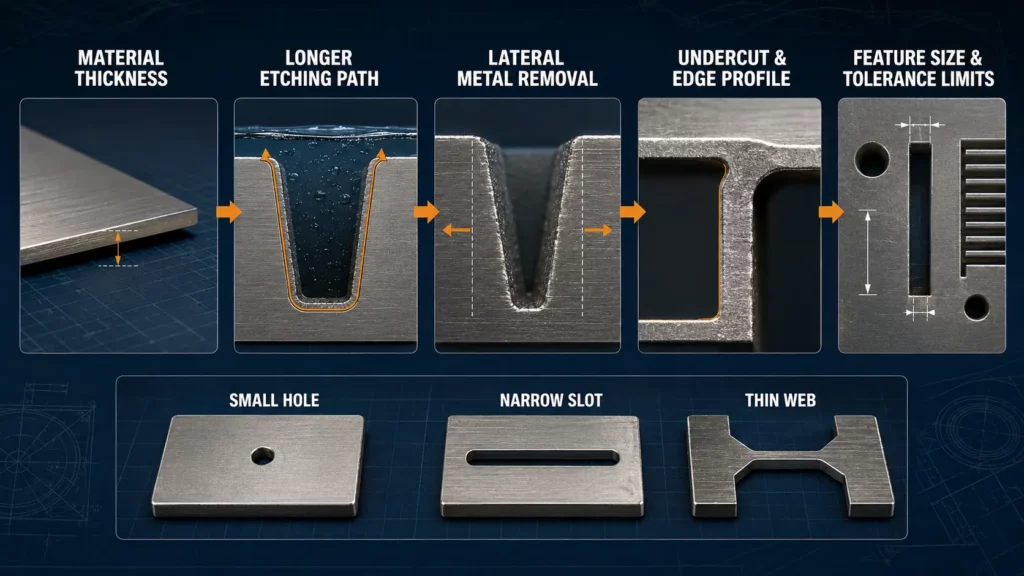
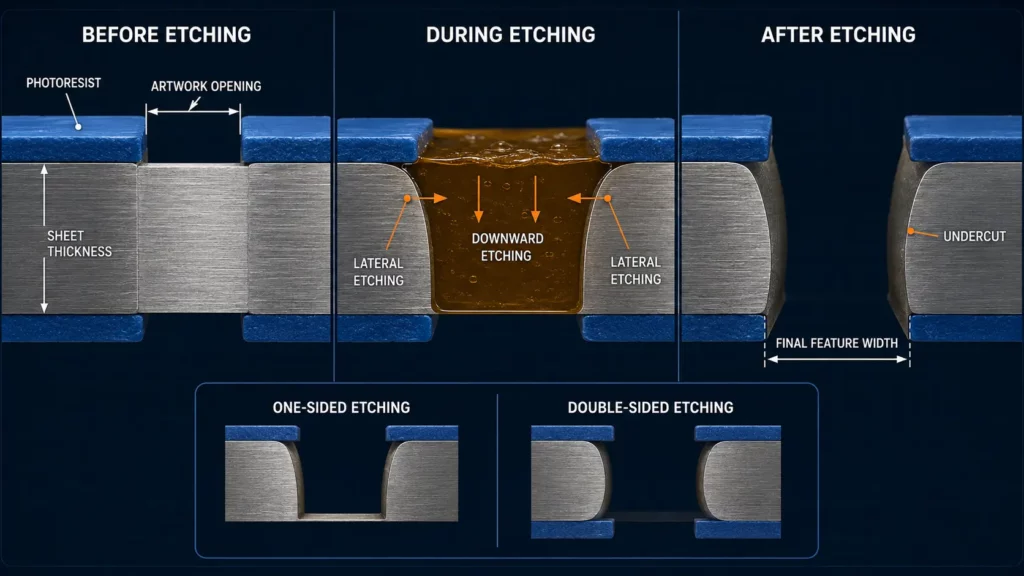
During etching, the etchant removes metal not only perpendicular to the sheet but also laterally beneath the photoresist. This lateral removal, known as undercut in photochemical machining, changes the cross-sectional profile and makes minimum feature size increasingly dependent on material thickness.
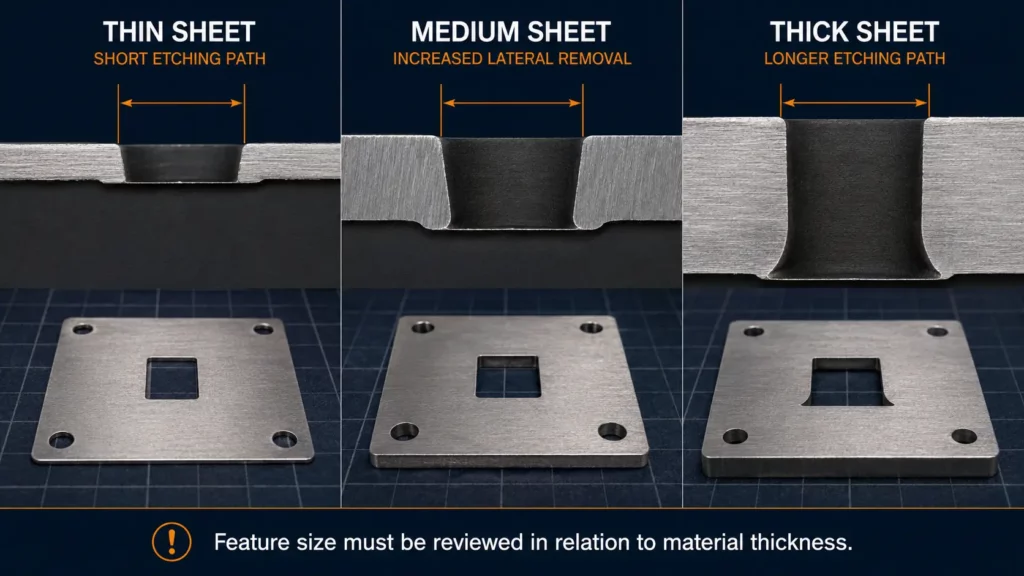
When the etchant must travel farther through a thicker sheet, the effect of lateral removal becomes more important. It can affect the final size of holes, slots, webs, corners, and outside profiles.
The process may use artwork compensation to allow for expected material removal. However, compensation cannot turn a chemical process into a mechanical cutting process. The final edge still has an etched profile.
For a complete explanation of photoresist, UV exposure, developing, chemical etching, cleaning, and inspection, read our photochemical etching process and design guide.
10 Key Limitations of Photochemical Etching
1. It Is Mainly a Sheet-Metal Process
Photochemical etching works mainly with flat metal sheet, strip, and foil. It is commonly used to produce thin components with detailed profiles and repeated openings.
It is less suitable for thick structural parts, solid blocks, raised bosses, threads, or large three-dimensional forms. These features do not match the flat-sheet foundation of the process.
A flat etched blank can be bent or formed after etching. However, bending is a separate operation and has its own material and geometry requirements.
2. Feature Size Is Related to Material Thickness
Minimum feature size cannot be considered separately from sheet thickness.
As the material becomes thicker, the etchant must remove more metal to cut through the sheet. This can increase lateral undercut and make very small openings harder to control.
This relationship affects:
- Hole diameter
- Slot width
- Web width
- Feature spacing
- Fine teeth
- Dense opening patterns
A minimum feature size from one project should not be applied to another material or thickness without review.
3. Undercut Changes Lateral Dimensions
Undercut occurs when the etchant removes metal sideways beneath the photoresist.
It can change the final dimensions of holes, slots, outside profiles, and narrow metal sections. It also affects the relationship between the feature shown on the artwork and the feature produced in the metal.
Undercut is not always a defect. It is a normal part of the process that must be considered during artwork preparation and dimensional planning.
The amount of undercut can vary with the material, thickness, feature geometry, etchant condition, exposure pattern, and process settings.
4. Perfectly Vertical Walls Are Not Typical
Photochemical etching does not normally create the same wall shape as milling or another mechanical cutting method.
Because metal is removed both downward and sideways, the etched edge may include a taper or curved profile. The exact shape depends on whether the feature is etched from one side or both sides.
This matters when a component requires:
- A deep feature with a near-vertical wall
- A specific edge angle
- A sharp internal corner
- A controlled fit along the complete sheet thickness
Critical wall and edge requirements should be stated on the drawing instead of being included under a general linear tolerance.
5. Deep and Narrow Features Are Harder to Control
Deep channels and narrow recesses place more demands on the etching process.
The etchant must reach the exposed metal and remove reaction products from the feature. As the feature becomes deeper or narrower, uniform chemical access can become more difficult.
Undercut also becomes more important as the required depth increases. A deep channel may become wider near its opening than at its lower surface.
Channel depth, width, spacing, remaining thickness, and nearby features should therefore be reviewed as one connected design.
6. True 3D Geometry Is Limited
Photochemical etching can create partial-depth and multi-depth features. These may include channels, recesses, markings, bend lines, and surface patterns.
However, the finished component is still mainly based on a metal sheet. The process does not create arbitrary curved surfaces, deep pockets, threads, raised bosses, or thick structural forms.
The term “3D photo etching” refers to controlled depth within a sheet-based part. It does not mean that the process can replace every form of full 3D manufacturing.
Learn more about controlled-depth and multi-depth photo chemical etching.
7. Etch Depth Requires Separate Control
Through etching removes metal through the full thickness of the sheet. Partial-depth etching removes only part of the thickness and leaves metal below the feature.
These two feature types require different controls.
For a partial-depth feature, the drawing should define:
- The side to be etched
- The required depth
- The remaining material thickness
- The depth tolerance
- The measurement location
- The relationship to nearby through-features
“Half etching” does not always mean that exactly half of the material must be removed. The required depth should be clearly shown on the drawing.
8. Starting Surface Quality and Flatness Matter
Photochemical etching does not automatically remove every mark, scratch, wave, or surface defect from the original sheet.
Oil, oxidation, contamination, or an uneven surface may affect photoresist adhesion and the final appearance. Proper surface preparation is therefore an important part of production.
Flatness can also be affected by the part design. Large open areas, very narrow webs, uneven patterns, and later secondary processes may reduce support within a thin sheet.
If flatness or cosmetic appearance is critical, it should be defined separately on the drawing.
9. Tolerance Is Not One Fixed Number
There is no single photochemical etching tolerance that applies to every component.
Achievable accuracy depends on several connected factors:
- Material type and exact grade
- Material thickness
- Part size
- Hole, slot, and web geometry
- Feature spacing
- Etch depth
- Surface condition
- Critical dimension location
- Inspection method
An outside dimension, a small hole, a channel depth, and a dense opening pattern may require different measurement methods.
Applying the tightest tolerance to every feature can also create unnecessary manufacturing difficulty. The drawing should identify the dimensions that directly affect fit, assembly, or function.
10. Chemical and Environmental Control Is Required
Photochemical etching uses controlled industrial chemicals. These chemicals must be managed throughout production.
Etchant condition, temperature, line speed, spray control, and metal content can affect the chemical reaction. Cleaning and rinsing must also be controlled so that the reaction stops at the correct stage.
The manufacturer must manage chemical storage, worker safety, rinsing, and waste treatment under the regulations that apply in its jurisdiction. In the United States, the OSHA Hazard Communication Standard requires employers using hazardous workplace chemicals to provide appropriate labels, safety data sheets, and worker training. This makes photochemical etching an industrial process rather than a simple surface treatment that can be performed without control.
How Do These Limitations Affect Common Features?
The table below shows how the main limitations relate to common etched features.
| Feature | Main limitation | Why it matters |
|---|---|---|
| Small holes | Material thickness and undercut | Hole size and sheet thickness must be reviewed together |
| Narrow slots | Sideways material removal | Undercut can change the final slot width and edge profile |
| Thin webs | Etching on nearby sides | The remaining metal may become narrower or weaker |
| Dense hole arrays | Spacing and sheet stability | Small changes can affect the pattern and remaining metal |
| Deep channels | Etchant access and undercut | Width, depth, and remaining thickness become harder to control together |
| Sharp internal corners | Chemical edge profile | Internal corners may become more rounded |
| Outside corners | Greater exposed area | The corner may etch differently from a straight edge |
| Half-etched features | Depth control | Required depth and remaining thickness need separate inspection |
| Thick components | Longer etching path | More metal must be removed, which can increase undercut |
| Curved 3D parts | Flat-sheet process | PCE cannot directly create every three-dimensional form |
These effects do not mean that every feature in the table is unsuitable for etching. They show why the complete drawing must be reviewed instead of judging a part from one dimension alone.
Are Very Small Holes and Slots Impossible?
No. Photochemical etching can produce small holes, slots, and repeated openings in suitable designs.
The difficulty depends on the relationship between the opening and the sheet thickness. A small hole in a thin sheet does not present the same conditions as the same hole in a thicker sheet.
The following factors also affect feasibility:
- Metal and alloy grade
- Hole or slot shape
- Distance between openings
- Width of the remaining metal
- Pattern density
- Required dimensional tolerance
- Surface and flatness requirements
For this reason, a published minimum feature value should not be treated as a universal rule. The manufacturer should review the complete pattern and the material thickness before confirming the feature.
Can Photochemical Etching Limitations Be Reduced?
Some effects can be reduced or managed, although the basic nature of chemical removal does not change.
Artwork Compensation
The artwork can be adjusted to allow for expected undercut and dimensional change. The amount of compensation depends on the material, thickness, geometry, and process.
Suitable Feature Proportions
Hole size, slot width, web width, depth, and spacing should be planned in relation to material thickness. Better feature proportions give the process more room to produce a stable result.
Controlled Process Conditions
Etchant condition, temperature, line speed, spray pattern, exposure, and developing all require control. Stable conditions help improve repeatability between parts and production batches.
Surface Preparation
Cleaning removes oil, dirt, and other contamination before photoresist coating. A clean surface helps the resist attach to the metal and protect the required areas.
Clear Critical Dimensions
The drawing should identify which dimensions affect function. This allows production and inspection to focus on the most important features.
Prototyping and Inspection
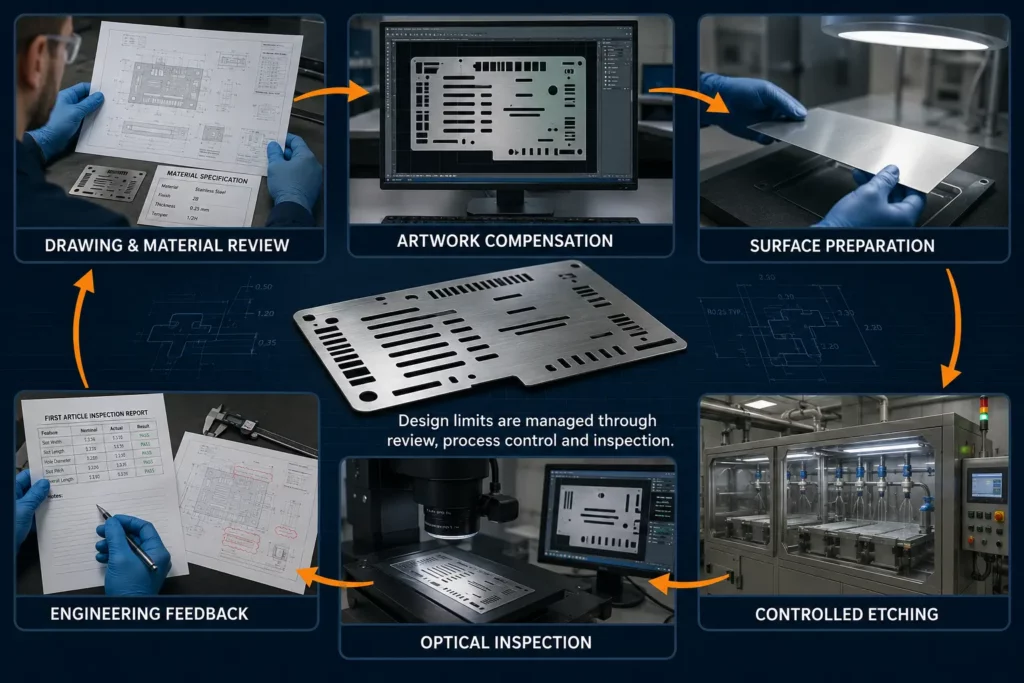
A prototype or first article can confirm how the material and geometry behave before full production. Fine holes, dense patterns, profiles, and etched depths may require optical, vision, or other suitable inspection methods.
These actions help manage process limits. They do not guarantee that every geometry can be produced by photochemical etching.
What Information Is Needed to Review a Design?
A technical review should consider the complete component rather than one feature.
Useful project information includes:
- A 2D drawing or CAD file
- Material name and exact grade
- Material thickness and temper, where relevant
- Critical dimensions and tolerances
- Minimum hole and slot sizes
- Minimum web widths and feature spacing
- Through-etched and partial-depth areas
- Required etch depths and remaining thickness
- Flatness and edge requirements
- Surface finish, plating, or coating
- Inspection and documentation requirements
- Prototype and production quantities
- Final application and assembly conditions
The drawing should clearly separate functional requirements from general reference dimensions. It should also identify which features require special measurement or reporting.
TMNetch reviews material, thickness, geometry, depth, surface requirements, quantity, and inspection needs before confirming manufacturability. For an active project, visit our photo etching service page or submit your drawing for review.
Frequently Asked Questions
What are the main limitations of photochemical etching?
The main limitations involve material thickness, minimum feature size, undercut, edge profile, deep and narrow features, true 3D geometry, etch depth, starting surface quality, tolerance, and chemical process control.
The importance of each limitation depends on the material and part design.
Is photochemical etching suitable for thick metal?
Photochemical etching is mainly used for sheet and foil components.
As the metal becomes thicker, the etchant must remove more material. This can increase etching time, undercut, minimum feature size, and edge-profile variation.
How does metal thickness affect minimum feature size?
Thicker metal requires a longer etching path. During this time, sideways removal can increase.
Small holes, narrow slots, and thin webs therefore become more difficult as their size approaches the thickness of the sheet.
What is undercut in chemical etching?
Undercut is the sideways removal of metal beneath the edge of the photoresist.
It affects the final size and profile of holes, slots, corners, webs, and outside edges. It is a normal feature of chemical etching rather than a mechanical cutting burr.
Can photochemical etching produce vertical walls?
Photochemical etching does not normally produce the same vertical wall profile as milling.
The etchant removes metal downward and sideways. This creates an etched edge shape that depends on the material, thickness, feature geometry, and whether the sheet is etched from one side or both sides.
Conclusion
Photochemical etching is effective for producing detailed components from metal sheet and foil. It can create profiles, holes, slots, screens, channels, markings, and repeated patterns without mechanical cutting force or focused cutting heat.
Its main limitations come from the way chemical removal interacts with material thickness and geometry. Undercut, edge profile, feature size, depth, flatness, surface quality, and process conditions must all be considered.
These limits do not make photochemical etching unsuitable for precision manufacturing. They show why the process works best when the design matches its sheet-based and photo-defined nature.
For a broader understanding of the process, materials, tolerances, applications, and design requirements, read the complete Photochemical Etching: Process, Materials, Tolerances & Design Guide.
If you have a drawing with small holes, narrow slots, thin webs, half-etched channels, or critical tolerances, contact TMNetch for a technical review.