
When you observe a speaker with its perforated metal surface covering the sound-producing components, the grille design may appear mainly cosmetic. In practice, micro-perforated speaker grilles must balance component protection, acoustic transparency, structural strength, and appearance. The primary function of these grilles goes beyond aesthetics because they provide protection for components and enable sound passage without distortion while enhancing the overall design appearance. But making them?
The production method requires a completely different set of methods.
The process of making micro-hole grilles needs your full attention before we begin. This article explores every aspect needed for creating the essential components which power audio equipment through materials and techniques along with necessary tools.
Understanding the Role of Speaker Grilles with micro holes
Speaker grilles play multiple essential functions in audio devices since they both safeguard vital speaker elements and direct sound without interference, and also serve as design finishing components.
Protecting the Speaker Components
Speakers are sensitive devices. The protective barrier function of the grille provides defense for speakers’ cones along with their internal connections from airborne dirt and users who touch them too much.
Enhancing Sound Quality Without Obstruction
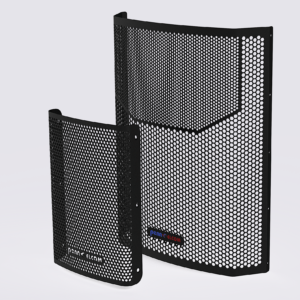
A proper sound protection design should enable clear sound passage while shielding the device from harm. The small perforations in speaker meshes enable sound wave transmission without causing audible reflections between them.
Aesthetic and Branding Value
Design elements always matter in any successful outcome. The overall appearance of a speaker significantly depends on the grille design selection, which may include brushed metal finishes together with custom logo cutouts.
Materials Used for Micro-Perforated Grilles
Common Choices (Steel, Aluminum, ABS Plastic)
Steel: Strong and rigid but heavier.
Aluminum : Lightweight and corrosion-resistant, aluminum is often evaluated for speaker grilles and other thin decorative or functional panels. For complex patterns produced without mechanical punching, aluminium etching can be considered as an alternative manufacturing route.
ABS Plastic: Good for low-cost or indoor applications.
The selection of metal for microhole production occurs for various reasons.
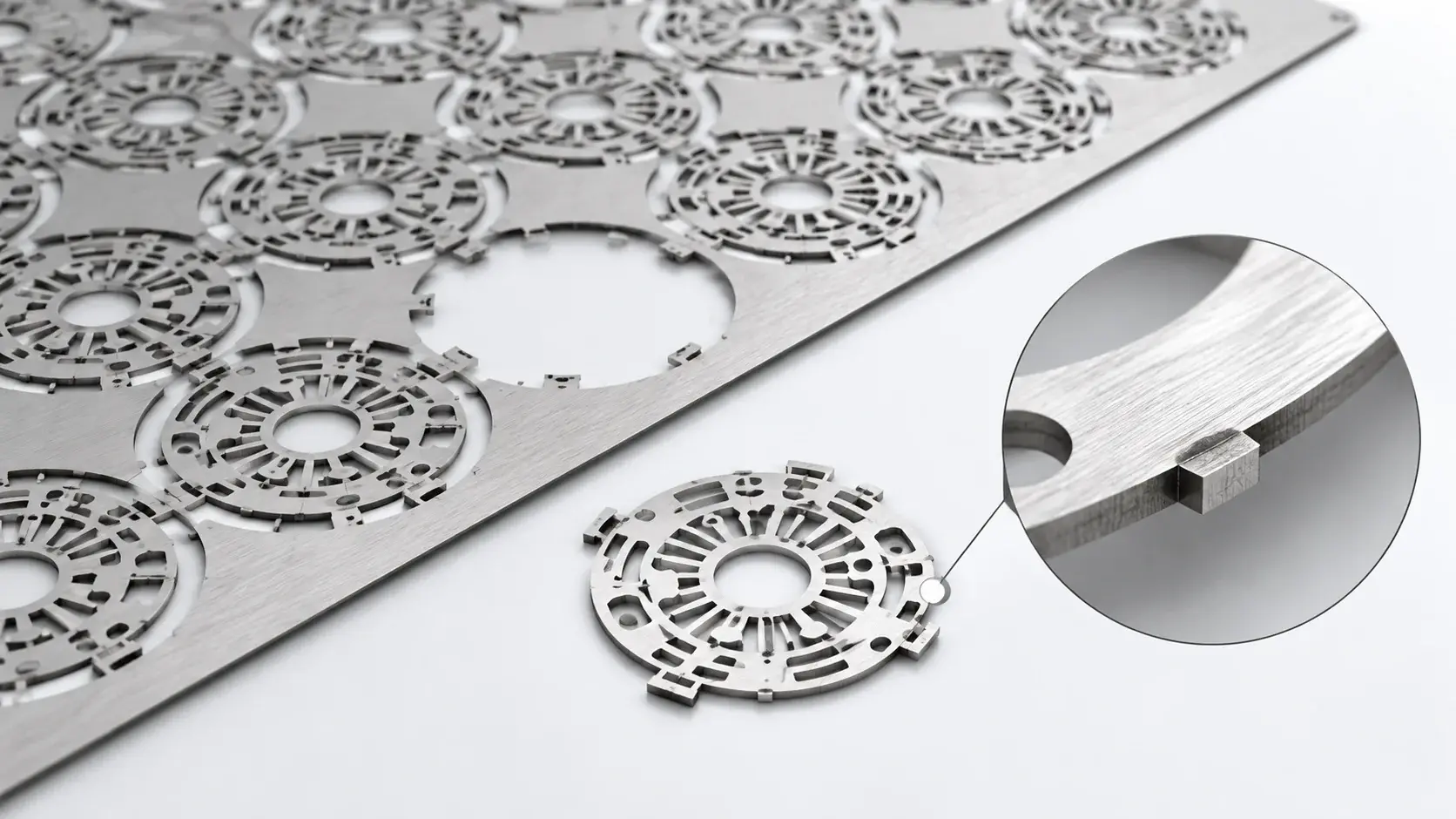
The best manufacturing method depends on metal thickness, hole size, pattern complexity, production volume, and cosmetic requirements. Engineers can compare photo-etched and perforated metal speaker grilles before selecting punching, laser processing, or photochemical etching.

Acoustic Transparency of Materials
The material density together with its natural resonance shapes how sound waves interact with it. The acoustic function of micro-perforated sheets generally works more efficiently through aluminum materials.
Tools and Machinery Required
Laser Punching Machines
Great for ultra-precise, clean holes. Useful for small production runs or high-detail work.
CNC Punch Press
The industry favorite. The tool provides quick results together with steady processing, which makes it ideal for large-scale manufacturing.
Users need metal sheet flattening and finishing tools.
Testing tools enable a smooth material surface before and after punching operations to reduce deformation and harsh edges.
Molds and Dies for Stamping
Molding the grilles into shapes requires these tools.
Design and Engineering
CAD Design of the Hole Pattern
All metal punching begins with putting design information into a computer-aided design file. Engineers use CAD to determine the positions of holes in addition to inter-hole spacing while selecting pattern kinds, including grids and honeycombs, and unique logo patterns.
Speaker-grille drawings should define hole diameter, pitch, open-area percentage, material thickness, edge spacing, and pattern geometry. For etched designs, engineers should also review photochemical etching design limits before finalizing the CAD file.
Diameter : Usually between 0.5 mm and 1.5 mm
Pitch: Distance between holes.
The open area within the filter must be set between 30% and 50% to allow proper sound transmission.

Balancing Aesthetics with Functionality
Too many holes? You risk weakening the structure. Too few? You kill sound clarity. Balance is key.
The Manufacturing Process Step by Step
The manufacturing procedure begins with two main subtasks.
Step 1: Selecting and Preparing Raw Material
The manufacturing begins with aluminum or steel sheets in flat form. The production process requires aluminum or steel sheets, which measure from 0.5mm to 1.2mm based on specific usage needs.
Operation number two consists of raw material measurements through cutting processes.
Step 2: Cutting the Material to Size
Manufacturers should use either laser cutters or shearing machines to transform raw material into grill dimensions.
Step 3: Surface Cleaning and Deburring
The material requires surface treatment to eliminate all dirt substances and level all edges for producing harmless silicone components.
Step 4: Micro Hole Punching or Drilling
The process includes both micro hole punching and drilling operations in sequence.
At the pattern-forming stage, manufacturers may use punching, laser processing, or photo etching depending on the required hole size, material thickness, pattern complexity, and production volume. Photo etching forms the openings through patterned photoresist and controlled chemical removal rather than mechanical punching.
Step 5: Shaping the Grille (Stamping/Bending)
The flat sheet becomes manageable by bending or creating domes before transforming it into any desired three-dimensional form.
Step 6: Surface Treatment and Coating
Protective finishes such as anodisation, powder coating, and painting should be applied to the grille for protection and enhanced looks.
Step 7: Quality Control and Acoustic Testing
Quality control and acoustic testing constitute the seventh step of production.
Any production should be checked based on whole consistency and flatness levels as well as acoustical transparency standards. Some test centers verify sound transmission across different frequency ranges.

Micro Hole Standards and Specifications
Typical Micro Hole Sizes (0.5 mm to 1.5 mm)
The chosen hole sizes make this grille distinctively protective while remaining acoustically usable.
Uniformity and Accuracy Tolerances
Required tolerance depends on the material, sheet thickness, hole diameter, pitch, pattern density, and manufacturing method. Buyers should confirm the achievable feature size and tolerance for photochemical etching against the actual grille drawing. The level of accuracy matters a great deal.
Open Area Percentage for Audio Transparency
The optimal performance level is achieved when manufacturers maintain an open area between 40% and 40–50% for their protective grill designs.
Finishing Techniques
Powder Coating
Durable, colourful, and weather-resistant. Great for both indoor and outdoor speaker grilles.
Anodizing (for Aluminum)
The finish creates an immune layer that retains metallic appearances against corrosion.
Common in premium audio gear.
Brushed or Polished Finish
The designer appearance of the speaker grille receives an upscale touch through this finishing method.
Acoustic Considerations
Hole dimensions impact the behavior of sound waves when passing through the grill.
Higher-frequency audio clarity results from having perforations that do not cause substantial sound wave diffraction.
Avoiding Diffraction and Sound Reflection
Holes should be spaced uniformly to prevent sound reflections and phase interference that brings confusion to the audio.
Importance of Uniform Performance
Uneven holes = uneven acoustics. Period.

Common Challenges and How to Overcome Them
Warping During Punching
Solution? Post-punch application of flattening tools or adjustment of tooling pressure helps solve this issue.
Clogging of Punches
The use of lubricants combined with regular cleaning operations will prevent micro-scale punch clogging.
Inconsistent Hole Sizes
Use highly precise machine calibration equipment while maintaining high-precision tools.
Applications Beyond Speakers
Automotive Speaker Grilles
Automotive speaker grilles may require stainless steel or aluminum structures that balance impact resistance, corrosion resistance, acoustic transparency, interior styling, and surface finishing.
Home Theatre Systems
Aesthetics in this application have equal importance to sound quality, which leads to the addition of customized finishes and logo cut-outs.
Industrial Audio Devices
Industrial factories require tough functional grills to work as their public address systems.
Cost Considerations and Production Efficiency
Material Waste Reduction
The CAD design process should include an optimization of hole placement to prevent material waste.
Batch Processing and Automation
Material processing through automation allows for fast production rates; at the same time, it provides uniform results.
Tooling Costs and Maintenance
Tool quality determines product longevity, even though high-quality tools have an initial higher expense. Occasional upkeep will yield better results in prolonged periods.
Conclusion
The production of micro-hole speaker grilles demands both artistic and scientific skills. The creation of these protective grilles requires perfect selection of components alongside total management of the production sequence for achieving optimal operational results. Having complete knowledge about the production details of these grilles allows you to achieve higher quality and innovation outcomes, whether you build personal audio equipment or manage production lines. For a custom speaker-grille project, provide the material, thickness, overall dimensions, hole diameter, pitch, open-area requirement, surface finish, forming requirements, quantity, and application so the design can be reviewed for manufacturability.