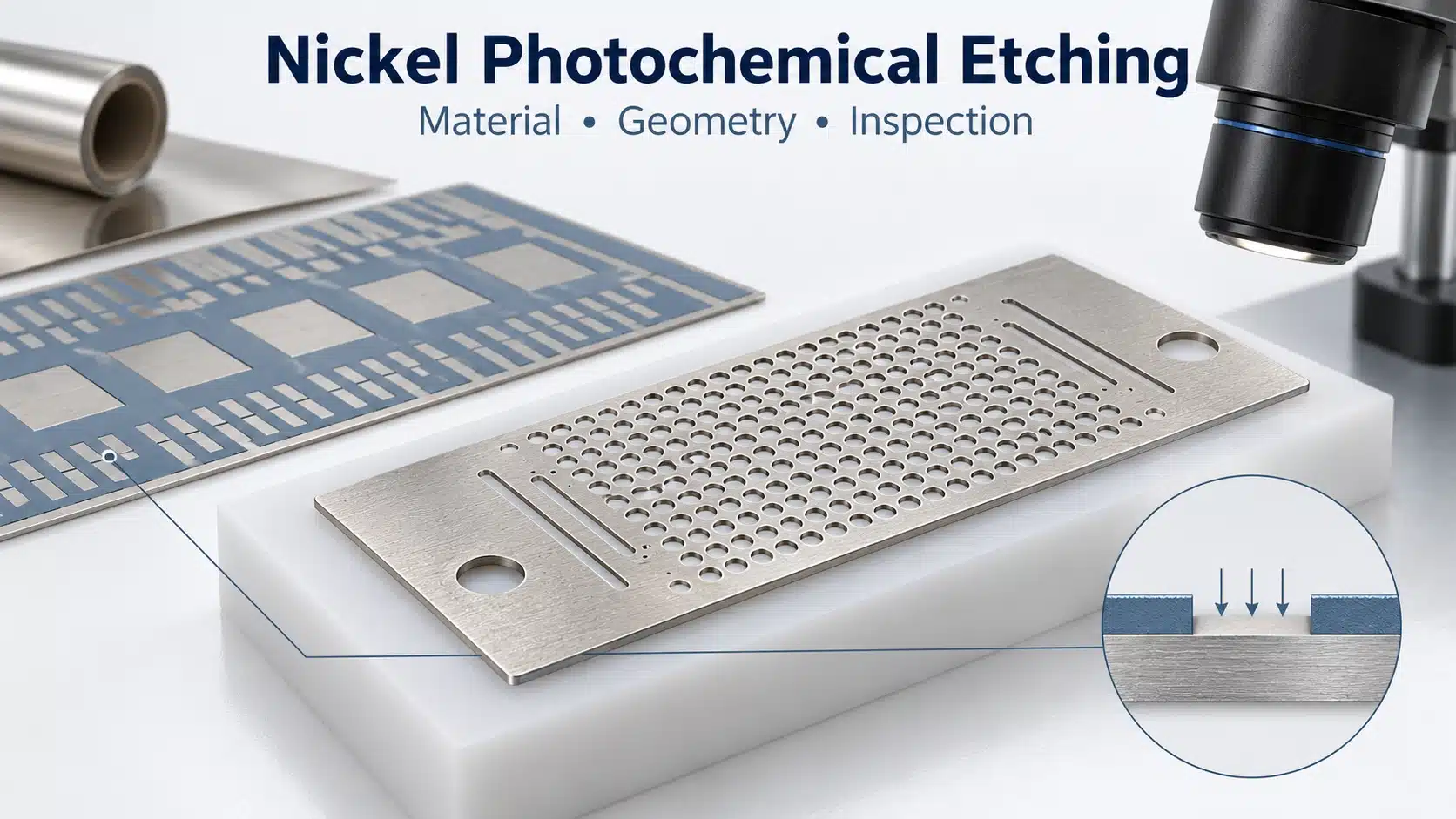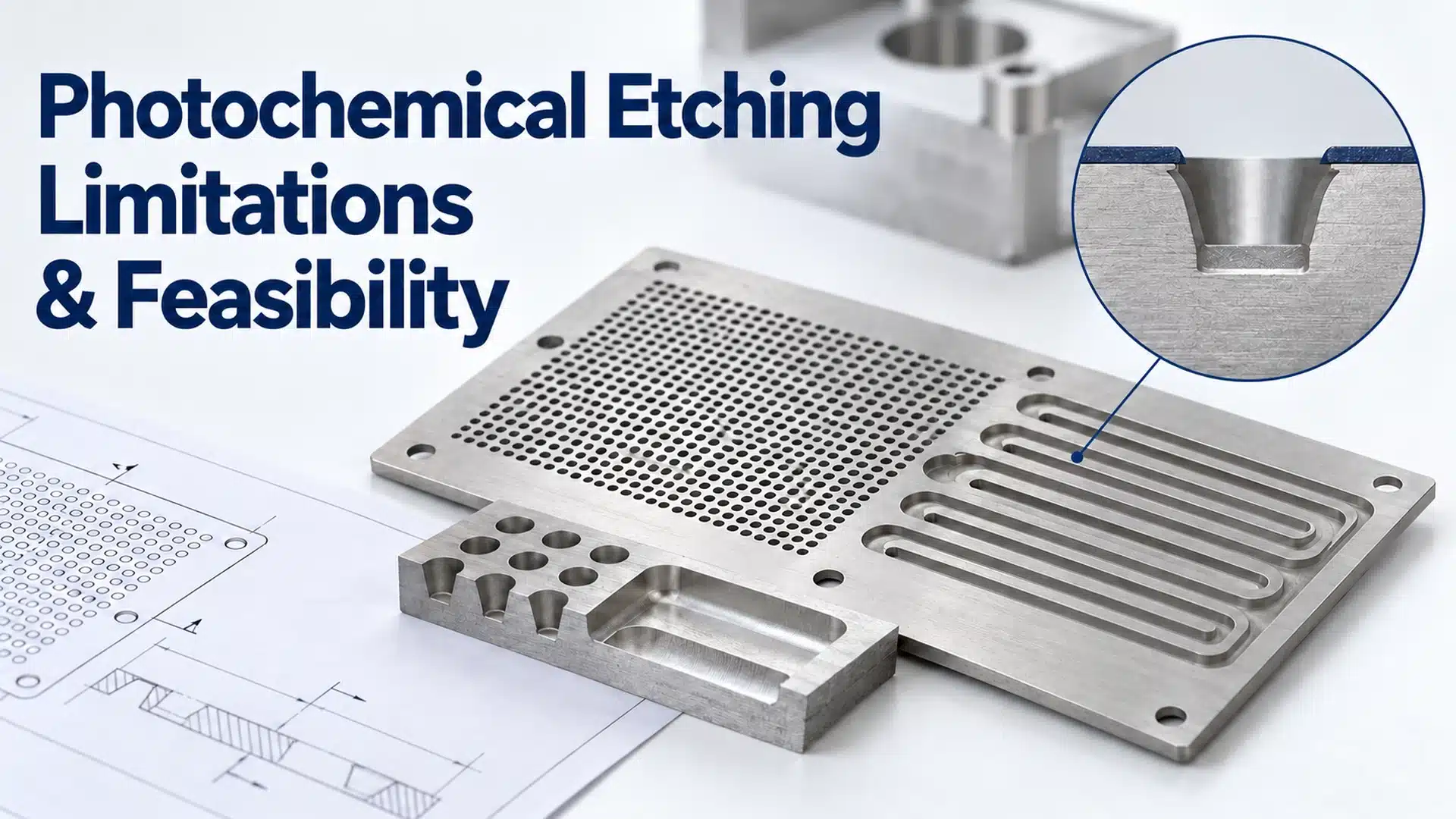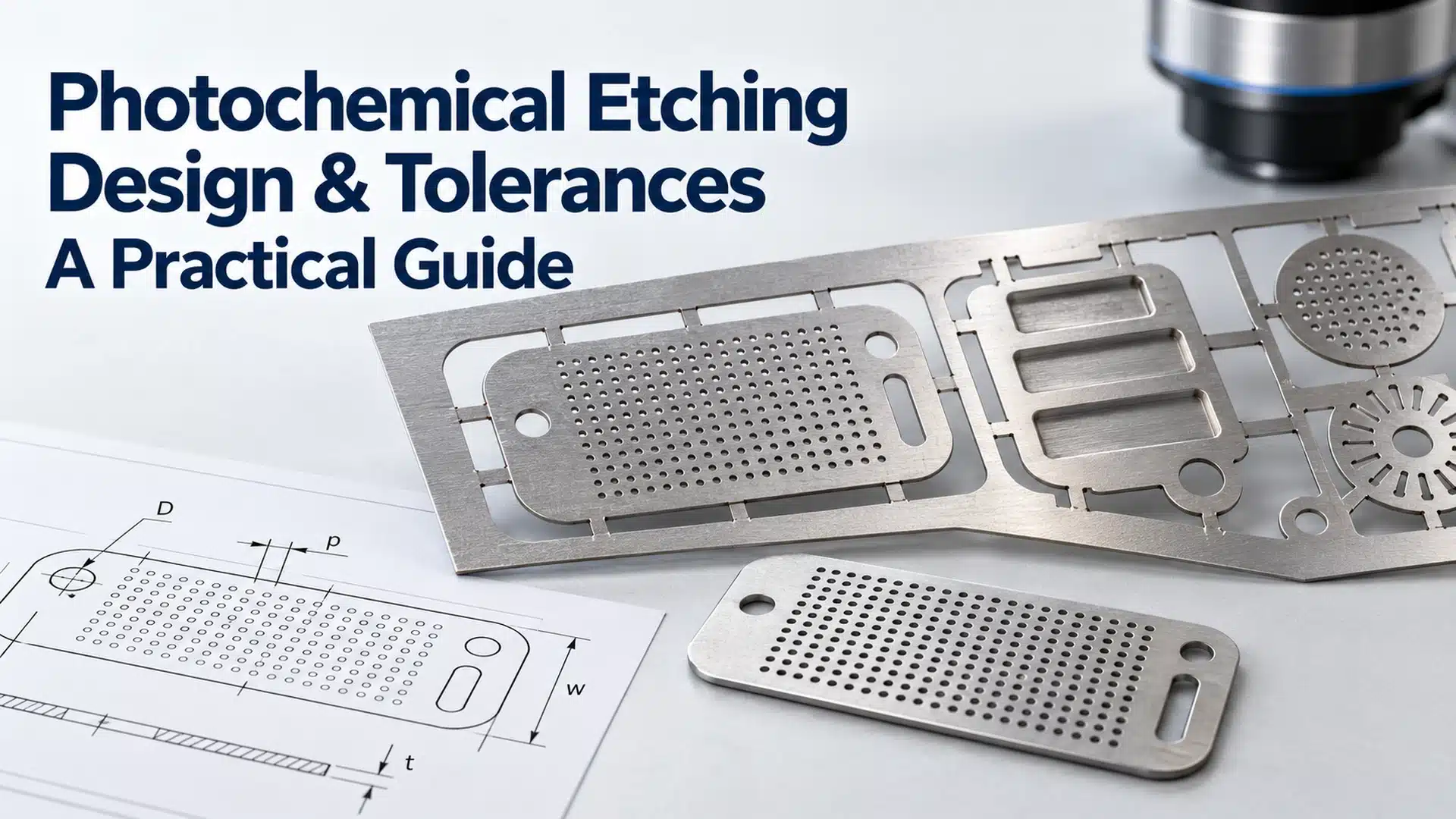

Chemical etching companies differ in material range, thickness capability, feature size, tolerances, quality systems, production scale and secondary processing. The right supplier is not necessarily the largest company, but the one that can meet your drawing requirements and support your required production stage. This guide compares eight chemical etching companies and explains how to evaluate a supplier before requesting a quotation.
When evaluating suppliers, confirm whether their chemical etching services support your required material, thickness, tolerance and production volume.
How We Compared These Chemical Etching Companies
We compared each chemical etching company using information published on its official website, certification pages and service pages. The review focuses on capabilities that matter to engineers and procurement teams rather than marketing claims alone.
The main comparison criteria include:
- Materials and available thickness ranges
- Published tolerances and feature capabilities
- Prototype, low-volume and production support
- Quality certifications and inspection systems
- Experience in regulated or demanding industries
- Engineering and design-for-manufacturability support
- Forming, plating, finishing and other secondary operations
- Factory location and international service coverage
A company may be strong in one area without being the best choice for every project. An aerospace buyer may prioritize AS9100 certification and traceability. An electronics manufacturer may care more about thin-foil processing, fine features and high-volume repeatability. A prototype buyer may prioritize flexible tooling and fast design revisions.
TMNetch publishes this comparison and is included in the list. The order should therefore be treated as an editorial overview, not an independent laboratory ranking. Buyers should confirm current certifications, tolerances, material availability, capacity and lead times directly with each supplier before placing an order.
| Chemical Etching Company | Location | Best For | Key Materials / Capabilities | Production Fit | Published Quality Information | Key Differentiator |
|---|---|---|---|---|---|---|
| TMNetch | China | Rapid prototyping, OEM production and global sourcing | Stainless steel, copper, brass, aluminum, nickel alloys, titanium, molybdenum; 0.01–2.5 mm; accuracy down to ±0.025 mm under suitable conditions | Prototype → high-volume production; published capacity up to 1,800 m²/day | ISO 9001:2015 | Combines rapid prototypes, broad material capability, scalable production and secondary processing for international OEM projects |
| Precision Micro | UK | High-volume aerospace and automotive programs | Wide range of standard and difficult-to-machine metals; large-scale sheet etching | Prototype → very high-volume production | AS9100, ISO 9001, IATF 16949, ISO 14001 | Large-scale production capacity and automotive/aerospace quality systems |
| Conard Corporation | USA | Aluminum etching and aerospace applications | Strong aluminum PCM expertise plus stainless steel, copper, nickel alloys and other engineering metals | Prototype → production | AS9100D, ISO 9001, ITAR registered | Specialized expertise in photochemical machining of aluminum |
| micrometal | Germany | Ultra-fine features and large-series micro-components | Stainless steel, copper, aluminum, titanium and specialty materials; Reel-to-Reel INLINE etching | Prototype development → high-volume series | ISO 9001, IATF 16949, ISO 13485, ISO 14001 | Highly automated Reel-to-Reel production for fine, repeatable micro-components |
| Advanced Chemical Etching (ACE) | UK | Aerospace and difficult-to-etch alloys | Titanium, aluminum, Nitinol and other precision metals; published thickness range 0.01–2.5 mm | Prototype → production | AS9100D, ISO 9001:2015 | Strong capability in high-performance and specialty alloys |
| Etchform | Netherlands | Specialty metals, R&D and complex thin-metal projects | Copper, brass, stainless steel, titanium, Nitinol, molybdenum and others; etching 0.003–1.5 mm; electroforming available | R&D / prototype → batch production | ISO 9001, ISO 45001, ISO 14001 | Broad material selection combined with etching, electroforming and secondary processing |
| Photofabrication Engineering (PEI) | USA | Titanium, medical, aerospace and energy applications | Strong titanium expertise plus aluminum, beryllium copper, molybdenum and other metals; forming and finishing available | Prototype → full-scale production | ISO 9001:2015, AS9100D, ITAR registered | Specialist titanium etching with integrated downstream processing |
| Tech Etch | USA | EMI/RFI shielding, electronics and aerospace | Precision photo-etched and formed metal parts plus EMI/RFI shielding and flex/rigid-flex technologies | Prototype → production | ISO 9001:2015, AS9100D; ISO 13485 at applicable facilities | Combines photo etching with established EMI/RFI shielding and electronics capabilities |
What Does a Chemical Etching Company Actually Provide?
A chemical etching company does more than remove unwanted metal. A capable supplier reviews drawings, checks whether features suit the selected material and recommends changes before production begins.
The manufacturer must also select and control the appropriate chemical etching process. This includes managing photoresist preparation, exposure, development, etchant condition, temperature and processing time. After etching, the supplier inspects critical dimensions and verifies that the parts meet the drawing requirements.
Some chemical etching companies also support material sourcing, prototyping, forming, plating, heat treatment and surface finishing. These capabilities can help buyers move from an early design to repeat production without coordinating several separate vendors.
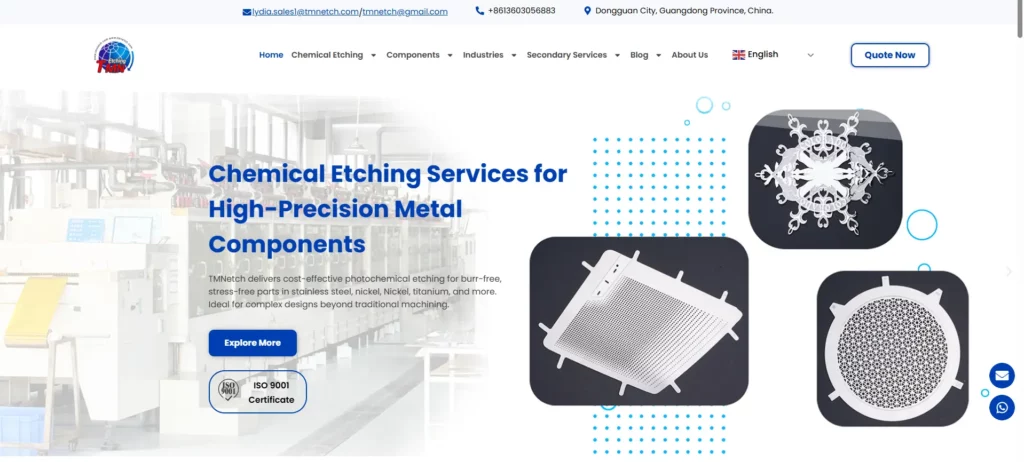
1. TMNetch – Precision Chemical Etching for Rapid Prototyping and Volume Production
Founded in 2011 and based in Dongguan, China, TMNetch is a photochemical etching manufacturer serving international OEM and engineering customers across electronics, automotive, aerospace, medical, energy and precision engineering applications.
Its main strength is the combination of rapid prototyping, broad material capability and scalable production. According to its published chemical etching capabilities, TMNetch supports projects ranging from development samples to high-volume production, making it particularly relevant to buyers that want to move from design validation into repeat manufacturing with the same supplier.
Core Capabilities
TMNetch publishes the following manufacturing capabilities:
- Material thickness: approximately 0.01 mm to 2.5 mm, depending on the metal and part design
- Dimensional accuracy: as tight as ±0.025 mm for suitable applications
- Production capacity: up to 1,800 m² of processed material per day
- Production equipment: five automated etching lines listed on its current chemical etching capability page
- Prototype support: prototypes can be produced in as little as six hours for suitable projects
- Quality system: ISO 9001:2015
- Secondary operations: forming, plating, heat treatment and other finishing operations are available for applicable components
These values should be treated as published capabilities rather than universal specifications. Actual tolerances and lead times depend on material thickness, alloy, geometry, feature size and order requirements.
Materials and Applications
TMNetch works with commonly etched engineering metals including:
- Stainless steel
- Copper and copper alloys
- Brass
- Nickel and nickel alloys
- Aluminum alloys
- Titanium alloys
- Molybdenum
- Other specialty metals subject to engineering review
This material range supports components such as EMI/RFI shields, encoder discs, lead frames, shims, filters, bipolar plates, vapor-chamber components and other thin precision metal parts.
Why TMNetch Stands Out
For international buyers, TMNetch’s main advantage is not one individual specification but the combination of engineering flexibility, fast prototype development and production-scale capacity.
A buyer developing a new etched component may require several design revisions before production. Photochemical tooling allows these revisions to be made without investing in a new hard stamping die each time. Once the design is validated, the same manufacturing route can then be scaled toward repeat production.
This makes TMNetch particularly relevant to OEM projects where design flexibility, lead time and future production scalability must be considered together, rather than treating prototyping and mass production as separate sourcing decisions.
TMNetch also serves customers internationally, which can make it a practical option for companies comparing Asian manufacturing capacity with suppliers in Europe or North America.
Best Fit
TMNetch is a strong fit for:
- OEMs requiring custom precision-etched metal components
- Projects moving from prototype to medium- or high-volume production
- Buyers sourcing stainless steel, copper, nickel, titanium or other engineering alloys
- Electronics, automotive, aerospace, medical and energy applications
- International buyers looking for a China-based chemical etching manufacturer
- Projects that benefit from etching plus secondary forming or finishing operations
Considerations
The achievable tolerance, minimum feature size and lead time should be confirmed against the actual drawing rather than selected from a general capability table.
TMNetch also publishes this comparison and is included in the list. Buyers should therefore treat this section as a description of published manufacturing capabilities rather than an independent ranking, and should verify specifications, certification scope, capacity and quotation terms before supplier approval.
2. Precision Micro – High-Volume Chemical Etching for Aerospace and Automotive Applications
Precision Micro is a UK-based chemical etching manufacturer with a strong position in high-volume precision manufacturing, particularly for automotive, aerospace and other technically demanding industries.
The company operates a large purpose-built chemical etching facility and supports both standard engineering metals and specialist materials. Its published technical guidelines cover stainless steel and steel up to 2.5 mm thick, as well as nickel alloys, copper alloys and aluminum across defined thickness ranges.
Core Capabilities
Precision Micro combines chemical etching with extensive process control and optical measurement systems. Its quality systems include ISO 9001, AS9100, IATF 16949 and ISO 14001, making the company particularly relevant to aerospace and automotive supply chains.
Its production infrastructure is designed for repeat manufacturing as well as new-product introduction, with the company reporting production of tens of millions of precision components annually.
Best Fit
Precision Micro is a strong fit for:
- High-volume chemical etching programs
- Automotive components requiring IATF 16949 controls
- Aerospace projects requiring AS9100
- Difficult-to-machine and specialist metals
- OEMs requiring detailed process monitoring and dimensional inspection
Considerations
Buyers should still compare prototype costs, production lead times and project-specific tolerances. Published technical limits vary by material type and thickness, so the drawing should be reviewed before assuming a general tolerance applies to a specific component.
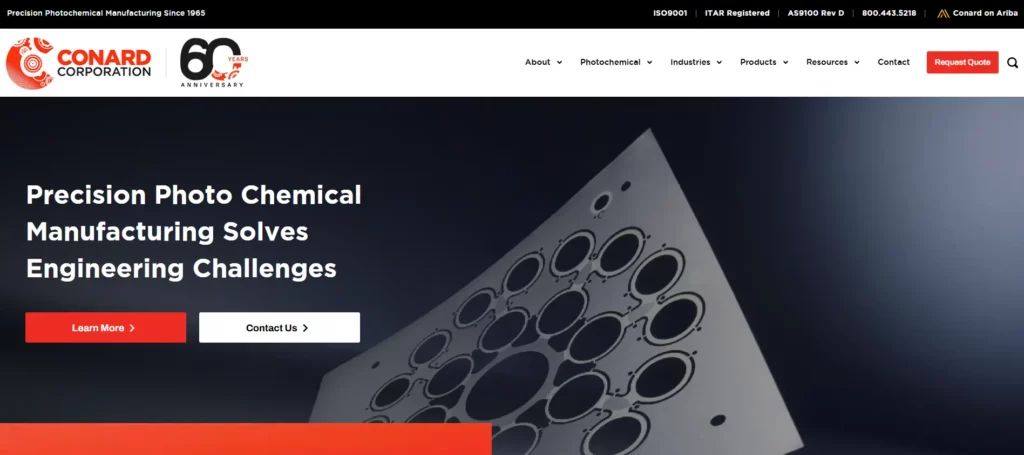
3.Conard Corporation – Aluminum Etching and Aerospace Specialist
Founded in 1965 in Connecticut, Conard Corporation is one of the longest-established US companies specializing in photochemical machining.
Its most distinctive capability is aluminum etching. Conard developed proprietary processes for photochemical machining of aluminum and continues to position this material as a major area of technical specialization. The company also processes steels, copper alloys, nickel alloys, molybdenum and other engineering metals.
Core Capabilities
Conard publishes photochemical machining capabilities for materials approximately 0.001 to 0.080 inches thick, depending on metal and geometry, and supports quantities ranging from prototypes to production runs in the hundreds of thousands.
The company is AS9100 Rev D and ISO 9001 registered and maintains ITAR registration, supporting applications where aerospace or defense documentation and traceability are important.
Best Fit
Conard is a strong fit for:
- Aluminum photochemical machining
- Aerospace and defense components
- US-based OEM supply chains
- Projects requiring AS9100 and ITAR controls
- Prototype-to-production precision metal parts
Considerations
Material-specific tolerances vary significantly with thickness. Buyers working with aluminum or other specialty metals should therefore submit the complete drawing and alloy specification before comparing Conard’s capabilities with those of other suppliers.
4. Micrometal – Ultra-Fine Reel-to-Reel Photochemical Etching
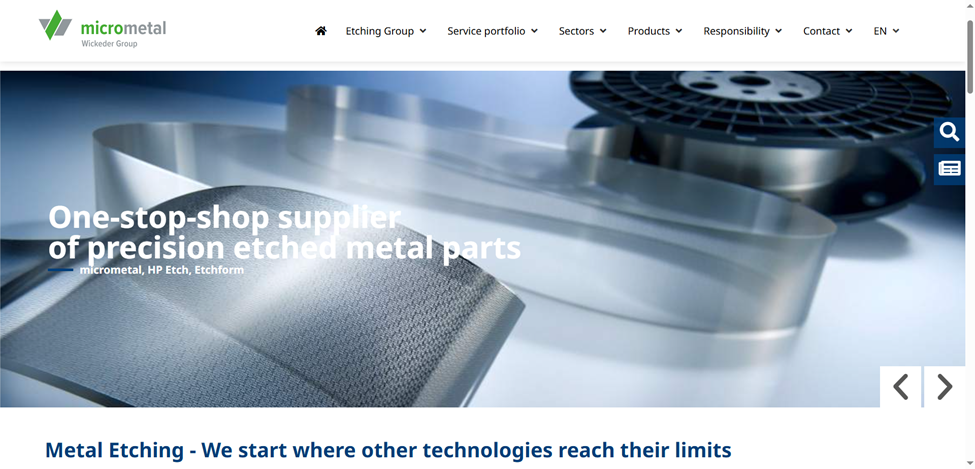
Based in Germany, micrometal specializes in highly automated reel-to-reel photochemical etching for fine-feature and high-volume precision metal components.
Its manufacturing approach differs from conventional batch or sheet etching. The company’s continuous reel-to-reel etching process is designed around process stability, repeatability and large-series manufacturing of thin, complex components.
Core Capabilities
micrometal processes stainless steel, copper, aluminum, titanium and other materials and supports applications including filters, bipolar plates, connectors, needles, springs, stencils, diffusers and EMC shielding components.
The wider Micro Component Group reports quality certifications including ISO 9001, ISO 13485, IATF 16949 and ISO 14001.
Best Fit
micrometal is a strong fit for:
- Ultra-thin precision components
- Fine and densely repeated features
- Reel-to-reel manufacturing
- High-volume automotive and electronics programs
- Medical micro-components
- Applications requiring strong repeatability at production scale
Considerations
micrometal is now part of the broader Micro Component Group together with Etchform, HP Etch and EMS Thin Metal Parts. Buyers should confirm which group facility and manufacturing process will actually be used for their component, particularly when comparing quotations or certifications.
5. Advanced Chemical Etching – High-Performance Alloy and Aerospace Etching
Advanced Chemical Etching, or ACE, is a UK precision manufacturer focused on photo-etched components for technically demanding industries, including aerospace, automotive and F1, fuel cells, medical and precision engineering.
The company works with a broad range of metals and has developed specific expertise in materials that can require more specialized etching chemistry, including aluminum, titanium and Nitinol.
Core Capabilities
ACE holds AS9100D and ISO 9001:2015 certification. Its certification scope covers the manufacture of high-precision photochemically etched metal components from approximately 0.01 mm to 2.5 mm thick.
The company also emphasizes prototype and pre-production support alongside production manufacturing.
Best Fit
ACE is a strong fit for:
- Aerospace and defense applications
- Titanium, aluminum and other demanding alloys
- Fuel-cell and flow-channel components
- Motorsport and automotive engineering
- Prototype-to-production development programs
- UK and European supply chains
Considerations
Etching performance for titanium, aluminum and Nitinol can differ from conventional stainless-steel processing. Buyers should therefore compare material-specific tolerances, surface requirements and inspection criteria rather than relying only on a general chemical etching capability range.
6. Etchform – Specialty Metals, Etching and Electroforming
Based in the Netherlands, Etchform specializes in precision etching and electroforming of thin metal components, with particular strength in broad material selection and flexible batch production.
The company processes metal thicknesses from approximately 0.003 mm to 1.5 mm and works with materials ranging from copper, brass, phosphor bronze and stainless steel to titanium, Nitinol, molybdenum, gold, nickel and silver.
Core Capabilities
In addition to photochemical etching, Etchform supports:
- Electroforming
- Bending
- Surface treatment
- Heat treatment
- Diffusion bonding
- Laser welding and cutting
- R&D and manufacturability development
This makes it useful when the etched part requires additional processing before integration into the final assembly.
Best Fit
Etchform is a strong fit for:
- Specialty and unusual metal requirements
- Thin precision components
- R&D and design-development projects
- Prototype and lower-volume batch production
- Components requiring electroforming or secondary processing
- European engineering projects
Considerations
Etchform is part of the Micro Component Group. Buyers should determine which processes are performed directly at Etchform and which may involve other group companies or external partners when supply-chain responsibility and traceability are important.
7. Photofabrication Engineering Inc. – Titanium Etching and Integrated Secondary Processing
Founded in 1968 and based in Massachusetts, Photofabrication Engineering Inc. (PEI) is a long-established US photochemical machining company with particular expertise in titanium etching.
PEI operates from a 40,000-square-foot manufacturing facility and supports aerospace, medical, electronics, defense, renewable-energy and industrial applications.
Core Capabilities
The company’s services extend beyond chemical etching to include:
- Engineering and DFM support
- Forming
- Plating and finishing
- Assembly
- Laser cutting
- Quality inspection
This vertically integrated capability can reduce the number of suppliers required for components that need both precision etching and downstream processing.
PEI also highlights extensive experience in photochemical etching of titanium and maintains quality credentials for demanding industries, including ISO 9001:2015, AS9100D, ITAR registered.
Best Fit
PEI is a strong fit for:
- Titanium components
- Aerospace and defense applications
- Medical precision components
- US-based manufacturing programs
- Components requiring forming, finishing or assembly after etching
- Projects combining laser cutting and photochemical machining
Considerations
Projects involving specialty metals should be evaluated using the exact alloy, thickness and required dimensional controls. Buyers should also determine which value-added operations are required before comparing PEI’s total project cost with a standalone etching supplier.
8. Tech Etch – Precision Etching with Strong EMI/RFI Shielding Capability
Founded in 1964, Tech Etch is a US manufacturer whose capabilities span precision photo etching, formed metal parts, flexible circuits and EMI/RFI shielding.
Unlike companies focused almost exclusively on photochemical machining, Tech Etch operates across several related electronic and precision-component technologies. This can be useful for buyers whose projects combine thin-metal components with shielding or electronic interconnection requirements.
Core Capabilities
Tech Etch operates three US manufacturing locations and serves aerospace, military, medical, telecommunications, electronics and alternative-energy markets.
Its quality program includes AS9100 certification across its three manufacturing facilities, while its Plymouth and Litchfield locations have also obtained ISO 13485 certification for medical-sector requirements.
A major differentiator is its established EMI/RFI shielding product portfolio alongside precision etched and formed parts.
Best Fit
Tech Etch is a strong fit for:
- EMI/RFI shielding applications
- Electronics and telecommunications
- Aerospace and defense programs
- Medical electronics
- Precision etched-and-formed components
- Buyers seeking both custom etched parts and related electronic manufacturing capabilities
Considerations
Because Tech Etch offers several manufacturing technologies, buyers should confirm which facility and process will manufacture the component and which certifications apply to that specific production site.
For projects focused purely on photochemical etching, its offering should be compared separately from its broader shielding and flexible-circuit capabilities.
How to Use This Chemical Etching Companies List
A list of chemical etching companies can help you identify potential suppliers, but it should not replace technical qualification. The best supplier is the company that can meet the requirements of your specific part, industry and supply chain.
Start with the Material and Drawing
Send each potential supplier the same drawing, material specification, thickness, annual quantity and inspection requirements. This makes quotations easier to compare and reduces the risk of receiving proposals based on different assumptions.
Pay close attention to holes, slots, narrow webs, partial-etch features and tolerances. A company may advertise tight tolerances, but the achievable result still depends on material thickness, feature geometry and process control, as explained in our photochemical etching process and design guide.
Verify Quality Evidence
Ask for current certification documents when your industry requires them. Also determine what inspection method the supplier will use and whether it can provide dimensional reports, material certificates, lot traceability or first-article inspection documents.
Do not rely only on certification logos displayed on a website. Confirm the certificate scope, issuing body, registered site and validity period.
Match the Supplier to Your Production Stage
Some photochemical etching companies specialize in prototypes and frequent design revisions. Others focus on stable, high-volume production. A supplier that performs well on a small development order may not automatically have the capacity or controls required for long-term production.
Discuss prototype quantity, expected annual demand, design-change frequency and production ramp-up before selecting a supplier.
Review Secondary Operations
Forming, plating, passivation, heat treatment and assembly can affect total cost, lead time and accountability. When a supplier offers these services, confirm which processes are completed in-house and which are handled by subcontractors.
A one-stop supplier may simplify purchasing, but the buyer should still review quality responsibility and traceability across every production stage.
Compare Total Project Cost
The lowest quoted unit price is not always the lowest final cost. Consider tooling, material, inspection, packaging, shipping, import duties, rejected parts and the cost of managing additional suppliers.
For a complete qualification process, use our chemical etching company buyer’s checklist. It provides a more detailed framework for evaluating capabilities, quality systems and quotation risks.
FAQs
What Should I Compare Between Chemical Etching Companies?
Compare material capability, thickness range, feature limits, quality certifications, inspection methods, production volume and secondary operations. You should also review engineering support, lead time, location and supply-chain risk.
Use the same drawing and project information when requesting quotations. Otherwise, suppliers may quote different materials, inspection levels or manufacturing assumptions.
Which Chemical Etching Companies Support Prototypes?
Many photochemical etching companies support prototypes because the process uses digital artwork and relatively low-cost tooling. However, prototype policies, minimum order values and lead times vary by supplier.
Ask whether design revisions require new tooling charges and whether the same process controls can support later production volumes.
Conclusion
Choosing the best chemical etching company is ultimately a technical qualification process rather than a simple comparison of price or company size.
Start by defining the part requirements: material, thickness, geometry, tolerances, production volume, inspection standards and secondary operations. Then determine which suppliers have demonstrated experience with similar parts and can provide the required process control, quality documentation and engineering support.
For aerospace and other regulated applications, certifications, traceability and inspection systems may be decisive. For electronics and precision components, thin-metal capability, fine-feature control and repeatability may matter more. Prototype projects may instead benefit from flexible tooling, engineering feedback and the ability to accommodate frequent design revisions.
The companies included in this guide represent different strengths across these requirements. Rather than asking simply, “Which is the best chemical etching company?”, buyers should ask:
“Which chemical etching supplier is best qualified to manufacture this specific part reliably, repeatedly and at the required production scale?”
That question leads to a more useful supplier comparison.
If you already have a drawing, material specification, annual quantity and inspection requirements, review TMNetch’s chemical etching services and request an engineering review.