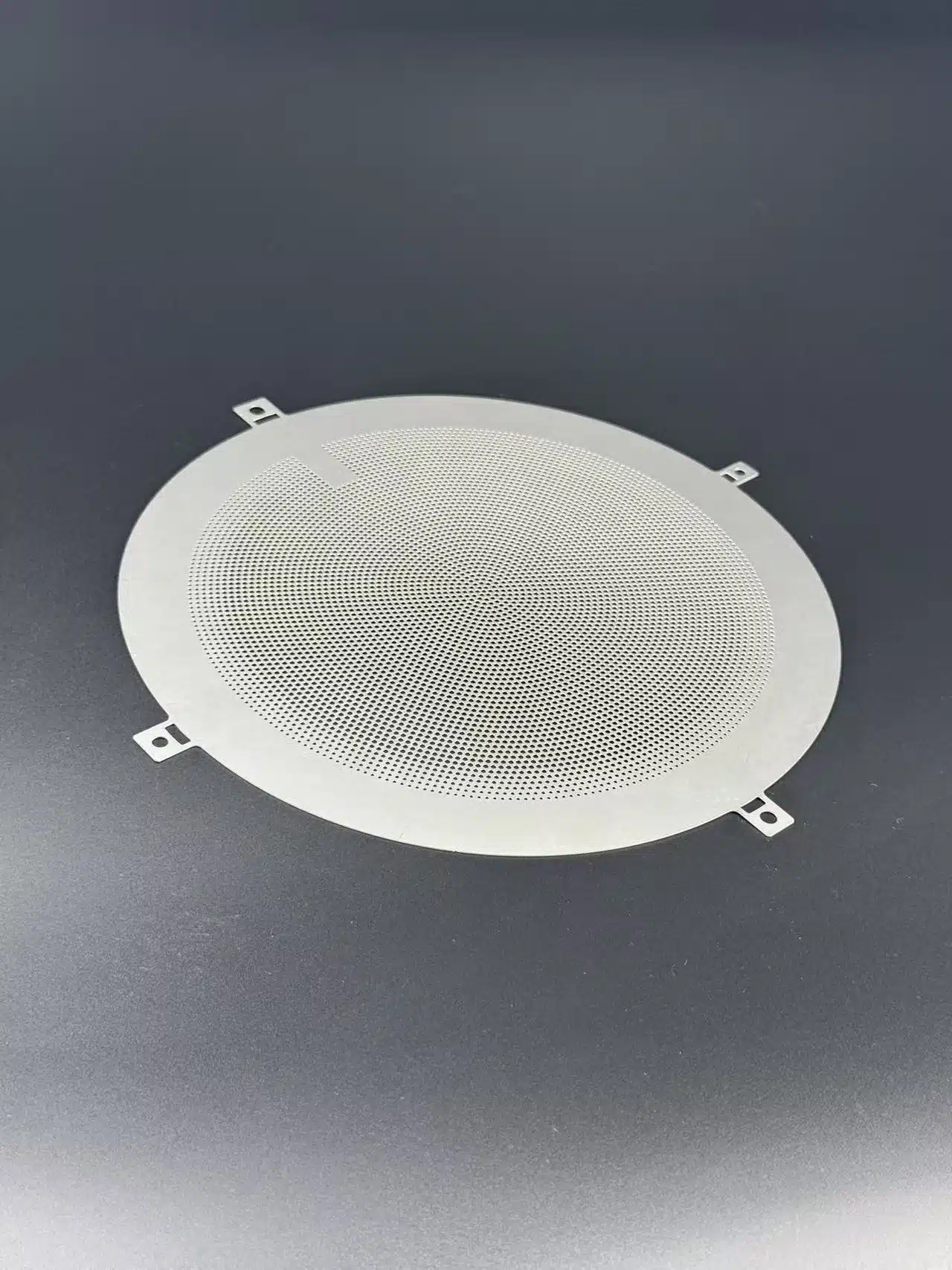

A stainless steel filter mesh is a candidate when a reusable screen must tolerate its process medium, cleaning method, temperature, and mechanical load.
The alloy designation alone does not determine a filter’s particle retention, pressure drop, service life or regulatory suitability. Material properties and filtration performance must be evaluated separately. Material selection should consider composition, corrosion resistance and operating conditions, while filter performance should be verified through application-specific testing of particle retention, flow resistance and durability.
First define the contaminant, medium, flow, allowable differential pressure, cleaning, support, and seal. Then select a candidate grade and structure.
Key takeaways
Material grade and filter performance are separate decisions.
Type 316 contains molybdenum and often merits evaluation for chloride exposure, but it is not universally corrosion-proof.
A woven wire cloth and a photo-etched sheet require different drawing inputs.
Food-contact, drinking-water, sterile-process, and emissions-control claims need system-level evidence.
When Is Stainless Steel Filter Mesh the Right Choice?
Stainless steel mesh filter can mean woven or joined wire, bonded porous media, or patterned sheet. Woven wire mesh and porous sintered metal filters have different structures and filtration characteristics and should not be treated as interchangeable. Woven wire mesh is characterized by its wire diameter, mesh opening and weave pattern, while sintered metal filters are evaluated based on their pore structure, permeability and flow resistance. Each construction requires appropriate specifications and testing methods to verify its suitability for the intended application. Supplier shorthand such as stainless filter mesh, stainless steel filtration mesh, or ss filter mesh should therefore be expanded into grade, product form, geometry, and validation requirements.
Shortlist stainless steel when compatibility, cleaning, stiffness, temperature, or reuse matters. The worldstainless selection guidance treats environment, mechanical properties, fabrication, and cost as separate inputs; concentration, temperature, time, and shutdown conditions can alter corrosion behavior.
| Selection question | Stainless steel can remain a candidate when… | The alloy alone cannot answer… |
|---|---|---|
| Chemical environment | Compatibility evidence covers process and cleaning chemistry | Corrosion rate or life |
| Reuse and cleaning | Geometry and finish suit the defined method | Hygienic or sterile status |
| Mechanical duty | Wire or sheet, support, and attachment suit the load | Collapse, fatigue, or bypass |
| Filtration duty | Geometry supports a testable retention task | Efficiency or pressure drop |
If weight, extreme corrosion, disposable cost, or depth filtration dominates, compare stainless steel with other metal mesh materials.
Define the Filtration Duty Before Choosing 304 or 316
Ask “What must the installed screen stop, and under what conditions?” before “304 or 316?” Record six linked inputs:
| Input | What to define before selecting the mesh |
|---|---|
| Contaminant | Particle range, form, loading, and what may pass |
| Medium | Gas, liquid, powder, chemical composition, and impurities |
| Flow | Normal, minimum, maximum, and flow direction |
| Allowable ΔP | Clean limit, loaded limit, and measurement conditions |
| Cleaning | Chemistry, temperature, method, frequency, and expected cycles |
| Mechanical system | Pressure, unsupported span, support, seal, vibration, and handling |
An aperture is geometry, not an efficiency claim. ISO 16890-2:2022 measures efficiency and airflow resistance for general-ventilation elements; ISO 16889:2022 evaluates hydraulic filters under a multi-pass method. A bare screen cannot inherit either result without the applicable assembly and test. Include edge sealing and support because bypass or deformation can defeat correct aperture geometry. See filter mesh terms and first-pass selection or air-intake protection mesh selection for those adjacent tasks.
304 vs. 316 Stainless Steel Filter Mesh: What Actually Changes?
Specify product form as well as grade. Stainless steel material requirements vary depending on the product form, such as plate, sheet, strip or wire. Each form has different specifications and manufacturing requirements. For accurate material selection and procurement, drawings should identify the exact stainless steel grade or UNS designation, applicable material specification, product form, supplied condition and required documentation rather than using the general term “stainless steel.”
| Candidate grade | Why it may enter the shortlist | Limitation to verify |
|---|---|---|
| Type 304 / UNS S30400 | Many mild atmospheric and process environments | Actual medium, cleaner, temperature, and exposure |
| Type 304L / UNS S30403 | Lower-carbon option when welding or relevant thermal exposure is involved | “L” does not establish filtration or compliance |
| Type 316 / UNS S31600 | Molybdenum-bearing candidate for many chloride environments | Temperature, crevices, stress, and concentration |
| Type 316L / UNS S31603 | Lower-carbon 316-family option when welding is relevant | Not automatically required for an unwelded etched sheet |
The worldstainless selection handbook supports these grade relationships .
ASTM A380/A380M-25 covers cleaning, descaling, and passivation and notes that visual inspection may miss thin contaminant films. If passivation is required, specify treatment and acceptance under an applicable requirement such as ASTM A967/A967M-25; passivated alone is not an inspection plan.
Woven Wire, Welded, Sintered, or Photo-Etched Sheet?
Choose structure from part function, not a universal ranking.
| Structure | How the flow path is formed | Best-fit task | Main specification inputs |
|---|---|---|---|
| Woven wire | Wires cross in a weave | Flexible or roll-based screening | Count, wire, aperture, weave, edge |
| Welded wire | Intersections are joined | Guards, baskets, support, stable openings | Wire, spacing, joints, panel, frame |
| Sintered medium | Bonded material creates interconnected porosity | Rigid porous or depth media | Construction, thickness, permeability, pore data |
| Photo-etched sheet | Etchant removes exposed patterned sheet | Thin one-piece screens with integrated features | Alloy, thickness, aperture, pitch, web, profile, tolerance |
Stainless steel wire mesh filter
For industrial woven wire mesh, mesh count should be evaluated together with wire diameter, aperture size and weave pattern. Different mesh constructions may require separate specifications and manufacturing considerations. A cut stainless steel filter wire mesh may also require additional features, such as reinforced borders, supporting frames, finished edges or mounting attachments, depending on the intended application and installation requirements.
Welded and sintered structures
Industrial wire screens require appropriate technical specifications and testing to verify their dimensions, construction and performance. Sintered metal filters have a different structure, with interconnected pores that allow fluid flow. Their permeability is evaluated through flow and pressure measurements rather than woven mesh count. Each filter type should therefore be assessed using methods suited to its structure and intended application.
Photo-etched stainless steel mesh
Photo etching starts with sheet or foil—not wire. It patterns photoresist, develops the image, removes exposed metal, and strips the resist. The IPC-hosted photochemical-machining paper explains lateral etching beneath the resist; thickness, aperture, web, profile, and tolerance therefore require one DFM review.
Evaluate this route when a flat part combines openings with a border, holes, locating features, marks, or several aperture zones. It is not automatically cheaper or more precise for every design. See stainless steel etching process considerations and the guide to metal mesh filter structures.
Mesh Count Is Not a Complete Filter Specification
A woven specification needs count, wire diameter, aperture, weave, material, shape, and edge. An etched drawing needs aperture, pitch, minimum web, active area, open-area target where relevant, thickness, profile, and mounting features. Detailed conversions belong in the guide to mesh count, aperture, and micron size.
Neither list proves performance. Measure pressure drop and retention with the defined medium, temperature, flow, loading, support, seal, assembly, and representative contaminant.
Match the Mesh to a Verifiable Filtration Task
| Application | Reasonable mesh task | Must be verified | Do not infer from stainless steel alone |
|---|---|---|---|
| Air intake | Guard or prefilter larger debris | Contaminant, airflow, ΔP, support, cleaning | HEPA or sterilization |
| Process liquid | Screen solids; protect equipment | Chemistry, particles, pressure, blockage, bypass | Purity from aperture alone |
| Food or beverage | Sieve or retain process particles | Contact rules, finish, cleaning, hygienic assembly | “Food grade” from alloy alone |
| Drinking water | Particle screen within a system | Certification, health effects, system performance | Water safety or microbial control |
| Chemical process | Protect equipment or classify solids | Chemical, concentration, temperature, stress, corrosion evidence | Universal acid/alkali resistance |
| Powder screening | Separate a stated fraction | Shape, abrasion, load, tension, cleaning | Untested service life |
The application defines a testable task; it does not create a material guarantee.
Food, Drinking Water, Medical, and Gas Control Need More Evidence
For food equipment, the FDA Food Code 2026 material criteria require food-contact surfaces to be safe, durable, corrosion-resistant, nonabsorbent, able to withstand repeated warewashing, smooth, and readily cleanable. Those are finished-equipment conditions; a 304 or 316 label does not establish them by itself.
For drinking-water components, NSF/ANSI 61 addresses contaminants or impurities imparted by products and materials. Its published scope does not establish mechanical performance, taste and odor, or support of microbial growth. A mesh therefore cannot promise “safe drinking water” from alloy and aperture alone.
For sterile processes, the FDA aseptic-processing guidance ties filtration validation to the product, filter, pressure, flow, temperature, use time, compatibility, and integrity testing. An ordinary metal screen should not be described as sterilizing merely because its openings are small.
The same boundary applies to gases. Metal screens can capture particles under suitable test conditions, but NOx and volatile organic compounds require different control mechanisms.
What Should Be on the Drawing and RFQ?
For a useful first technical review, provide:
material type or UNS designation, governing specification, product form, condition, thickness, and material-document requirement;
aperture shape and size, pitch, pattern orientation, wire diameter or web width, active area, and open-area requirement;
outer profile, border, mounting holes, tabs, zones, edge treatment, frame, support, and sealing concept;
datums, critical tolerances, flatness, surface finish, cleaning or passivation requirement, inspection method, and sampling plan;
contaminant, medium composition, concentration, temperature, pressure, flow, clean and loaded ΔP limits, and cleaning cycle;
prototype and production quantities, packaging needs, and functional acceptance tests.
For a thin patterned screen, send these inputs through the custom photo-etched stainless steel filter mesh page. A DFM review should evaluate alloy, thickness, aperture, web, pattern, tolerances, and panel layout together; it should not promise filtration performance before representative testing.
How Should the Prototype Be Validated?
First verify material records and critical geometry. Confirm cleaning or passivation only where the drawing requires it. Then test the installed assembly for flow, ΔP, representative-particle retention, bypass, blockage, and corrosion compatibility in the intended medium and temperature.
For reusable parts, repeat relevant checks after the agreed cleaning cycles. Tests should reproduce credible failure conditions; worldstainless guidance favors worst-case service testing over universal alloy assumptions.
Frequently Asked Questions
Is 316 stainless steel always better than 304 for filter mesh?
No. Type 316 often merits evaluation in chloride service, but concentration, temperature, crevices, stress, fabrication, cleaning, and service evidence still decide.
What is the difference between a stainless steel wire mesh filter and etched mesh?
Woven cloth interlaces wire; photo etching selectively removes flat sheet. Their specifications and limits differ.
Does stainless steel mesh count equal a filtration rating?
No. ISO 9044 treats woven-cloth geometry through defined terms and tests. Count alone omits wire, aperture, flow, loading, seal, and test method.
Is 304 or 316 mesh automatically food-grade or suitable for drinking water?
No. FDA food-contact criteria and NSF/ANSI 61’s drinking-water scope require evidence beyond alloy name.
Can stainless steel mesh remove bacteria, NOx, or hydrocarbons?
A screen may retain particles. Sterile filtration and gas adsorption are different validated system tasks.
What should I send for a custom photo-etched filter mesh review?
Send material, form, thickness, aperture, pitch, web, active area, profile, tolerances, medium, flow/ΔP limits, cleaning, quantities, and acceptance criteria.
Conclusion: Select the Filter System, Not Just the Alloy
Define contaminant, medium, flow/ΔP, cleaning, and mechanical conditions before choosing grade and structure. Type 304 and Type 316 are conditional candidates; woven, welded, sintered, and photo-etched constructions solve different tasks.
A drawing review converts the decision into inspectable geometry; a representative prototype test validates the assembly. For a thin stainless sheet with custom openings and integrated features, submit the drawing and operating conditions for photo-etching DFM review.