
Washers and gaskets are commonly used across various industries. To the untrained eye, they may seem very similar. Although both are flat and round, they actually have very different functions. A gasket creates a seal between two mating surfaces to control fluid or gas leakage. Gaskets can be flat, ring-shaped, spiral-wound, metal-jacketed, or made from non-metal materials. Review these metal gasket types before choosing a design for a specific joint. It serves as a soft barrier that fills gaps. A washer is usually placed under a bolt or nut to help distribute the pressure and protect the surface on which it rests.
Using the wrong one could mean leaks, loose bolts, or even the damaging of equipment. In this article, we’ll discuss the differences between a gasket vs washer.
What is Gakset?
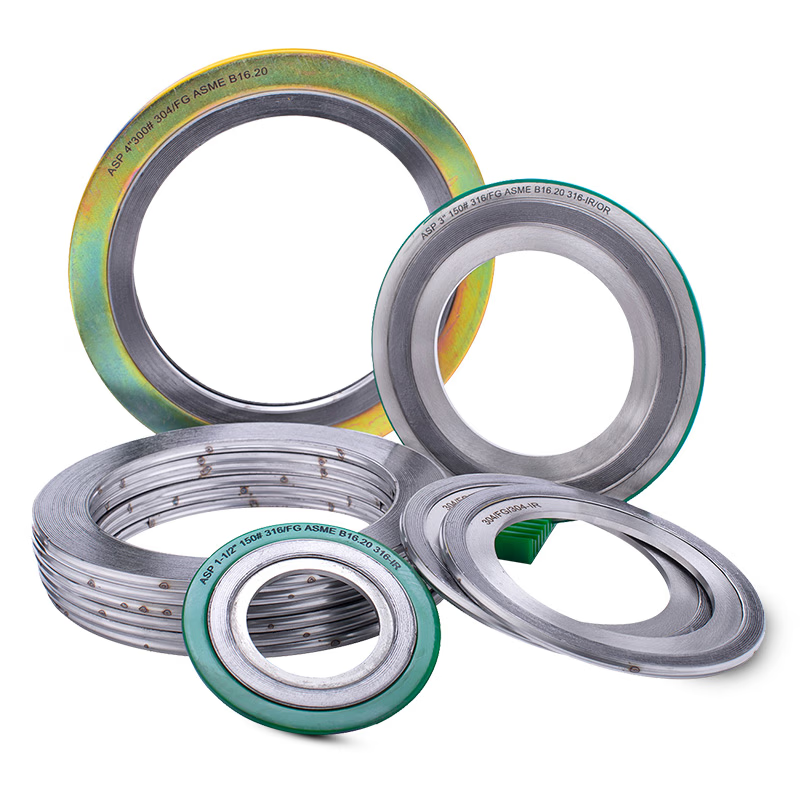
A gasket is a kind of seal that sits between two surfaces, aimed at preventing leaks in fluids or gases. When two metal parts are bolted together, their surfaces are not flat. Even if they appear flat, there are small gaps. A gasket steps in and fills these gaps by compressing under pressure.
How Gaskets Work
- They sit between two mating surfaces, like pipe flanges or engine blocks.
- Gaskets compress when bolts are tightened.
- They fill in surface imperfections to create a seal that’s either airtight or watertight.
- Stay put even when pressure and temperature fluctuate.
Common Gasket Types
- Sheet gaskets: flat and cut to size.
- Ring gaskets: circular, designed for pipes.
- Spiral wound: made of layers of strips of metal and filler for high-pressure applications.
Gaskets are softer than the surfaces they seal, allowing them to fill in the gap. Without a proper gasket, pressurized systems can leak. Even a tiny leak can waste energy, damage equipment, or pose safety risks.
What is a Washer?
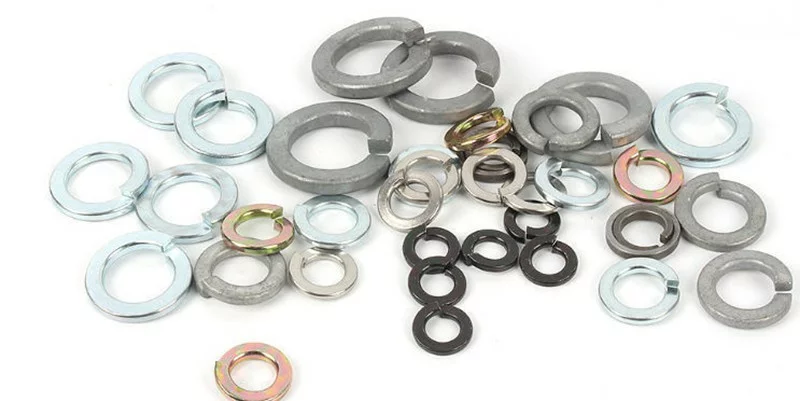
A washer is a flat component placed under a bolt head or nut. It can spread the clamping load, protect the mating surface, or support a specific fastening function. For thin parts used to control spacing or alignment, see this guide to metal shim washers. Its main job is to distribute the load. When you tighten a bolt, all the force is concentrated on a small contact point, which can crush softer materials or create an uneven grip. Crush washer vs gasket are often compared because they both seal.
How Washers Work
- It slides onto the bolt before the nut.
- Sit between the fastener and the surface.
- The washer spread the clamping force over a wider area.
- They protect the surface from damage.
Common Washer Types
- Flat washers: standard for load distribution.
- Lock washers: designed to prevent loosening from vibrations.
- Spring washers: help maintain tension.
Standard flat washers are usually more rigid than soft gaskets. However, spring washers, wave washers, and crush washers are designed to deform or maintain preload under specific conditions. Their hardness protects softer materials like wood, plastic, or thin metal from the pressure of bolts. They also prevent nuts and bolts from digging into surfaces. In machinery that experiences vibrations, special washers help keep fasteners secure over time.
Gasket vs Washer: What’s the Difference?
The main difference is function. A gasket creates a seal, a washer supports a fastener, and a shim controls spacing or alignment. Learn when an assembly may need custom-made shims instead of standard washers.
Gasket vs Washer: Design
- Gasket: Gaskets may be made from soft non-metal materials, solid metals, or layered metal-and-filler structures. Their thickness and flexibility depend on the joint design, sealing conditions, and selected material. They’re often custom-cut to fit specific joint shapes, and some even have metal reinforcement for those high-pressure situations.
- Washer: On the other hand, washers are thin, uniform discs that come in standard sizes to match bolt diameters. The hole in the center is just a bit larger than the bolt shaft, making installation a breeze.
Gasket vs Washer: Function
- Gasket: This is where things can get a little confusing between gasket vs washer. While both can sit between surfaces, they serve completely different purposes. Whether a washer is required depends on the joint design, fastener arrangement, gasket type, flange condition, and specified tightening procedure.
- Washer: Conversely, if you use a washer where a gasket is needed, you’ll likely end up with leaks right away. In many cases, both are necessary; the washer protects the gasket from bolt damage, while the gasket does the sealing.
Gasket vs Washer: Material
- Gasket: Gasket materials must match the operating media, temperature, pressure, and joint design. Use this metal gasket material guide to compare common materials and their application limits. For instance, chemical plants often use PTFE gaskets for corrosive fluids, while exhaust systems require graphite gaskets that can withstand extreme heat. Each material has its own temperature and pressure limits. Understanding this washer vs gasket material difference will help you to choose a better one.
- Washer: When it comes to washers, the material selection follows different guidelines. Washer materials should be selected for mechanical strength and corrosion compatibility with the full assembly. Engineers should consider the bolt, washer, mating surface, coating, moisture, and operating environment rather than relying only on identical materials.
Gasket vs Washers: Industrial Applications
Let’s look at the application differences of a gasket vs washer:
Gasket:
- In the oil and gas industry, gaskets help seal pipeline flanges, pumps, valves, and processing equipment. Material and design requirements depend on the operating media, pressure, temperature, and flange condition. Explore more metal gasket applications across industrial equipment.
- Chemical processing plants depend on them to safely contain corrosive materials.
- Automotive manufacturers rely on gaskets in various parts of vehicles, including engines, transmissions, and exhaust systems.
- Pharmaceutical and food-processing equipment may require gasket materials that meet applicable hygienic, chemical-resistance, traceability, and food-contact requirements.
- The aerospace industry also uses specialized gaskets for fuel systems and pressurized cabins.
- Meanwhile, food processing facilities need food-grade gaskets that won’t compromise product safety.
Washer:
- In construction, washers are essential for securing structural steel connections in buildings and bridges.
- The automotive industry incorporates them throughout vehicle assembly, from the chassis to body panels.
- Manufacturing plants use washers on nearly every machine bolt to avoid equipment damage.
- The electrical sector requires insulating washers for control panels and switchgear.
- In marine applications, corrosion-resistant washers are a must for boats and offshore platforms.
This makes the difference between the washer vs gasket clear.
TMNetch: Custom Gasket and Washers
TMNetch manufactures custom metal shims, washers, and spacers through photochemical etching. This process is well suited to thin, flat components with complex outlines, clean edges, and frequent design revisions. Photochemical etching uses patterned photoresist and controlled chemical removal to produce detailed metal profiles. It avoids hard stamping dies and works well for thin, complex 2D parts. Stamping may still be more economical for simple parts produced in very high volumes.
What Sets TMNetch apart:
- Tailored designs to meet your specific needs
- A variety of materials: stainless steel, aluminum, brass, copper, and phosphor bronze
- Photolithographic etching for intricate shapes and precise tolerances
- Flat components can be etched first. Forming, plating, marking, and other post-etch operations may then be coordinated through our one-stop chemical etching services. Final feasibility depends on the material, thickness, bend geometry, and tolerance requirements.
- No tooling costs for prototypes or small production runs
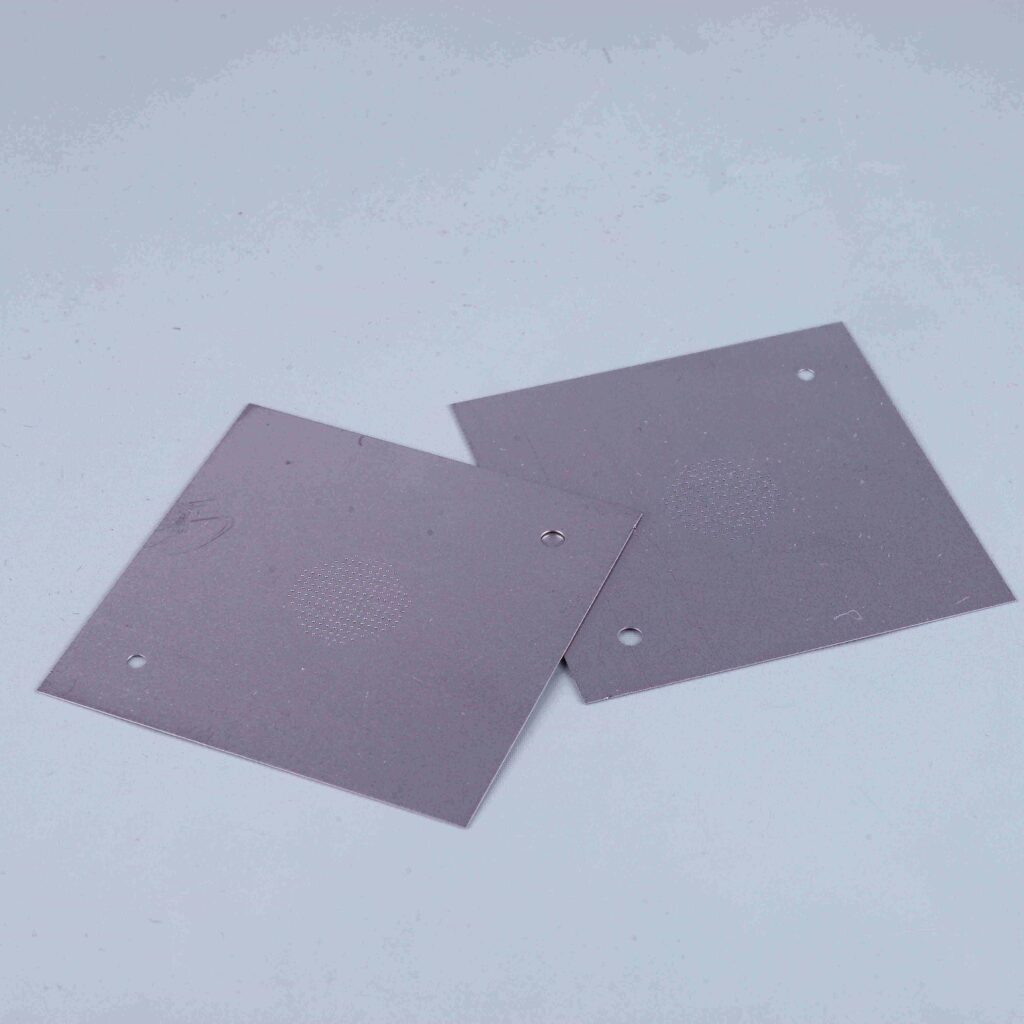
Choosing the right component starts with its function, material, thickness, and operating conditions. Send your gasket, washer, or shim drawing for a manufacturability review. Include the dimensions, tolerances, quantity, operating media, temperature, pressure, finish, and any forming requirements.
FAQs About Custom Gasket vs Washer
Is an O-ring the same as a washer?
No, an O-ring is a circular rubber seal that fits snugly into a groove to keep leaks at bay. On the other hand, a washer is flat and helps distribute the load from the bolts. Even though they’re both round, they have different roles to play.
Is a gasket the same as a washer?
No, a gasket is designed to create a seal between two surfaces to prevent leaks. A washer is placed under bolts to evenly spread the pressure and protect the surfaces. The key difference between a gasket and a washer lies in sealing versus supporting.
What is the lifespan of a gasket?
The lifespan of a gasket can vary quite a bit depending on the material and the conditions it’s exposed to. Gasket service life depends on the material, temperature, pressure, chemical exposure, compression, installation quality, and operating cycle. Inspection and replacement intervals should follow the equipment and gasket supplier’s recommendations.
What is a washer used for?
A washer helps distribute the clamping force from bolts and nuts over a larger surface area. This not only prevents damage to softer materials but also helps keep fasteners from loosening due to vibrations or repeated stress.
Conclusion
Understanding the difference between gasket vs washer is crucial for keeping your equipment running smoothly and avoiding expensive breakdowns. Gaskets are designed to seal joints and prevent leaks in pressurized systems, while washers help distribute the load of fasteners and protect surfaces from wear and tear. In many cases, both of these components need to work in harmony to ensure everything operates at its best.