
Baffle filters are generally better for heavy, frequent cooking because they handle grease buildup well and require less frequent cleaning. Mesh filters cost less and work well for lighter cooking, but they usually need more frequent maintenance.
Baffle filters use curved metal panels to separate heavier grease droplets, while mesh filters trap grease as air passes through fine openings. This guide compares their efficiency, lifespan, cleaning needs, cost and best-use scenarios.
Baffle Filter vs Mesh Filter: Quick Answer
| Factor | Baffle Filter | Mesh Filter |
|---|---|---|
| Best for | Heavy cooking | Light to moderate cooking |
| Grease handling | Better | Moderate |
| Cleaning | Less frequent | More frequent |
| Durability | Higher | Lower |
| Upfront cost | Higher | Lower |
| Replacement frequency | Lower | Higher |
| Design flexibility | Limited | Higher |
Baffle Filter
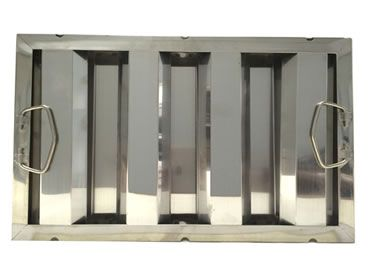
Baffle filters are made up of numerous layers of thick pieces of curved metal. The air is pulled through the spaces between the curved baffles and is forced to repeatedly change directions. The drops of grease are so heavy that they can’t turn sharply.
Instead, they drop downwards, hitting the baffles and sliding down into the grease collection tray. From there, clean air will flow through the system and up the chimney to be exhausted to the outside.
Pros
- Longer-lasting than other filter types
- Clean the filter every 2-3 months
- Great for heavy cooks on high heat
- Can remove plugs and be cleaned in the dishwasher or by soaking with soap and water
- More effective at removing larger particles of grease
Cons
- More expensive than mesh filters
- Will not catch the really fine smoke particles
- Limited design styles of baffle filters compared to mesh filters.
Mesh Filter
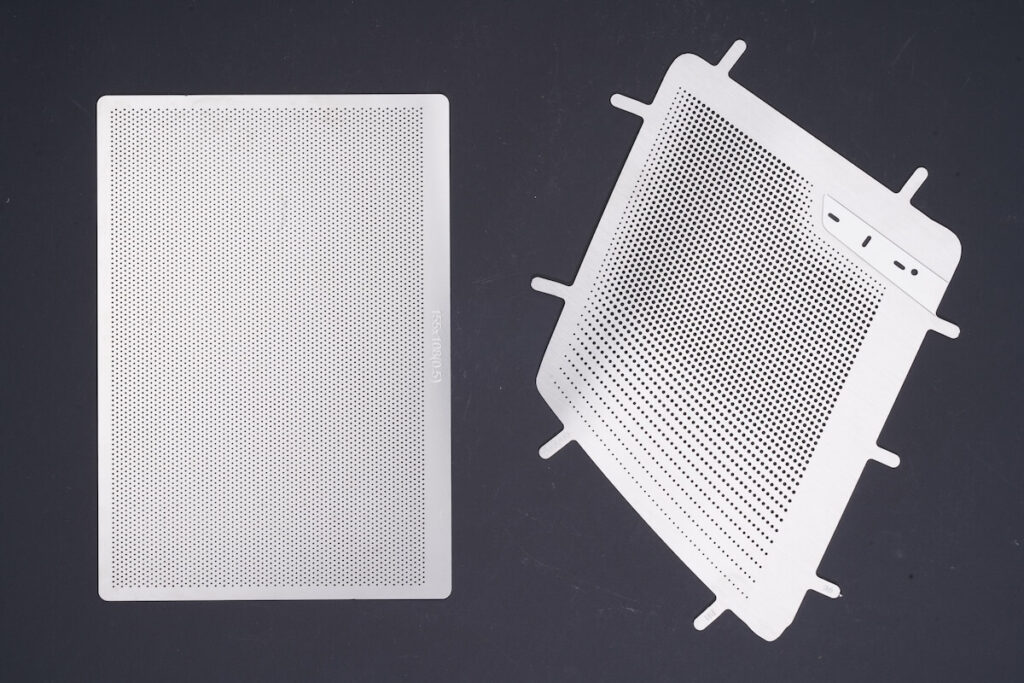
Mesh filters consist of multiple layers of fine metal mesh material. Each layer of mesh consists of small holes throughout its surface. Cooled cooking air passes through the small openings, but grease particles will get stuck in the mesh layers as the air flows through.
Pros
- Mesh filters cost less
- They come in various sizes and styles
- Easy to replace
- Mesh filters are great for kitchens with less cooking grease
Cons
- Require a frequent cleaning schedule, around every 2-4 weeks
- They clog faster
- Mesh filters may not hold up as well in environments with heavy cooking grease, with professional chefs, or catering jobs.
- They have a shorter lifespan when compared to baffle filters.
Baffle Filter vs Mesh Filter: A Comparison
Efficiency
Baffle filter vs mesh filter efficiency depends on cooking style.
- Baffle Filters: Baffle filters can trap 85-90% of grease particles in normal cooking. Baffle filters work better for cooking styles that produce thick, heavy grease. Their zigzag airflow path effectively works through this type of grease.
- Mesh Filters: For mesh filters, this capture rate is about 70-80% in the same conditions of use. Mesh filters work well for occasional cooking styles that use less oil and grease. But at a certain point, if grease builds up and blocks the tiny holes in the mesh, it will stop allowing for proper flow.
Durability
- Baffle Filters: Baffle filters will typically last 5-8 years if maintained correctly. Metal panels of a baffle filter can withstand heat and grease. Thus, when we compare baffle vs mesh filter longevity, it can very clearly be in favor of baffle filters.
- Mesh Filters: Mesh filters can typically last 1-2 years before needing to be replaced. mesh layers can become damaged and start to stretch after significant use and cleaning
Maintenance
- Baffle Filters: The maintenance of baffle filters is also very different from mesh filters. Baffle filters can go 2-3 months between cleanings.
- Mesh Filters: Depending on frequency of use, mesh filters will need to be cleaned every 2-4 weeks. Cleaning a mesh filter requires more time because grease gets trapped in the tiny holes of the mesh. For stubborn grease, a special brush needs to be purchased, since soaking it in a cleaning solution will not provide the same deep clean to remove sticky residue
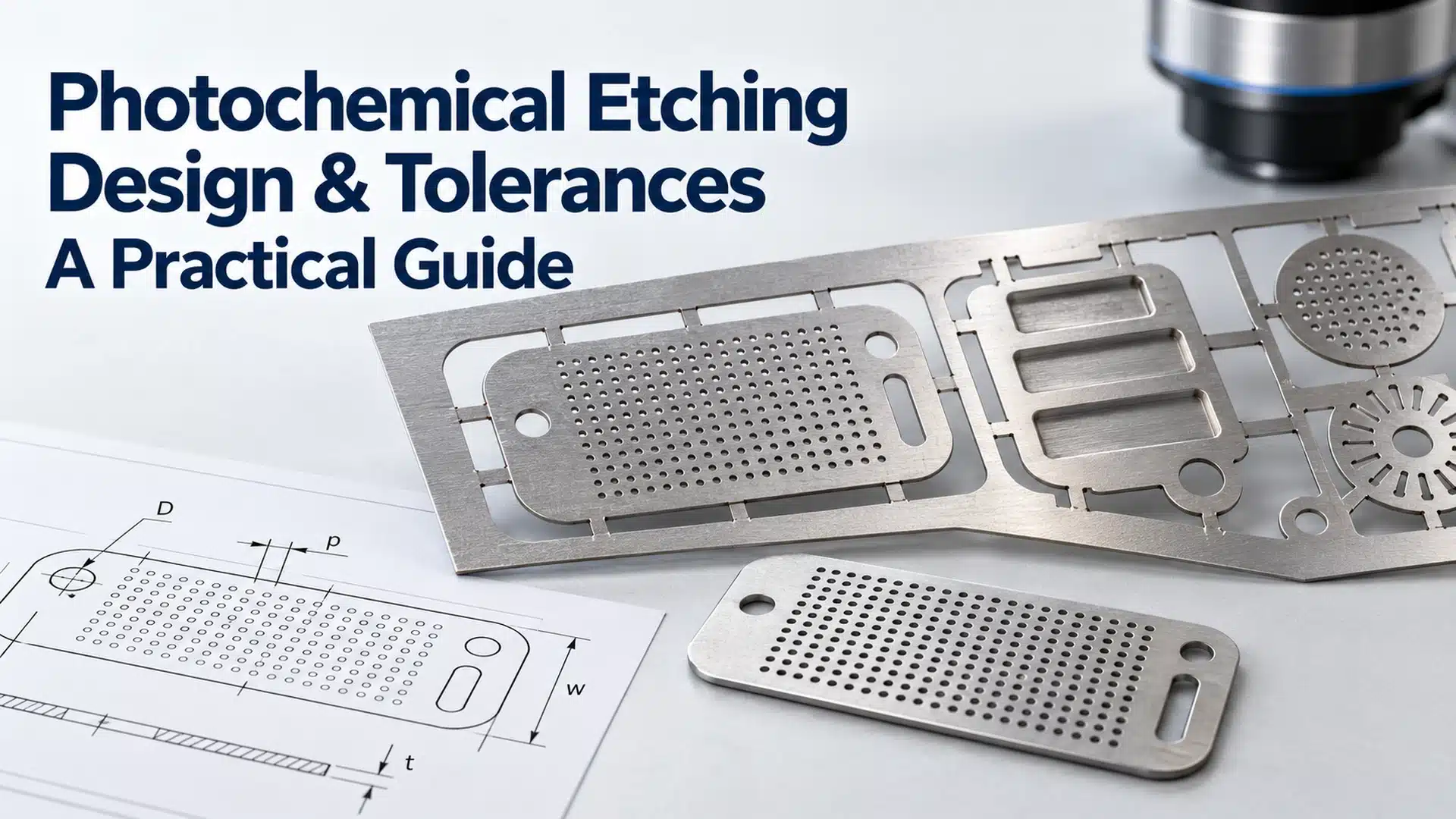
For buyers who need customized filtration parts, custom metal mesh filters can be designed with specific mesh size and aperture dimensions, material thickness, layer configuration, and hole patterns to match different airflow and filtration requirements.
How to Choose Between a Baffle Filter and Mesh Filter
Before choosing between baffle vs mesh filter, consider these factors.
- Heavy cooking requires baffle filters, while light cooking can benefit from using mesh filters as a cost-saving option.
- Budget is also an important consideration. While baffle hoods typically cost a little more to buy, they last longer than mesh filters. Mesh filters are less expensive at the point of sale but are replaced more regularly than baffle filters; hence, they will ultimately represent a more costly purchase.
- Sizing your kitchen is another factor to consider. Larger kitchens may require better filtration work on the heavy cooking side of the baffle filter option, while mesh filters will be more than sufficient in the smaller kitchen scenario.
- Also consider cleaning requirements between baffle filter vs mesh. Some may desire to clean less often, while others may desire to clean more often to save money.
What If You Need a Custom Metal Filter Rather Than a Standard Kitchen Filter?
Standard kitchen filters are usually selected from existing sizes and configurations. OEM products are different. Engineers may need a specific aperture size, airflow area, outer profile, mounting feature, material or thickness.
In these applications, a custom etched metal mesh can provide much greater control over geometry than a standard replacement mesh filter.
Custom Metal Mesh Filters for OEM Applications
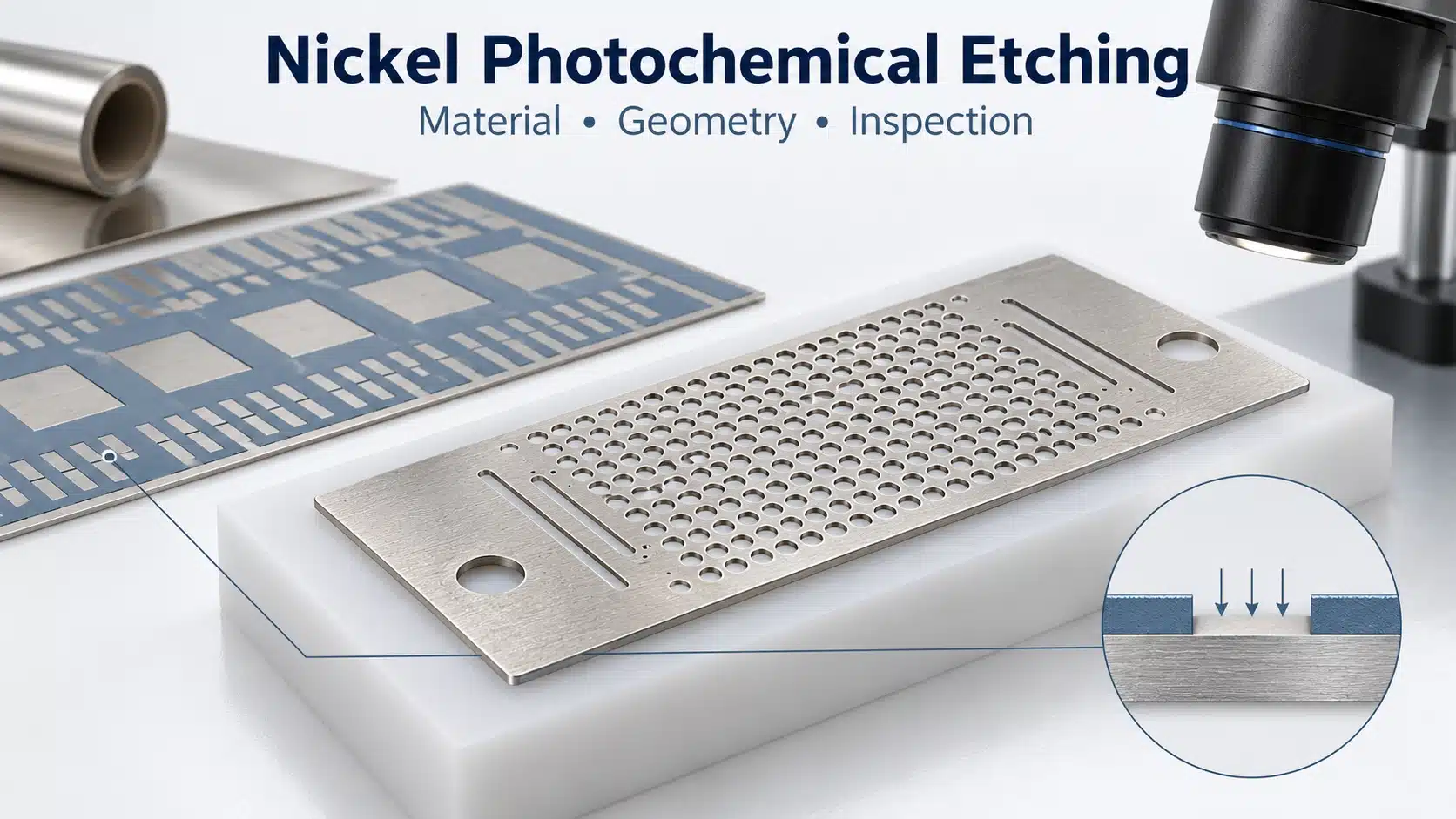
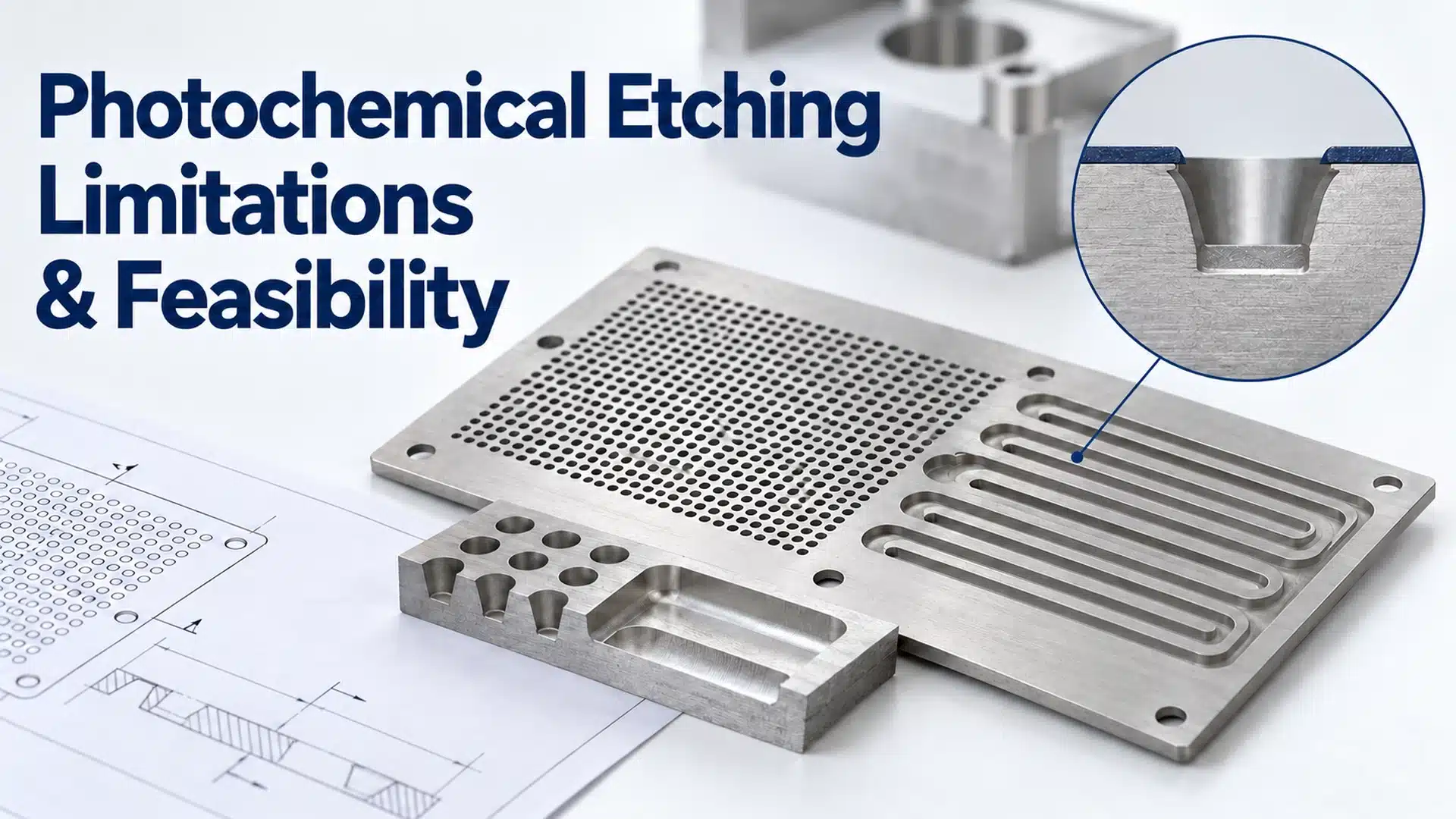
TMNetch manufactures custom metal mesh filters using a photochemical etching process, which removes selected metal areas without mechanical cutting forces. For fine apertures and complex hole patterns, the process can provide an alternative to stamping or mechanical perforation where tooling cost, burr formation, or design flexibility are important considerations. Engineers evaluating this method can review the metal filter mesh manufacturing process to understand how photoresist patterning, etching, dimensional control, and inspection are applied to precision mesh production.
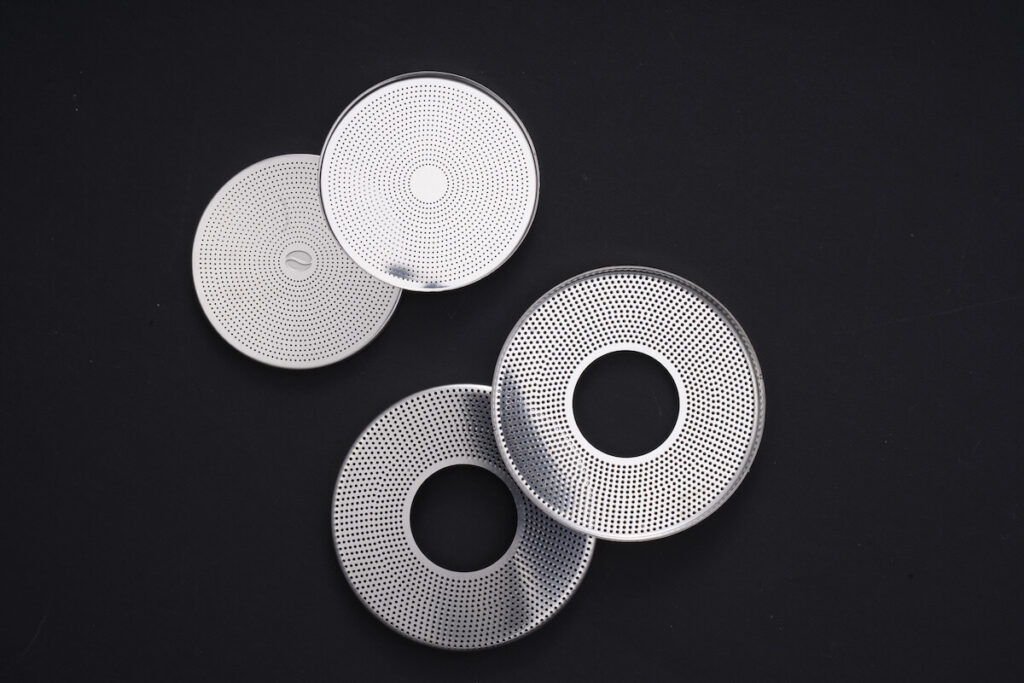
- Openings as small as 0.1mm for fine filtration
- Custom hole shapes, including round, square, or honeycomb patterns
- Filter widths up to 1200mm and thicknesses ranging from 0.01mm to 2.00mm
- Prototypes can be produced within 6 hours of receiving design files
- Components are burr-free and stress-free
- Available multi-layer filters for improved grease trapping
- Various metals (Aluminum, Stainless Steel, etc.) and applications are available
The same manufacturing process can also produce precision mesh for industrial metal filtration applications, where aperture geometry, material thickness, corrosion resistance, pressure drop, and production repeatability become more important design considerations.
If your application requires a specific aperture size, hole pattern, metal thickness, or filtration geometry, review the available custom metal mesh filter specifications before preparing your drawing or RFQ.
FAQs About Baffle Filter vs Mesh Filter
What are the benefits of using a baffle filter?
Baffle filters last longer, require cleaning less often, handle heavy cooking qualities much better, work with high temperatures, and trap more grease effectively than other filter types.
Which filter type is best for kitchen chimney?
Baffle filters work best for daily heavy cooking applications. Mesh filters are best for light cooking. The type of cooking you do and your budget will determine which style is best for you.
What are the different types of filter ranges?
Kitchen chimneys use baffle filters, mesh filters, charcoal filters, and cassette filters, all have different filtration methods and cleaning requirements.
Which type of filter offers the most protection?
Baffle filters offer the most protection by trapping 85-90% of grease particles and have a longer lifespan than mesh or charcoal filter alternatives.
Baffle Filter vs Mesh Filter: Which Is Better?
A baffle filter is generally the better option for frequent, grease-heavy cooking because it is durable and requires less frequent cleaning. A mesh filter is more affordable and can work well for lighter-duty kitchens, but it usually needs more regular cleaning.
For OEM or industrial applications, the decision is different. Aperture size, open area, material, thickness, pressure drop and geometry become more important than the kitchen-filter format itself.
If your project requires a custom metal filter rather than an off-the-shelf replacement, send TMNetch your drawing for a manufacturability review.