
Choosing the right chemical etching company can affect part accuracy, surface quality, production cost, lead time, and long-term supply stability.
Buyers should compare not only price, but also the supplier’s technical control, inspection methods, and ability to provide reliable chemical etching services from prototype to production.
A low price may look attractive at first. However, a supplier that lacks material knowledge, design support, or inspection controls can create expensive problems later. These may include failed samples, unstable dimensions, delayed production, or parts that cannot meet assembly requirements.
This guide explains how to compare chemical etching companies before sending an RFQ or placing an order. It focuses on the technical and commercial factors that matter to procurement managers, engineers, OEM buyers, and project teams.
Why Choosing the Right Chemical Etching Company Matters
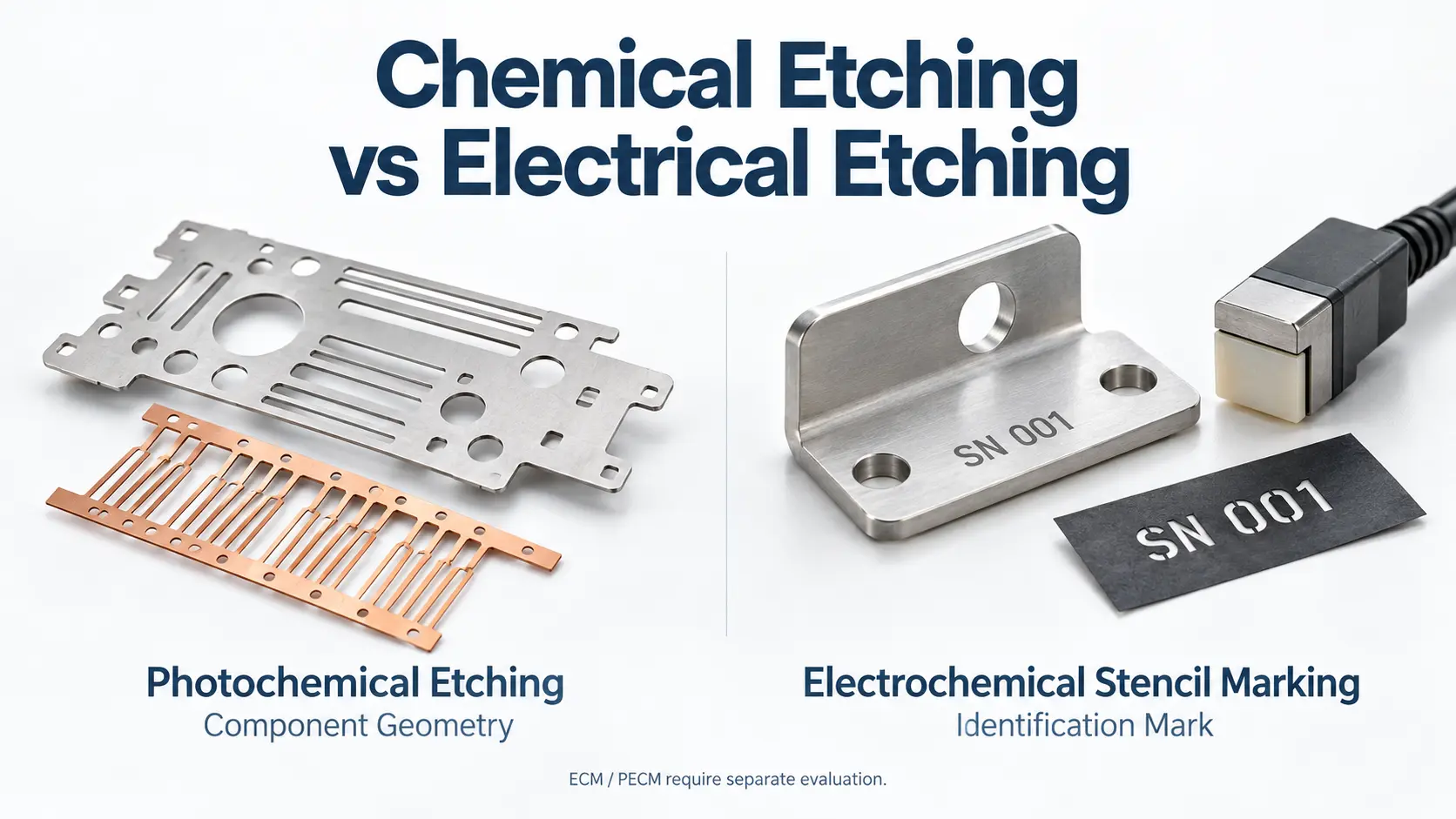
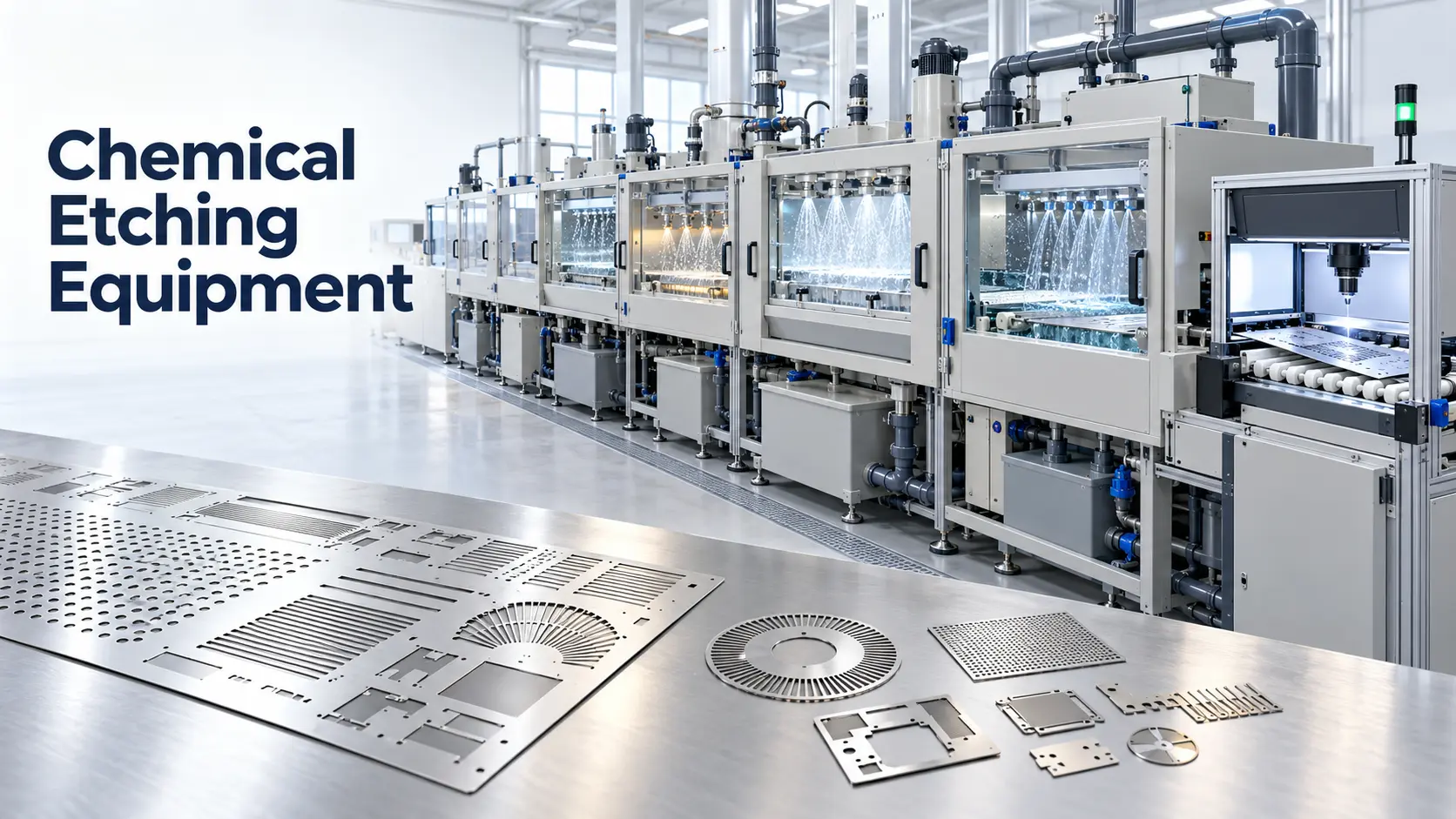
Chemical etching, also called photochemical etching or photo etching, uses controlled chemical reactions to remove selected areas of metal.
The process is often used to produce thin, detailed, and burr-free metal parts. Common examples include filters, screens, lead frames, shielding parts, springs, gaskets, encoder discs, bipolar plates, and medical components.
The process itself is only one part of the result. Final part quality also depends on:
- Material selection
- Phototool accuracy
- Etch compensation
- Process control
- Cleaning
- Inspection
- Secondary processing
- Production planning
Two suppliers may use similar equipment but produce very different results. A professional photochemical etching supplier should understand both the drawing and the final application.
The following checklist can help you evaluate each supplier more clearly.
1. Check Material and Thickness Capabilities
Start by confirming which metals the supplier can process.
A capable chemical etching supplier may work with materials such as:
- Stainless steel
- Copper
- Brass
- Phosphor bronze
- Beryllium copper
- Aluminum
- Titanium
- Nickel
- Nickel alloys
- Specialty metal alloys
Do not assume that a supplier can process every metal with the same level of control.
Each material reacts differently during etching. Material grade, hardness, surface condition, chemical composition, and thickness can affect the etching rate and edge profile.
For example, copper alloys may require different controls from stainless steel. Titanium chemical etching can also need different process knowledge from standard steel or copper etching.
Ask the supplier whether it has experience with your exact material grade, not only the general material family.
Questions to ask about material capability
- Have you etched this specific material grade before?
- What thickness range can you process for this material?
- Can you source the material or work with customer-supplied stock?
- Can you provide material certificates when required?
- How does the selected material affect tolerance and surface finish?
- Are there any risks related to hardness, coating, or surface condition?
A reliable supplier should explain these issues before production. It should not simply confirm that the material is “etchable.”
2. Review Tolerance, Feature Size, and Design Support
Chemical etching tolerance is not a single fixed value.
The achievable result depends on several factors, including:
- Material type
- Material thickness
- Part size
- Feature geometry
- Hole diameter
- Slot width
- Feature spacing
- Half-etched areas
- Surface finish requirements
- Inspection method
As material becomes thicker, it is generally more difficult to produce very small holes, narrow slots, or sharp internal corners.
This is why buyers should ask the supplier to review the drawing before quotation.
A good chemical etching company should evaluate:
- Minimum hole size
- Minimum slot width
- Minimum web width
- Edge-to-edge spacing
- Inside and outside corner geometry
- Half-etched features
- Bend lines
- Tabs and break-off points
- Dimensional datums
- Flatness requirements
- Etch compensation
Etch compensation means adjusting the phototool geometry to account for material removal during the etching process. Without correct compensation, the final part may not match the intended dimensions.
Look for practical DFM support
DFM means design for manufacturing. It is the process of reviewing a design to improve manufacturability before production begins.
Useful DFM feedback may include:
- Increasing a hole size
- Widening a narrow slot
- Changing an internal corner
- Adjusting feature spacing
- Moving a dimension to a more suitable datum
- Redesigning a bend line
- Improving sheet utilization
- Separating etched and secondary-processed features
Early design support can reduce sampling failures, shorten development time, and lower production risk.
A supplier that only accepts the drawing without reviewing it may miss important technical issues.
For more complex projects, buyers should also review the supplier’s photochemical etching design guidelines before finalizing the drawing.
Clarify Design Responsibility Before Production
DFM recommendations can improve manufacturability, but the supplier should not change a functional dimension without approval. For example, widening a slot may make it easier to etch, but the change could affect airflow, assembly, or electrical performance.
Before sampling, define:
- Which dimensions the supplier may adjust
- Which changes require written approval
- Who approves the final production drawing
- How revised files will be identified
- Which drawing revision controls repeat orders
The approved drawing should remain the single production reference. Verbal instructions should be added to the drawing or recorded in a controlled project document before manufacturing begins.
3. Clarify the Manufacturing Model, IP, and Tooling Ownership
Before sharing production files, agree on who owns the design, who approves changes, and who controls the phototool. Record these terms in the purchase order, NDA, or supply agreement. Clear ownership rules reduce disputes when a design changes or the project moves to another supplier.
Build-to-Print Manufacturing
Most custom chemical etching projects use a build-to-print model. The buyer supplies the drawing, material specification, tolerance, quantity, and inspection requirements. The supplier manufactures the part to the approved information.
The supplier may recommend a larger hole, wider slot, or different sheet layout. However, the buyer should approve any change that affects fit, function, or performance.
Co-Development and Engineering Support
In a co-development project, the supplier contributes more technical input. This may include material selection, DFM review, prototype revisions, or secondary-process planning.
Define the limits of this support before work begins. For example, the supplier may optimize an etch compensation value but should not change a flow channel, spring geometry, or electrical contact area without approval.
Protect Confidential Design Files
Ask how the supplier protects CAD files, drawings, specifications, and commercial information. An NDA is useful, but the supplier also needs practical controls.
Confirm:
- Who can access the project files
- Where the files are stored
- Whether external processors receive the complete drawing
- How long files remain in the system
- What happens to the files after the project ends
- Whether the supplier will delete files on request
If plating is outsourced, the plating company may only need coating and masking information. It may not need the buyer’s complete product design.
Define Phototool and Process-Data Ownership
A phototool is the image or stencil used to transfer the part geometry onto photoresist. Ask who owns it, who pays for revisions, and whether it can be transferred.
Also confirm whether the supplier will retain:
- Approved phototool data
- Etch compensation settings
- Inspection criteria
- Packaging instructions
- Drawing revision history
These records help maintain consistency on repeat orders. They should not replace the buyer’s control over the approved design.
4. Ask About Quality Control and Inspection
Quality control is one of the clearest differences between a professional chemical etching manufacturer and a basic processing shop.
Ask how the supplier controls quality from incoming material to final packaging.
Incoming material inspection
The supplier should confirm that the material matches the project requirements. Depending on the application, this may include checking:
- Material grade
- Thickness
- Surface condition
- Hardness
- Material certificate
- Flatness
- Existing coating or oxide
Using the wrong material grade can affect etching, forming, plating, conductivity, corrosion resistance, and final part performance.
Review Material Sourcing and Sub-Supplier Controls
A material certificate is useful only when the supplier can connect it to the metal used for your order. Ask how the company records the material batch from receiving through cutting, etching, inspection, and shipment.
Confirm whether the supplier:
- Purchases from approved material sources
- Checks certificates against the purchase specification
- Separates different grades and material batches
- Records material substitutions
- Quarantines non-conforming material
- Maintains lot traceability when required
The same control should apply to outsourced processes. If an external company performs plating, heat treatment, coating, or welding, ask how that company is approved and monitored.
For example, an etched copper contact may meet its dimensional drawing but still fail during assembly if an external plating supplier applies the wrong coating thickness. The chemical etching supplier should define responsibility for subcontractor quality and inspect the part after all required processes are complete.
Process control
The supplier should have documented controls for important production steps.
These may include:
- Surface cleaning
- Photoresist coating
- Exposure
- Development
- Etching
- Resist stripping
- Final cleaning
- Drying
- Inspection
Stable process control is especially important for repeated orders. A successful prototype does not guarantee that future batches will remain consistent.
Dimensional and visual inspection
Ask which tools are used to inspect the parts.
Depending on the design, inspection may cover:
- Overall dimensions
- Hole and slot sizes
- Feature position
- Edge condition
- Surface defects
- Cleanliness
- Flatness
- Burr-free requirements
- Plating or coating condition
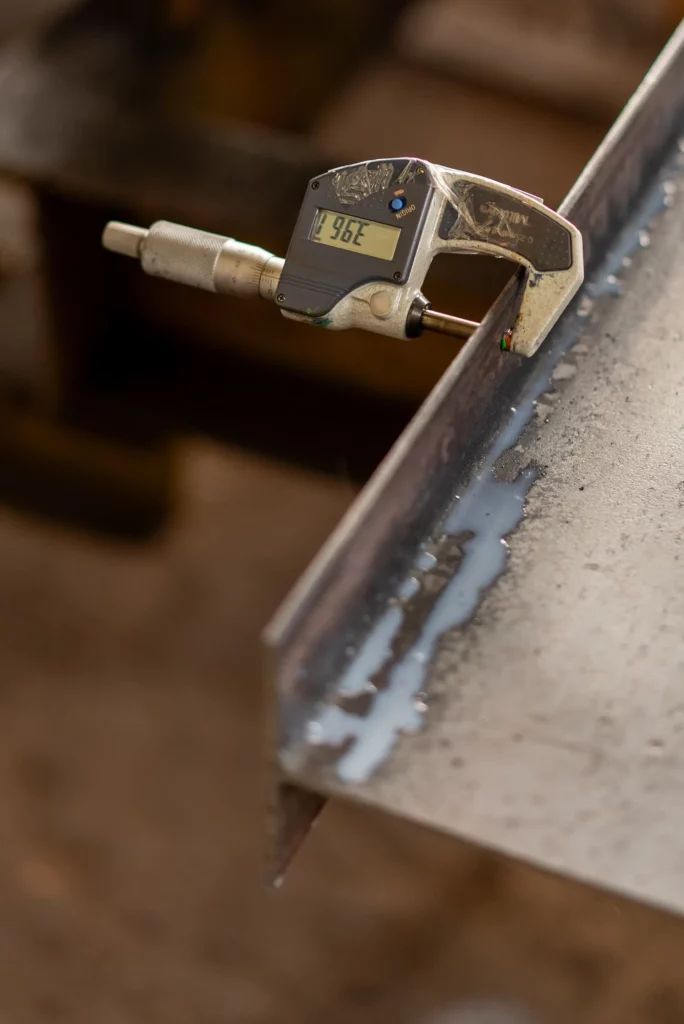
Photo etched parts may be inspected with optical measuring systems, microscopes, gauges, calipers, micrometers, or other suitable equipment.
The method should match the feature size and tolerance. A standard hand tool may not be suitable for inspecting very fine features.
First article inspection and traceability
For new projects, ask whether the supplier can provide a first article inspection report. A first article inspection confirms that the initial production parts and manufacturing process meet the approved drawing before larger quantities are released. For aerospace projects, buyers may also require inspection documentation aligned with the SAE AS9102C first article inspection standard
Buyers may also request:
- Dimensional inspection reports
- Material certificates
- Batch records
- Process records
- Certificates of conformity
- Packaging records
- Lot traceability
ISO 9001 certification can be a useful sign that a supplier has established a formal quality management system. The standard focuses on areas such as customer requirements, process control, management responsibility, and continual improvement. However, certification alone does not prove that the supplier can control your specific part.
Ask how the quality system is applied to your project.
5. Confirm Prototype and Mass Production Capacity
Some chemical etching suppliers are suitable for samples but cannot support stable batch production.
Others focus on large orders and may not offer flexible prototype support.
Choose a supplier that matches the full project life cycle.
Prototype production
During development, you may need:
- Small sample quantities
- Several design versions
- Fast drawing changes
- Material comparisons
- Different thickness options
- Secondary process trials
- Assembly testing
A supplier with prototype support can help engineers test the design before committing to regular production.
Define Sample Approval and Production Release
A successful sample should not automatically authorize mass production. Define the approval steps before the supplier starts manufacturing.
A practical release process may include:
- Confirm the drawing, material, and inspection requirements.
- Produce prototypes or first-article parts.
- Review dimensional and functional results.
- Record required design or process changes.
- Approve the final sample and drawing in writing.
- Run a pilot batch when production risk is high.
- Release the project to regular production.
For example, a photo-etched spring may pass dimensional inspection but still fail an assembly or force test. The buyer should complete the required functional checks before approving a larger order.
The quotation should state prototype, first-article, inspection, and pilot-production charges. Do not assume that samples or design revisions are free.
Low-volume and mass production
When the project moves into production, the supplier must control more than part geometry.
It should also manage:
- Material availability
- Production scheduling
- Batch repeatability
- Inspection capacity
- Secondary processing
- Packaging
- Delivery planning
- Change control
Ask whether the same process, material, and inspection standards will be used when the order quantity increases.
A supplier should also explain how it manages repeat orders. Important questions include whether it stores approved tooling data, inspection standards, packaging instructions, and revision records.
Chemical etching can support both prototype and mass production, but production stability depends on process planning and quality control.
6. Compare Secondary Processing Capabilities
Many custom metal parts require more than chemical etching.
Possible secondary processes include:
- Plating
- Bending
- Forming
- Polishing
- Laser cutting
- Laser welding
- Stamping
- Heat treatment
- Cleaning
- Surface finishing
- Deburring
- Custom packaging
For example, an etched shield may need bending and plating. An etched spring may require forming and heat treatment. A bipolar plate may need coating, welding, cleaning, and leak testing.
Working with one supplier that can coordinate these steps may reduce:
- Supplier communication
- Transport between factories
- Handling damage
- Tolerance conflicts
- Lead-time uncertainty
- Quality responsibility disputes
Buyers can also review how one-stop chemical etching services combine etching, plating, forming, and surface finishing under one production plan.
However, buyers should still ask whether each process is completed in-house or managed through an approved partner.
The supplier should also explain how it protects critical dimensions during secondary processing. Bending, plating, polishing, or heat treatment can change dimensions and surface conditions.
Ask whether the final inspection is performed after all required processes are complete.
7. Evaluate Industry Experience
Industry experience matters because different applications have different risks.
A supplier should understand how the part will be used, not only how it appears on the drawing.
Aerospace chemical etching
Aerospace projects may place greater importance on:
- Material reliability
- Tight process control
- Documentation
- Traceability
- Revision control
- Repeatability
- Approved packaging
A supplier should be able to follow detailed specifications and maintain clear production records.
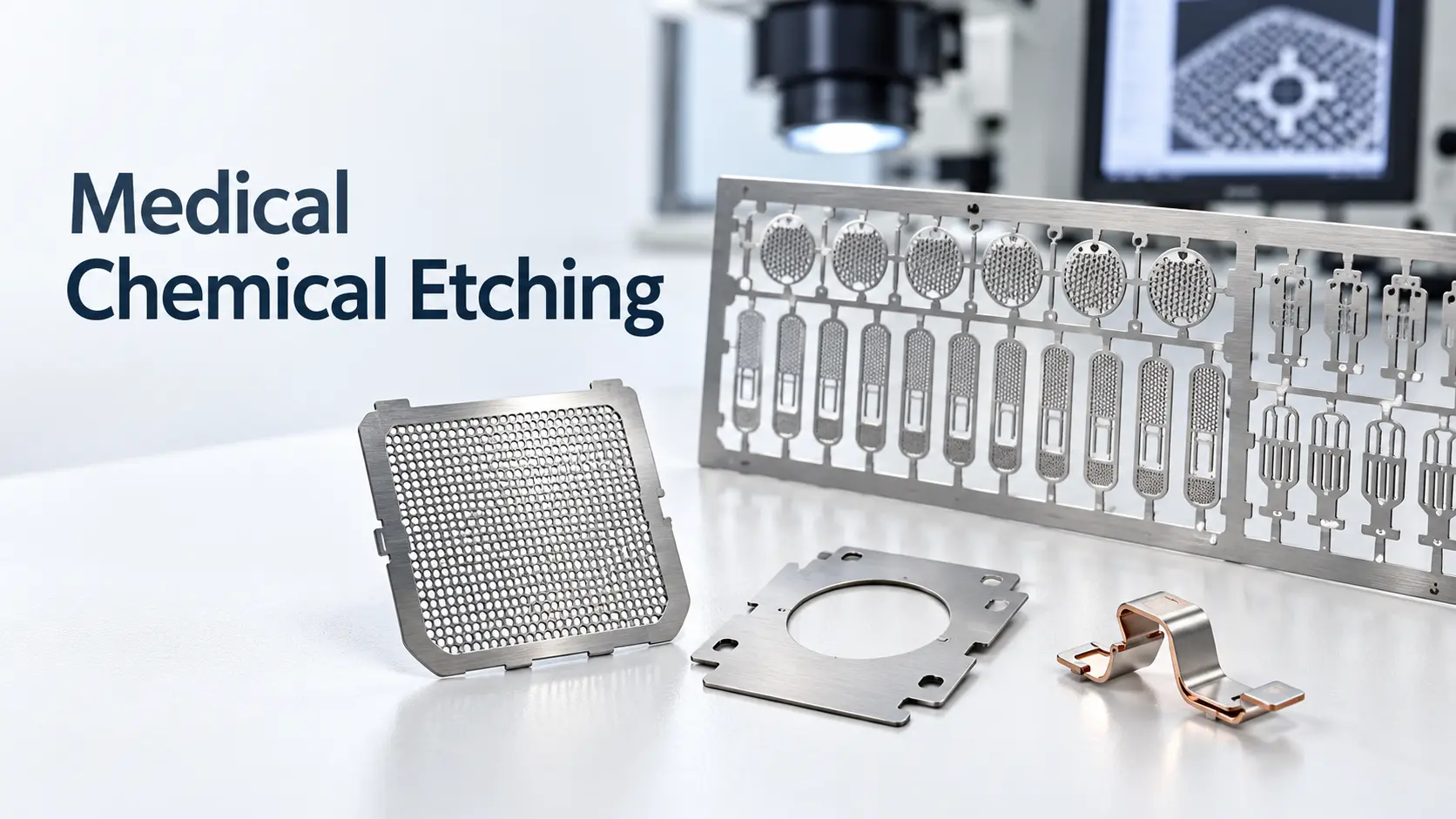
Medical chemical etching
Medical components may require:
- Smooth edges
- Fine features
- Clean surfaces
- Material control
- Repeatability
- Detailed inspection
- Controlled packaging
When etched components are supplied for medical-device applications, buyers may also need to evaluate whether the manufacturer understands the relevant quality and regulatory requirements. ISO 13485 provides a quality management framework specifically for organizations involved in medical-device design, production, and related supply activities.
The supplier should understand that surface defects or contamination can create risks beyond simple dimensional failure.
Electronics chemical etching
Electronics applications often focus on:
- Fine feature accuracy
- Electrical conductivity
- EMI shielding performance
- Surface finish
- Plating quality
- Solderability
- Flatness
Common etched electronics parts include EMI shielding cans, custom lead frames, contacts, connector parts, and precision screens.
Automotive chemical etching
Automotive buyers may prioritize:
- Batch consistency
- Cost control
- Stable supply
- Production capacity
- Change management
- Traceability
- Delivery performance
The supplier should be able to support the move from design validation to regular orders.
Fuel cell chemical etching
Fuel cell parts may require careful control of:
- Flow field geometry
- Channel depth
- Surface cleanliness
- Corrosion resistance
- Contact resistance
- Coating compatibility
- Welding preparation
For etched bipolar plates, flow field accuracy and surface quality can affect later coating, joining, and stack assembly.
Choose a chemical etching manufacturer that asks about the application and functional requirements before confirming the process.
8. Understand Cost and Lead Time Factors
Chemical etching cost depends on more than the number of parts.
Common cost factors include:
- Material type
- Material thickness
- Part size
- Sheet size
- Sheet utilization
- Order quantity
- Tolerance
- Feature complexity
- Inspection requirements
- Material certification
- Secondary processing
- Packaging
- Target lead time
Sheet utilization refers to how efficiently parts can be arranged on the metal sheet. Better sheet utilization can reduce material waste and lower unit cost.
A complete RFQ helps the supplier prepare a more accurate chemical etching quote.
The lowest quote is not always the lowest-cost option. A very low price may exclude inspection, documentation, suitable packaging, or proper secondary process control.
When comparing quotations, confirm that each supplier is quoting the same:
- Material grade
- Thickness
- Drawing revision
- Quantity
- Tolerance
- Inspection level
- Secondary processes
- Packaging method
- Delivery terms
Lead time can also depend on material availability, drawing approval, prototype testing, tooling preparation, inspection, and outsourced processes.
Ask the supplier to separate prototype lead time from regular production lead time.
9. Watch for Red Flags When Comparing Chemical Etching Companies
Certain warning signs may indicate higher project risk.
The supplier quotes without reviewing the drawing
A reliable supplier should check material, thickness, dimensions, features, tolerances, and secondary processes before providing a final quotation.
The supplier does not ask about material grade
“Stainless steel” or “copper” is often not enough. Different grades can behave differently during etching and later processing.
The supplier cannot explain tolerance limits
Be cautious when a supplier accepts every tolerance without discussing material thickness or feature geometry.
Quality control answers are vague
Statements such as “we check every part” are not enough. Ask what is inspected, how it is inspected, and what records are available.
There is no clear inspection process
The supplier should match inspection equipment to the required dimensions and feature sizes.
Prototype and mass production support are unclear
A sample may be successful, but the supplier must also explain how it controls larger and repeated orders.
Secondary processing risks are ignored
Plating, bending, polishing, heat treatment, and welding may affect the final dimensions or surface.
The discussion focuses only on price
A reliable supplier should also discuss manufacturability, quality, lead time, inspection, and project risk.
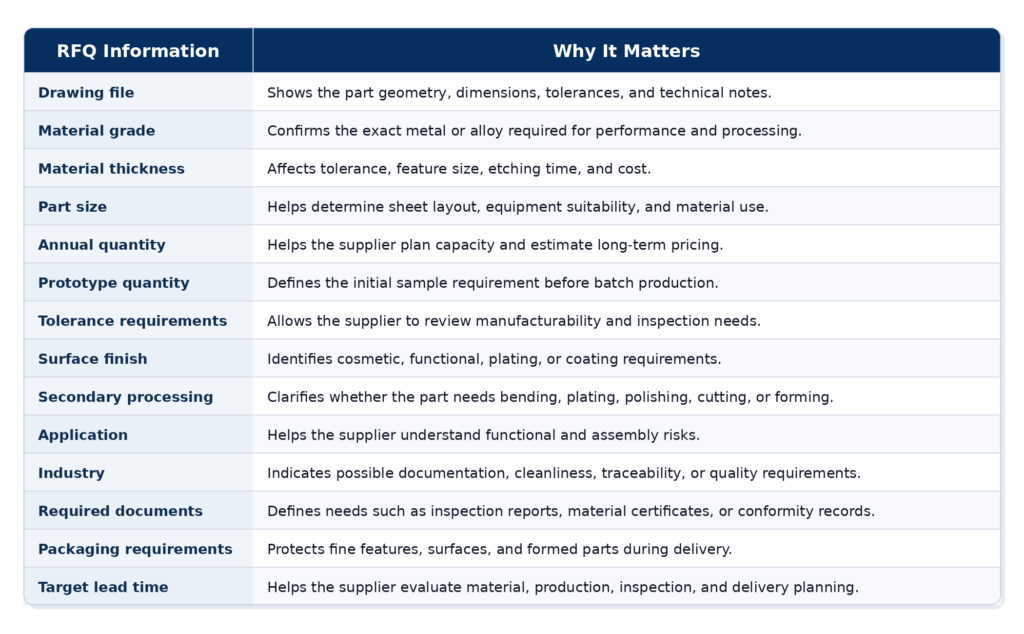
10. Buyer’s RFQ Checklist for Chemical Etching Projects
Providing complete RFQ information helps the supplier review the project and prepare an accurate quotation.
11. Questions to Ask a Chemical Etching Supplier
Use these questions when comparing chemical etching suppliers:
- What materials and thicknesses can you etch?
- Have you processed this exact material grade before?
- What tolerance can you hold for this material and thickness?
- What are the minimum hole, slot, and spacing limits?
- Can you review my drawing before quotation?
- Do you provide DFM recommendations?
- Can you produce half-etched features or bend lines?
- Do you support both prototypes and mass production?
- How do you control repeatability between batches?
- What inspection equipment do you use?
- Can you provide first article inspection reports?
- Can you provide material certificates or batch records?
- Do you offer plating, bending, polishing, or other secondary processes?
- Are secondary processes completed in-house or through approved partners?
- How do you inspect parts after secondary processing?
- What information do you need for an accurate quote?
- What factors may affect the quoted lead time?
- How do you manage drawing revisions and repeat orders?
Clear answers to these questions can reveal whether the supplier understands the full project or only the etching step.
How TMNetch Matches the Buyer’s Checklist
TMNetch supports custom precision metal parts from drawing review through production.
| Buyer Check | TMNetch Information |
|---|---|
| Materials and thickness range | TMNetch publishes chemical etching capability for 0.01–2.5 mm metal sheet, covering stainless steel, copper, brass, aluminum, titanium, nickel alloys and other precision metals. Material-specific feasibility should still be confirmed against the exact alloy, temper and drawing. |
| Tolerance and feature capability | Under suitable material and design conditions, TMNetch publishes dimensional accuracy of up to ±0.025 mm. Actual tolerance depends on material thickness, geometry, feature size and inspection requirements, so the drawing should be reviewed before quotation. |
| Drawing review and DFM support | TMNetch’s published workflow begins with phototool/CAD design and material selection, followed by controlled exposure, development, etching and final inspection. The company states that engineers can review drawings, materials, tolerances and secondary-process requirements before production. |
| Prototype support | TMNetch publishes prototype turnaround of as little as 6 hours for suitable projects, allowing buyers to validate geometry and manufacturability before moving into regular production. |
| Production scalability | TMNetch supports projects from prototypes to volume production and publishes production capacity of up to 1,800 m² per day on its current photo-etching capability information. Buyers with large or recurring programs should confirm capacity allocation and required delivery schedules during quotation. |
| Quality system and inspection | TMNetch states that its manufacturing operates under an ISO 9001:2015 quality management system. Its chemical etching process also includes dimensional control, visual inspection and final inspection before finishing and shipment. Project-specific FAI, inspection reports or traceability requirements should be agreed during RFQ review. |
| Secondary and complementary processing | TMNetch publishes support for plating, bending/forming, polishing, laser cutting, cleaning, surface finishing, inspection and packaging, allowing etched parts to move through multiple manufacturing steps under one coordinated production plan. |
| Industry experience | TMNetch states that it serves applications across electronics, medical, aerospace, automotive, energy and other precision-engineering industries, including parts such as shielding components, filters, lead frames, bipolar plates and other thin-metal components. |
| International supply capability | Founded in 2011 and based in Dongguan, China, TMNetch states that it supplies precision parts to customers in more than 20 countries, making it relevant to international OEM sourcing programs as well as domestic manufacturing projects. |
| Design/IP and phototool ownership | TMNetch’s public website describes its CAD and phototool workflow, but it does not publicly define project-specific ownership, file-retention or transfer terms. Buyers with confidential or transferable tooling requirements should confirm these points in the NDA, quotation or supply agreement before releasing production data. |
| Sub-supplier and special quality requirements | Public capability pages describe one-stop and in-house secondary-process support, but buyers requiring specific subcontractor controls, lot traceability, first-article documentation or customer-approved processors should define these requirements explicitly during RFQ and supplier qualification. |
Buyers can send their project information for an engineering review of the required chemical etching services, photo etching services, or related custom metal part production.
FAQs
How do I choose a chemical etching company?
Compare the supplier’s material experience, thickness capability, tolerance control, design support, inspection process, production capacity, and secondary services. Choose a supplier that reviews your drawing and explains manufacturing risks before quotation.
What should I ask a chemical etching supplier before requesting a quote?
Ask about material grades, thickness ranges, tolerance limits, minimum feature sizes, inspection methods, prototype support, mass production capacity, secondary processes, documentation, and lead time.
What materials can a chemical etching company process?
Common materials include stainless steel, copper, copper alloys, aluminum, titanium, nickel, and specialty alloys. Actual capability depends on the supplier’s equipment, chemistry, and process experience.
How important is tolerance in chemical etching?
Tolerance is critical because it affects part fit, assembly, and performance. Achievable tolerance depends on material type, thickness, feature geometry, part size, and inspection requirements.
Conclusion
Choosing a chemical etching company should not be based only on price.
The right supplier should provide more than an acceptable quotation. It should give clear technical answers, documented quality controls, transparent commercial terms, and defined responsibility for drawings, tooling, subcontractors, and production changes.
Before placing an order, ask how the supplier will control the project from material selection to final inspection. Confirm that it can support both the current prototype and future production needs.
To discuss a custom project with TMNetch, request a chemical etching quote and send your drawing, material grade, thickness, tolerance, quantity, application, and secondary processing requirements for engineering review.