
Laser etching aluminum is a good choice when a part needs surface marks, logos, serial numbers, or traceability codes. Chemical aluminum etching is usually better when buyers need thin, complex, burr-free aluminum parts without heat distortion or mechanical stress. Some projects can use both processes: chemical etching for the part geometry and laser marking or engraving for final identification.
For procurement engineers, the key question is simple: do you need a surface mark, a functional aluminum component, or both?
What Is Laser Etching?
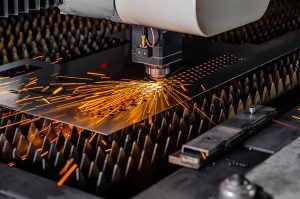
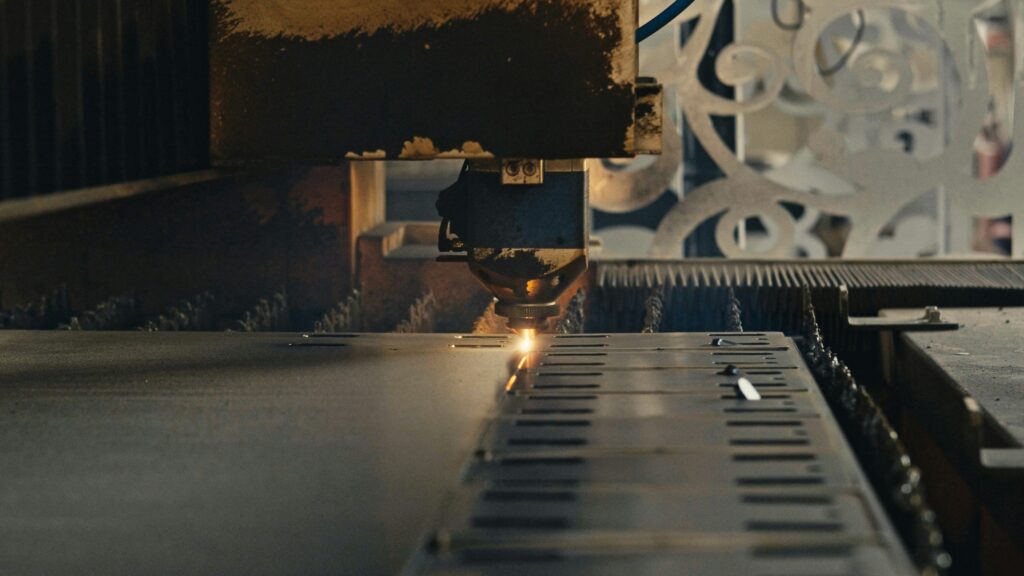
Laser etching uses a focused laser beam to change the surface of aluminum. The laser energy locally heats the material, which creates a visible mark, shallow texture, or surface contrast. In many industrial projects, buyers use laser etching or laser marking to add serial numbers, logos, QR codes, part numbers, or traceability information.[Source: NASA PRC-9003]
For aluminum, laser etching often works well when the design is simple and the main goal is identification. It can mark individual parts quickly without physical tooling. This makes it useful for prototypes, small batches, maintenance parts, and customized labels.
Laser etching can also support simple patterns or shallow surface features. However, it is not always the best process for producing thin, complex aluminum components. Because the process uses concentrated heat, it may create a heat-affected zone, local oxidation, discoloration, or microstructural change depending on the laser type, power setting, material grade, and surface condition.
Laser etching should not be confused with laser cutting. Laser cutting removes material through the full thickness of the sheet. Laser etching usually modifies the surface or removes only a shallow layer. For buyers, this distinction matters because surface marking and precision part manufacturing have very different quality requirements.
What Is Photochemical Etching?
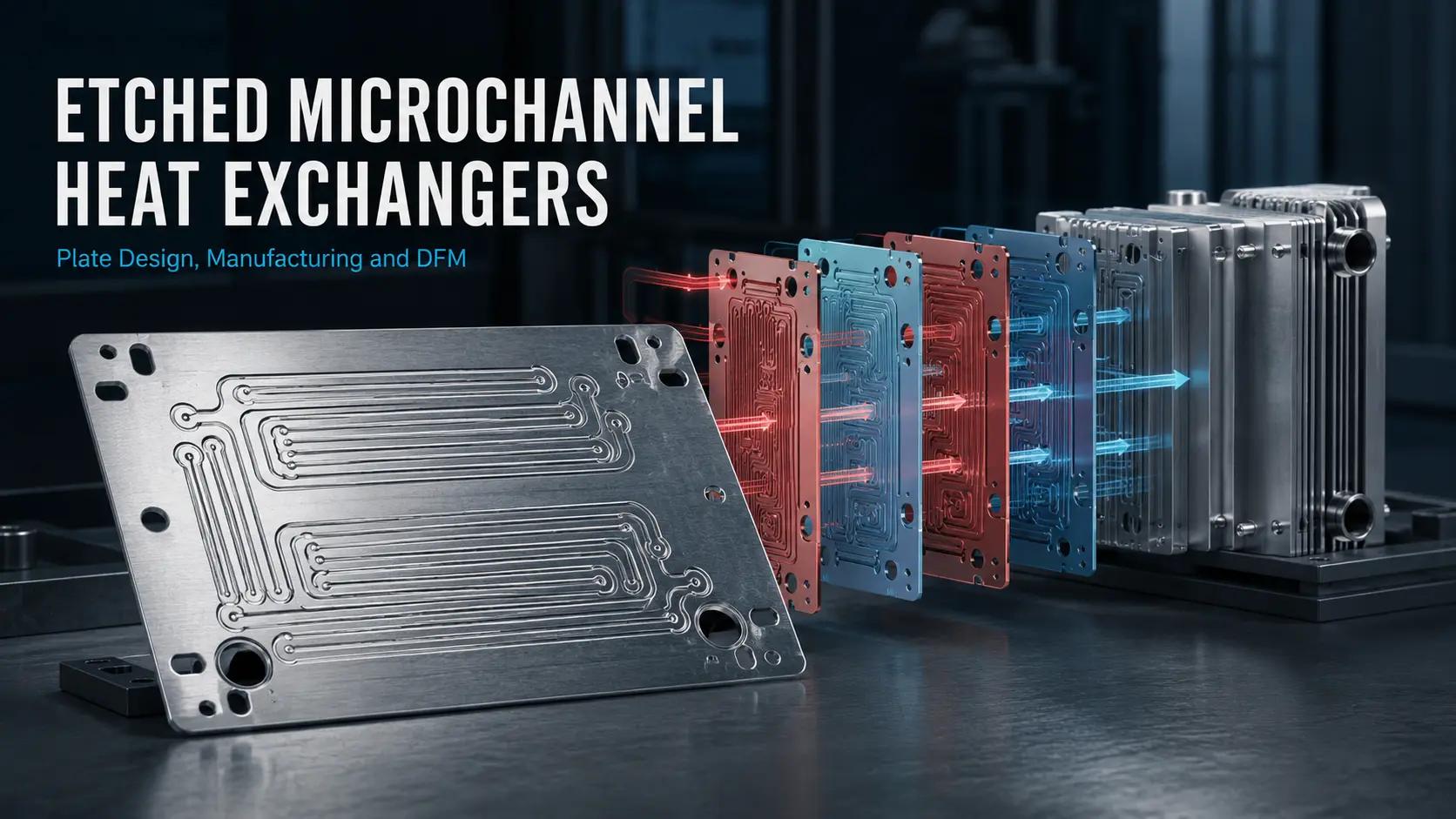
Chemical etching, also called photochemical etching or photo chemical machining, removes selected areas of metal through a controlled chemical reaction. In technical literature, photochemical machining is described as a multi-stage process using photoresist technology and chemical dissolution to produce metal parts. The process starts with a cleaned aluminum sheet. A photoresist is applied to the surface, and the required pattern is transferred by exposure through a phototool. Click to know more details about photochemical etching process.
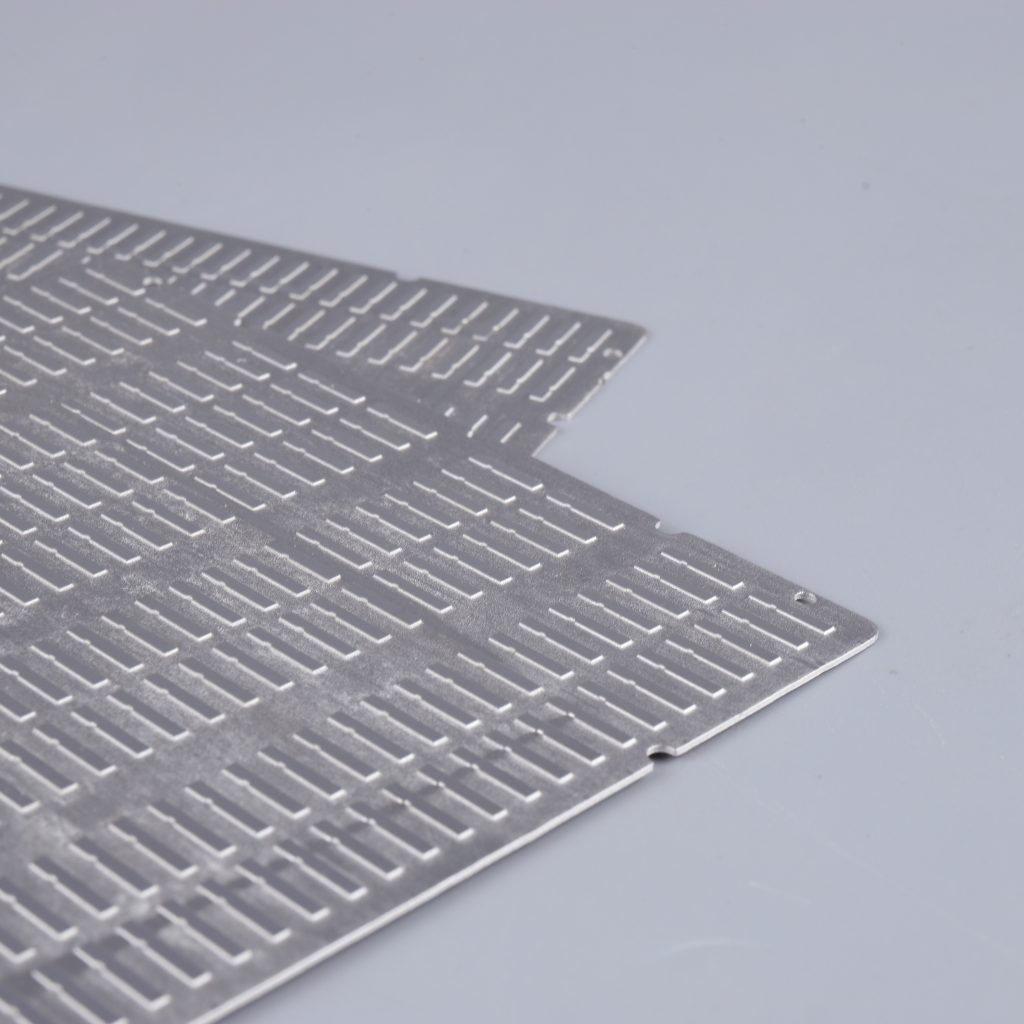
After development, the exposed metal areas are removed by chemical etchant. The protected areas remain in place. This allows manufacturers to create thin, flat aluminum parts with detailed patterns, fine openings, and complex geometries.
For aluminum parts, chemical etching has several important advantages. It is a non-contact process, so it does not apply mechanical force to the sheet. Because chemical etching is a non-contact material removal process, it does not create mechanical burrs in the same way as stamping, punching, or mechanical cutting. Academic literature also describes photochemical machining as a burr-free and stress-free process for precision metal components.
This makes chemical etching suitable for parts that must remain flat, clean, and dimensionally stable. It is especially useful when the design includes many holes, slots, channels, meshes, or repeated fine features. Because the pattern is created from photo tooling, design changes are also easier than changing hard tooling for stamping.
Based on TMNetch production capability data, chemical etching can support aluminum sheets within a defined thickness range depending on alloy, feature size, and tolerance requirements. For projects requiring tight dimensional control, TMNetch can review drawings, material grade, feature width, hole size, spacing, and surface finishing needs before quoting.

Key Differences Between Laser Etching and Chemical Etching for Aluminum
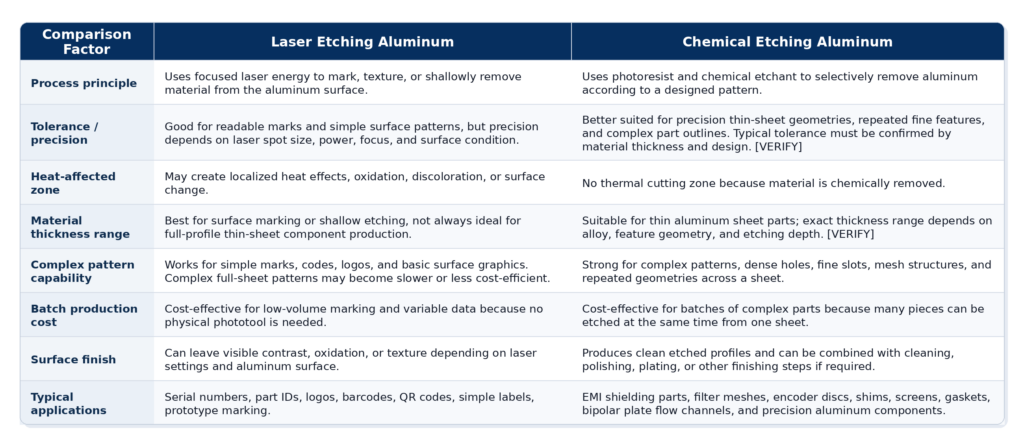
Both processes are useful. The better choice depends on whether your project needs surface information or part geometry.
When to Choose Laser Etching for Aluminum
Choose laser etching aluminum when the main requirement is identification. This includes logos, serial numbers, QR codes, date codes, batch codes, and part tracking marks.
Use It When the Requirement Is Surface Marking
Laser etching is usually suitable when the aluminum part is already finished. It adds visible information without changing the main structure of the component.
This is common in medical devices, aerospace parts, electronics housings, and automotive components. The mark helps with traceability, assembly, and quality control.
Use It When Traceability Is the Main Goal
If your supplier already provides the final part shape, laser marking can add traceability information later. This is useful when parts must be tracked by batch, production date, or customer part number.
This does not mean laser etching is always the best process for forming the part itself. It means laser etching is useful as an identification step.
Use It When Geometry Is Already Finished
For finished aluminum components, laser etching can be a good final process. It can add information without requiring a new mechanical tool.
If the part still needs complex cutouts, fine holes, small channels, or burr-free edges, chemical aluminum etching should also be reviewed.
When to Choose Chemical Etching for Aluminum
Choose chemical aluminum etching when the project needs thin, flat, complex aluminum parts. It is especially useful when the design contains fine openings, narrow ribs, smooth profiles, or detailed patterns.
Choose It for Thin Aluminum Parts
Chemical aluminum etching is well suited for thin aluminum parts because it does not rely on cutting force. This helps protect delicate geometries during production.
For lightweight aerospace, automotive, electronics, and energy applications, this can be important. Thin parts often need clean edges, repeatable dimensions, and stable flatness.
Choose It for Burr-Free Edges
Burr-free edges are one of the strongest reasons to choose aluminum etching. TMNetch states that its aluminium etching process produces burr-free finishes and smooth edges without secondary deburring.
This matters for gaskets, shims, filters, shielding parts, and other components that must fit cleanly into an assembly.
Choose It When Heat Distortion Is a Concern
Heat can affect the area near a cutting or welding operation. A heat-affected zone is the area of base material that has not melted but has had its microstructure and properties altered by welding or heat-intensive cutting.
Chemical etching does not use heat-based cutting. TMNetch lists no heat distortion as one of the benefits of its aluminium etching process.
Choose It for Complex Patterns Without Hard Tooling
Chemical aluminum etching can support complex profiles, holes, channels, and patterns without expensive hard tooling. This is useful when the design may change during prototyping.
TMNetch states that it supports one-sided, two-sided, and multi-depth aluminum etching, including complex shapes, narrow channels, and detailed patterns.
Can Both Processes Be Combined?
Yes. Some projects can use both processes in the same production route.
A common approach is to use chemical aluminum etching to form the precision structure first. This step can create holes, channels, mesh patterns, thin ribs, or the full flat part profile.
After that, laser marking or engraving can add serial numbers, logos, QR codes, or batch information. This is useful when the part needs both functional geometry and traceability.
Chemical Etching Can Form the Precision Structure First
Chemical etching is usually the better fit when the part geometry is complex. It can create functional aluminum components without mechanical force and without heat-based cutting.
This makes it suitable for thin aluminum parts that require clean openings, smooth edges, and repeatable profiles.
Laser Marking Can Add Identification Later
Laser marking or engraving can then be used as a secondary operation for identification. This is useful when the part must carry a logo, serial number, or tracking code.
Buyers should confirm this requirement early. Marking location, mark size, surface finish, and readability may affect the final production plan.
One-Stop Secondary Processing Can Reduce Coordination
For projects that require etched geometry and secondary processing, TMNetch can help buyers coordinate several steps under one process plan.
TMNetch’s in-house secondary processes include electroplating, bending, laser cutting, polishing, and custom packaging. The photo etching page also describes ISO 9001:2015-certified facilities and automated etching lines.
This allows TMNetch to reduce supplier coordination when a project needs more than a single etching step. Click to know more about TMNetch’s one-stop services.
Why TMNetch for Aluminum Chemical Etching
TMNetch supports custom aluminum etching for precision metal components. The company’s aluminium etching page lists burr-free finishes, close tolerances as small as ±10% of material thickness, complex geometries, no heat distortion, and parts as large as 1500 mm × 600 mm.
TMNetch also lists aluminum grades including 1100, 3003, 4043, 5052, 5083, and 5182. These options support different requirements for formability, corrosion resistance, strength, and conductivity.
For company background, TMNetch states that it was founded in 2011, has a 4,000-square-meter factory in Dongguan, operates five fully automated 39-meter lines, and supplies precision parts to more than 20 countries.
If your project requires aluminum etching for thin parts, complex holes, EMI/RFI shielding, mesh, shims, gaskets, or lightweight components, TMNetch can review the material, drawing, tolerance, surface finish, and secondary process requirements before production.
FAQ
Is laser etching the same as chemical etching?
No. Laser etching uses focused laser energy to mark or shallowly modify the aluminum surface. Chemical etching uses photoresist and chemical etchant to remove selected metal areas and create the part geometry.
Which process is better for thin aluminum parts?
Chemical etching is usually better for thin aluminum parts with complex shapes, fine holes, slots, or burr-free edge requirements. Laser etching is better for surface marking, identification, and simple low-volume labeling.
Does chemical etching aluminum create burrs?
Chemical etching is a non-contact process, so it does not create mechanical burrs like punching, stamping, or some cutting methods. Final edge quality still depends on material grade, thickness, feature design, and process control.
Conclusion: Choose Based on the Real Requirement
Laser etching fits surface marking and part identification. Chemical aluminum etching fits thin, complex, burr-free aluminum components.
In some projects, both processes can work together. Chemical etching forms the precision structure, while laser marking or engraving adds traceability information later.
If you are not sure whether your project needs laser etching, chemical aluminum etching, or both, contact TMNetch for a technical review before production.