
Machining for aerospace is a mission‑critical type of manufacturing where parts for aircraft, spacecraft, and defense systems must be manufactured to extremely tight tolerances with the utmost reliability. All components have to adhere to tight tolerance, weight, and safety guidelines. It is for this reason that precision machining for aerospace relies on advanced CNC systems, repeatable and controlled processes, and experienced engineering teams. Companies provide these high‑precision industries with standards‑based production. When the CNC machining is for aerospace, which you cannot afford to compromise on, as it affects performance, safety, and long-term durability, the alloys vary from lightweight to high-end designs.
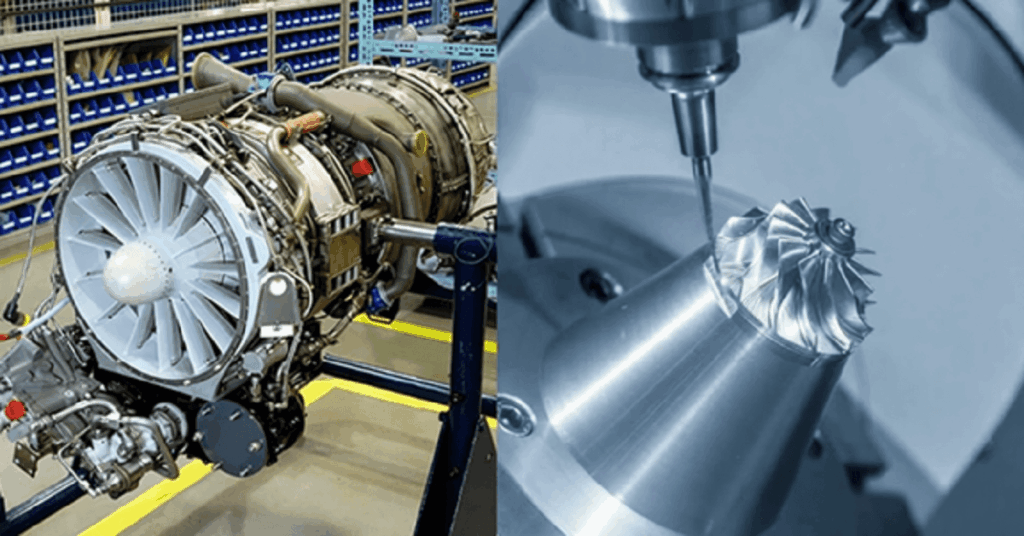
Types of CNC Machining Aerospace Components
This section explains real−world CNC machining aerospace parts, where accuracy, repeatability, and material integrity are non−negotiables. When using CNC machining, manufacturers must produce safety‑critical parts that operate reliably even under extreme mechanical, thermal, and environmental stress.
1. Structural Aircraft Components
Machining for aerospace structural components is common for producing the main support structures for aircraft and spacecraft. Common parts include fuselage frames, bulkheads, ribs, brackets, spars, and mounting plates. They are minimally, they have high strength‑to‑weight ratios, while attaining tight dimensional stability is achieved through precision machining for aerospace. Aluminum and titanium alloys are the major materials for machining of aerospace parts for structural applications.
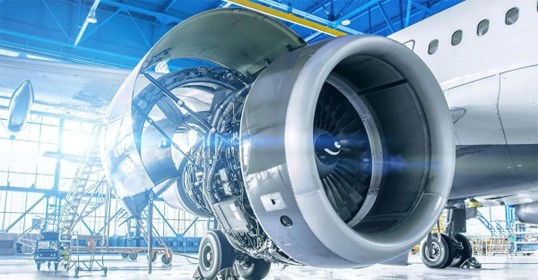
2. Engine and Propulsion Parts
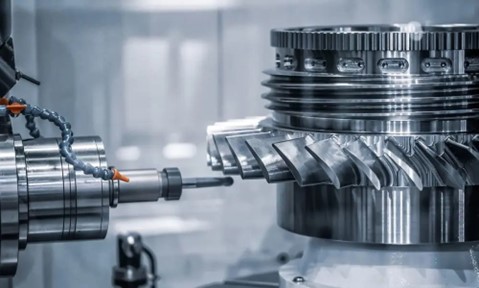
Complex geometry machining for aerospace supplies components for aerospace engines in high-performance applications, which are critical to safety. These include compressor housings, turbine casings, fuel manifolds, and heat‑resistant mounts, for example. These parts, made with CNC machining for aerospace, can include intricate internal channels while withstanding temperature and rotational load parameters.
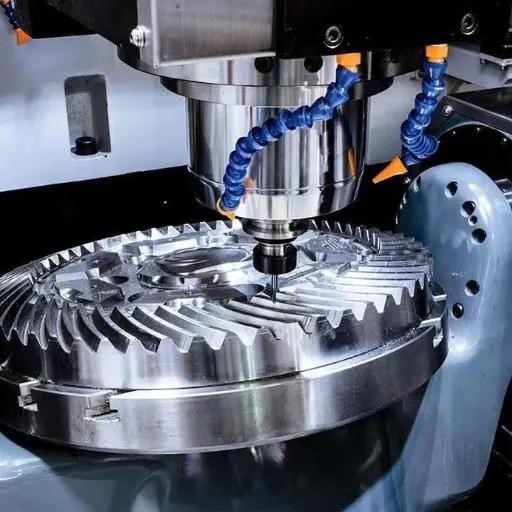
3. Flight Control and Motion Systems
Precision machining for aerospace is an essential cog in the production of flight‑control hardware. Precision tolerances are needed in CNC machining aerospace parts like actuator housings, control linkages, sensor mounts, and hydraulic components. Aerospace machining allows for reliable responsiveness of the aircraft in order to operate the aircraft in a safe way.
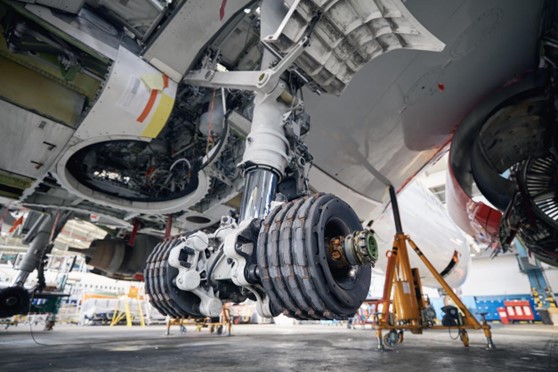
4. Landing Gear and Load‑Bearing Assemblies
Landing gear parts are among the most stressed items in aviation. Manufacturers use machining for aerospace structural components, producing shock struts, joints, hinges, and heavy-duty brackets. The parts manufactured through CNC machining for aerospace have to qualify in terms of fatigue, impact, and load‑bearing.
5. Spacecraft and Satellite Components
Machining for aerospace contributes to the production of light-weight frame, electronic housings, antenna mounts, and thermal control structures for space applications. For aerospace, manufacturers use tight, rugged, low power designs that work reliably in vacuum and radiation intense environments via complex geometry machining for aerospace.
6. Avionics and Aerospace Electronics Housings
CNC machining aerospace parts, a significant category is avionics enclosures, sensor housings, and communication system casings. These parts use precision to safeguard these sensitive electronics while still allowing for electromagnetic increased ability, improved vibration resistance, and fit accuracy within aircraft and spacecraft systems.
Material Selection for Cnc machining of aerospace
CNC machining for aerospace targets components that are repeatably accurate and tight to dimensional ranges. The aerospace parts material is selected based on its strength, low weight, resistance to heat, and corrosion. Successful aerospace machining starts with selecting the right materials.
Common Aerospace Materials
Common materials that are used for precision machining for aerospace are:
- Lightweight structural aluminum alloys
- High strength to weight ratio titanium alloys
- Corrosion-resistant and heat-resistant stainless steel
- Nickel superalloys for extreme temperature environments
In aerospace, cutting forces, heat generation, and tool wear are measured during CNC machining for aerospace. This provides consistent CNC machining of aerospace parts with reproducible surface finishes and mechanical properties. With its controlled machining strategies, TMNetch also supports aerospace‑grade material processing.
Why Material Control Matters
Full material traceability is needed for the machining of structural components. Aerospace standards require documentation and control of everything from raw stock through the final inspection. This ensures that all the CNC-machined parts fulfill both performance and compliance.
Precision Machining For Aerospace Components
Components used within complex assemblies must come together in such a way that they function correctly, and precision for aerospace is imperative for this outcome. A single unit-based dimensional deviation is enough to make them unsafe. This dependence on advanced CNC platforms and inspection systems makes machining for aerospace quite challenging.
Tight Tolerances and Accuracy
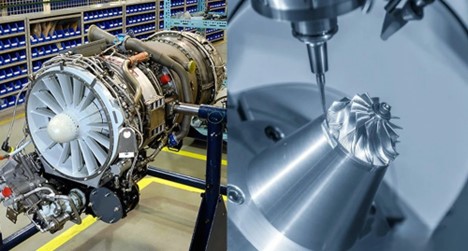
CNC machining for aerospace regularly attains micron‑level tolerances with multi‑axis CNC and in‑process metrology. Another strict application to benefit precision machining for aerospace:
- Stable machining environments
- Optimized toolpaths
- In‑process inspection
These practices guarantee consistent accuracy of CNC machining aerospace parts during the stress of operation. Adding precision workflows for aerospace manufacturing highlights the precision focus of TMNetch.
Quality Assurance Standards
Machining for aerospace should comply with AS9100 and ISO certifications. Precision is only slowly mastering the tooling process, such as CMM and laser measurement tools. This is to ensure that structural components meet not only design intent but also regulatory expectations.
Machining for aerospace structural components
Machining for aerospace structural components is simply the production of load-bearing components like frames, housings, and mounting brackets. They need to provide strength to weight ratio and the durability required of these components.
Structural Integrity and Design
It is even possible to build thin‑wall structures and reinforced geometries through CNC machining for aerospace without compromising strength. Aerospace precision machining allows consistent wall thickness and uniform stress distribution. The machining for aerospace structural components commonly supports:
- Aircraft fuselage structures
- Wing and engine mounting systems
- Satellite and spaceframe assemblies
TMNetch provides aerospace machining by ensuring consistency from run to run on structural production.
Lightweight Engineering
One of the main goals of machining for aerospace is to reduce weight. Parts with optimization, offering better fuel consumption and system performance while maintaining safety margins
Complex Geometry Machining For Aerospace
Complex geometry machining for aerospace is for parts that have an odd or complex shape, have internal channels, and can have multi‑surface features. As modern aerospace systems require packing and functional integration, these designs are key.
Multi‑Axis Machining Capabilities
To support complex geometry machining for aerospace, 5‑axis machining is frequently used in aerospace. This method minimizes the setup duration while enhancing the surface finish quality. Precision machining for aerospace offers several advantages:
- Fewer setups
- Higher dimensional accuracy
- Reduced machining errors
Advanced design challenges
Aerospace support for complex geometry(widebodies) for both turbine housings, fluid manifolds, and structural connectors. Complex features in aerospace structural components require sophisticated CAM programming and personnel with significant experience. TMNetch integrates machining strategies with intricate aerospace design requirements.
Benefits of machining for aerospace
Machining for aerospace provides obvious benefits, the foundation for critical manufacturing.
Key Benefits
- Exceptional dimensional accuracy
- Efficient material utilization
- Consistent quality output
- Scalable production capability
CNC machining for aerospace parts, used with precision to ensure that these parts meet functional as well as regulatory standards. Enhanced design freedom from complex geometry machining for aerospace
Why Choose TMNetch for Machining for Aerospace
TMNetch focuses on precision, consistency, and process reliability for machining for aerospace. The way it is manufactured aligns with aerospace quality in mind.

TMNetch Capabilities
- Specializes in complex geometry machining for aerospace
- Experience in machining aerospace structural components
- Aerospace controls for precision machining
TMNetch transforms aerospace parts with process control and engineering discipline in a reliable manner.
FAQs
Q1. What is different about aerospace machining compared to other industries?
Machining aerospace components uses much more restrictive standards, both for tolerancing and for materials, which must be certified, and quality control. CNC machining of aerospace parts must comply with safety and regulatory requirements that are not a factor in general manufacturing.
Q2. Why precision machining for aerospace matters?
Aerospace precision machining is a manufacturing process that builds aerospace precision components with tight tolerances for fit and function. CNC machining of aerospace parts needs to be precise, as any small differences can affect safety.
Q3. How does complex geometry machining in aerospace help to improve performance?
Aerospace applications for aerospace, complex geometry machining results in designs with internal channels and weight savings that improve air flow for any weight-sensitive aerospace system.
Conclusion
Machining for aerospace is the foundation of every single modern aircraft and space system. The entire procedure is a series of steps that require precision and performance, beginning with control of material and complex geometry machining for aerospace. Aerospace parts made with CNC machining are a niche that is written in stone with the support of safety, efficiency, and innovation. TMNetch specializes in engineering to cater quality‑driven processes through crucial aerospace solutions, which facilitate consistent mechanical properties.